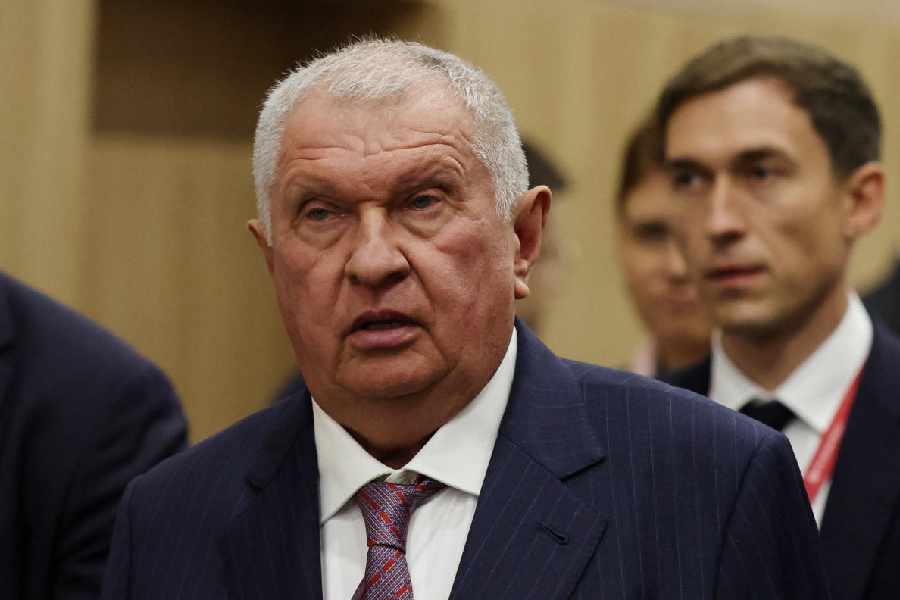
Rosneft Chief Executive Igor Sechin on Saturday said US energy companies were the biggest beneficiaries of the closure of the Strait of Hormuz, but warned that prolonged disruption in the vital shipping route could weaken long-term global oil demand and fuel inflationary pressures across sectors.
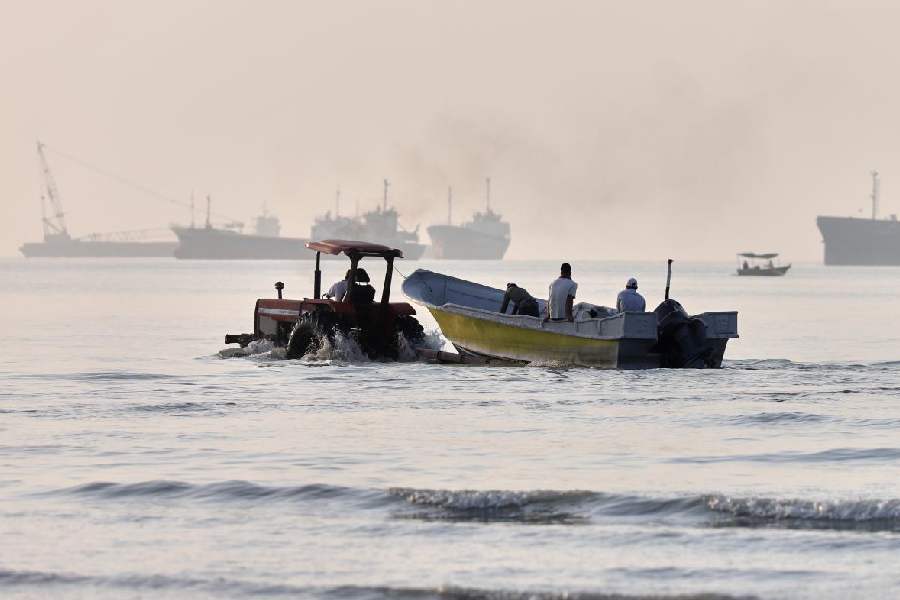
Iran blockaded the Strait of Hormuz — the route for about a fifth of global oil supplies and a key transit corridor for other commodities, including fertilisers — after the United States and Israel attacked Iran and killed Supreme Leader Ayatollah Ali Khamenei in February. The United States has since blockaded Iranian ports.
Speaking at the St Petersburg International Economic Forum, Sechin, a close ally of Russian President Vladimir Putin and one of the most influential figures in Russia's energy sector, said the crisis had reshaped energy markets in ways that primarily benefited American producers.
"The closure of the Strait of Hormuz is an attempt to reshape global energy market regulations to benefit the United States. The measures taken to block the strait were aimed at Iran, but backfired on the entire world. The strategic risks were underestimated," Sechin said.
"The main beneficiaries, of course, were American companies, which gained non-competitive advantages and the ability to secure high-cost supplies," he added.
However, Sechin cautioned that sustained tensions in the waterway could undermine long-term oil consumption and accelerate interest in alternative energy sources.
He also warned that disruptions in Hormuz could push up fertiliser and food prices, increasing the risk of a wider food crisis. Countries such as India, as well as nations in Africa and Southeast Asia, would be among the most vulnerable to any resulting food-price shock, he said.
According to Russian media reports, Sechin said fertiliser prices had already risen nearly 60 per cent in the first four months of the year, while supply disruptions and the absence of strategic reserves in some markets heightened risks to global food security.
Sechin said China had been among the best-prepared countries for the crisis due to long-term planning, but warned that other strategic maritime chokepoints, including the Malacca, Bab el-Mandeb and Gibraltar straits, also remained vulnerable to disruption.
He said that if the Strait of Hormuz reopens in the near future, oil prices could reach USD 95-96 per barrel by the end of the year before easing to USD 80-85 within a year and returning to market fundamentals by the second half of 2027.
In a wider assessment of global risks, Sechin said the world was facing mounting challenges ranging from geopolitical tensions and militarisation to looming shortages of electricity, food, water and critical metals.
India to drive global oil demand growth
Sechin also said India would account for about half of the growth in global oil demand over the next decade, underscoring the country's growing importance in world energy markets.
Speaking at the forum, Sechin described India as occupying a "special place" in the global oil market.
"Over the next 10 years, this country will account for about half of the global increase in oil demand," he said, according to Russia's state-run TASS news agency.
Citing International Energy Agency projections, Sechin said India's oil consumption was expected to reach nearly eight million barrels per day by 2035, representing growth of about 44 per cent. Global oil demand, by comparison, is projected to increase by roughly five per cent over the same period.
The Rosneft chief also said discounted Russian oil supplies had generated significant economic benefits for India and China since April 2022.
According to TASS, Sechin estimated the cumulative value of those benefits at more than USD 40 billion. He argued that Russia's economic partnership with India and China had helped ensure stable energy supplies and demonstrated that Russia could not be excluded from global supply chains.
The St Petersburg International Economic Forum was held from June 3 to June 6.
Earlier at the forum, President Vladimir Putin said any attempt to undermine India's sovereignty through "threats of sanctions" would "boomerang immediately" under Prime Minister Narendra Modi's leadership.