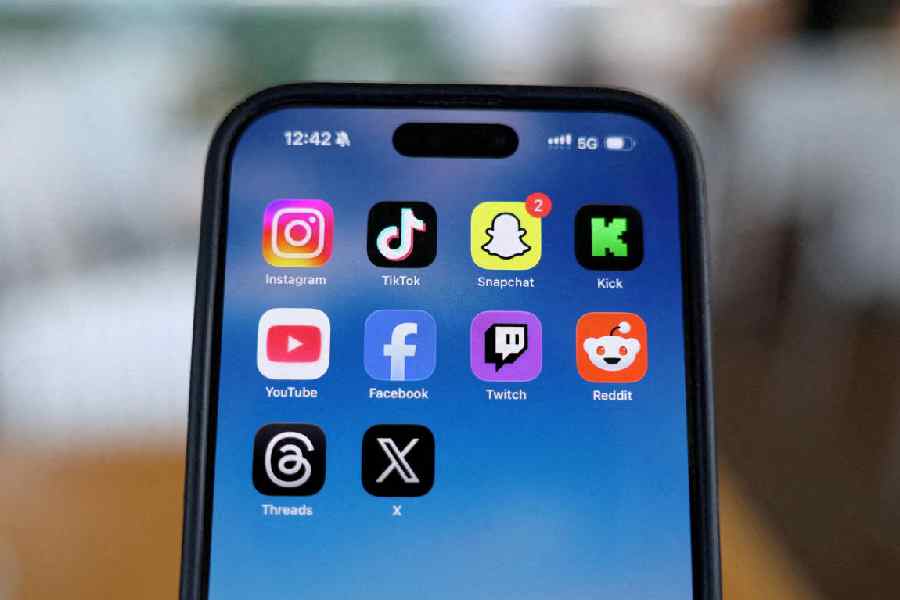
The UK government has begun public consultations on the possibility of banning under-16s from using social media, joining a host of European nations that have moved to restrict such online activities of teenagers.
In December, Australia became the first country to impose sweeping curbs on teenage social media use.
Parents, guardians and young people are being invited to submit comments before the UK government reaches a decision on the proposal.
“There is growing agreement that more needs to be done,” the government said in a statement announcing what it called “the world’s most ambitious consultation on social media”. It added: “The contributions to this consultation will determine how the government decides what that looks like.”
The UK is following in the footsteps of several European countries that are moving towards broad social media bans for children, despite doubts over how such measures would be implemented and whether they risk a prolonged battle with US technology groups.
France is close to passing a law, with lawmakers having approved a bill that would ban social media use by under-15s. The country’s President, Emmanuel Macron, hailed the vote as a “major step” to protect French children and teenagers in a post on X.
Spain, Greece and the Netherlands have said they will act to keep young people off platforms such as TikTok, Instagram and X.
Past attempts to regulate online platforms have struggled, as there are several ways to circumvent bans, such as virtual private networks that conceal users’ locations.
In the UK, the consultation asks whether platforms should be required to switch off addictive features such as infinite scrolling and autoplay, which keep children hooked late into the night. It is also considering overnight curfews to help children sleep better.
The first trial will involve around 150 children aged 13 to 15 and will test their responses to being denied social media altogether, being limited to one hour a day, and being subject to overnight screen curfews. Their sleep, moods and physical activity will be assessed.
In India, the chief economic adviser, V. Anantha Nageswaran, in January called for age-based restrictions on social media platforms, describing them as “predatory” in the way they keep users engaged online.
Last month, NDA ally Telugu Desam Party (TDP) asked the information and broadcasting ministry to explore a legal framework to protect children online by limiting social media use. The party’s floor leader in the Lok Sabha, Lavu Krishna Devarayalu, submitted a letter to I&B minister Ashwini Vaishnaw, saying the country needs age-based regulation of social media for children.
In the letter, he said nearly 90 per cent of children aged 14 to 16 have access to smartphones, and more than 75 per cent actively use social media.
India is home to the world’s second-largest smartphone market, with 750 million devices and a billion Internet users, according to Reuters. Research firm DataReportal says YouTube has 500 million users in India, Facebook 403 million, while Instagram has 481 million.
Goa’s information technology minister, Rohan Khaunte, said in February that his government was examining the possibility of restricting social media use for children below 16 in the coastal state.
Andhra Pradesh IT minister Nara Lokesh has also indicated that his state is contemplating imposing a ban on access to social media for children below 16.
In the US, the Children’s Online Privacy Protection Act prevents companies from collecting the personal data of users under 13. However, a blanket social media ban for children would be difficult to enact, partly because individual states have their own laws.
Evan Spiegel, co-founder and chief executive of Snap, the parent company of Snapchat, recently said: “Stripping teens of this source of connection may not be the healthiest option.”
Meta chief executive Mark Zuckerberg, who founded Facebook in his college dormitory in 2004, last month testified in a landmark tech addiction case against his company (and YouTube). He defended his company, telling the court that “a meaningful number of people” lie about their age and that enforcing Instagram’s age limits can be “very difficult”.