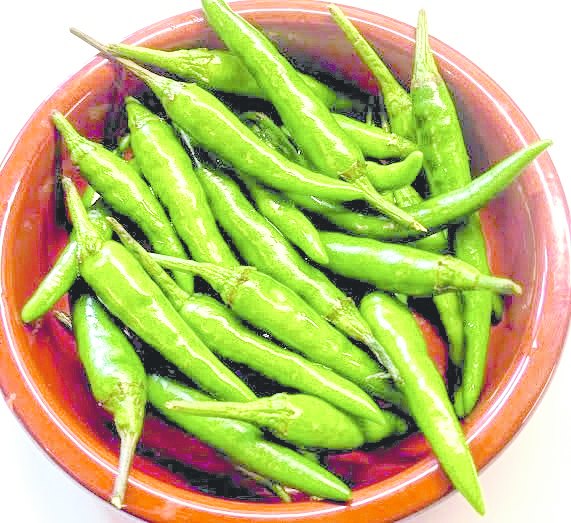

London, Aug. 5: The age old Indian practice of having a kaacha lanka (green chillies) with meals received an endorsement in a detailed study published in the British Medical Journal, which basically says that spicy food is good for health and can be a check against diseases such as cancer.
While there is nothing new in the suggestion that an Indian curry has medicinal properties, this latest study is getting worldwide publicity with even the usually cautious New York Times carrying a report.
Probably the reason for that is the thoroughness of the study by the Peking University Health Science Centre which analysed the food habits of half a million Chinese.
Before people in India rush off and tuck into biryani, it is worth pointing out that the researchers say more work needs to be done before deciding whether the conclusions can be extended to other cultures. But the clear implication is they can.
As it is, the Indian curry is now considered British food across the UK. Since there are between 8,000 and 10,000 "Indian" restaurants in the country - many are run by Bangladeshis, actually - a chicken tikka masala is available pretty much everywhere.
The study found that those who consumed spicy food six or seven days a week had a 14 per cent reduced risk of dying compared with those who ate it less than once a week.
Those who did not have alcohol to wash down their lamb jalfrezi benefited even more.
According to the findings published in the BMJ, the object of the whole exercise was "to examine the associations between the regular consumption of spicy foods and total and cause specific mortality".
In all, "199,293 men and 288,082 women, aged 30 to 79 years, from 10 geographically diverse areas across China", were studied between 2004 and 2008.
The researchers found that "the habitual consumption of spicy foods was inversely associated with total and certain cause specific mortality, independent of other risk factors of death".
Their study added: "Inverse associations were also observed for deaths due to cancer, ischemic heart diseases, and respiratory diseases."
In plain English that means spicy food is linked to a longer, healthier life.
The study said: "Spices have been an integral part of culinary cultures around the world and have a long history of use for flavouring, colouring, and preserving food, as well as for medicinal purposes.
"The increased use of spices as flavourings in foods is a major trend worldwide. In China, chilli pepper is among the most popular spicy foods consumed nationwide."
That a green chilly is a good thing to eat is put in complicated language: "The beneficial effects of spices and their bioactive ingredients such as capsaicin have long been documented in experimental or small sized population studies. For example, an ecological study showed that populations with a higher consumption of spices have a lower incidence of cancer."
The study also said: "The ingestion of red pepper was found to decrease appetite and energy intake in people of Asian origin and white people and might reduce the risk of overweight and obesity.
"In addition, the bioactive agents in spices have also shown beneficial roles in obesity, cardiovascular and gastrointestinal conditions, various cancers, neurogenic bladder, and dermatological conditions."
It continued: "Moreover, spices exhibit antibacterial activity and affect gut microbiota populations, which in humans have been recently related to risks of diabetes, cardiovascular disease, liver cirrhosis, and cancer. These data collectively suggest that spices may have a profound influence on morbidities and mortality in humans; however, the evidence relating daily consumption of spicy foods and total and disease specific mortality from population studies is lacking."
The study concluded: "Our analyses showed significant inverse associations between spicy food consumption and total and certain cause specific mortality (cancer, ischemic heart diseases, and respiratory diseases). None the less, given the observational nature of this study, it is not possible to make a causal inference. Further prospective studies in other populations would be essential to demonstrate generalizability of these findings."
In an accompanying editorial, Dr Nita Forouhi, who leads the Medical Research Council unit's nutritional epidemiology programme at the University of Cambridge, suggested future studies should look at whether eating spicy food leads to drinking more water, or different types of tea could be behind the link.
"Future research is needed to establish whether spicy food consumption has the potential to improve health and reduce mortality directly or if it is merely a marker of other dietary and lifestyle factors," she said.
"The added contribution of spicy food intake to the benefits of a balanced healthy diet and healthy lifestyles also remains to be investigated," she cautioned. "However, the current findings should certainly stimulate dialogue, debate, and further interest in research."