The Kremlin said on Tuesday it had heard no statements from India about halting purchases of Russian oil after US President Donald Trump said New Delhi had agreed to stop such purchases as part of a trade accord with Washington.
US President Donald Trump announced a trade deal on Monday with India that slashes US tariffs on Indian goods to 18 per cent from 50 per cent in exchange for India halting Russian oil purchases and lowering trade barriers.
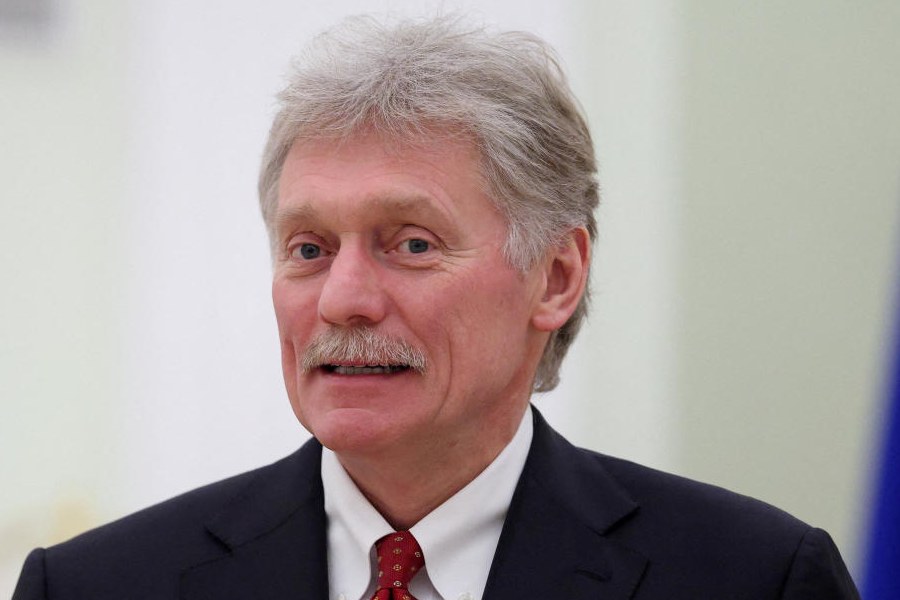
Kremlin spokesman Dmitry Peskov said Russia was carefully analysing Trump's remarks on relations with India.
Asked directly if India had decided to stop buying Russian oil, Peskov said: "So far, we have not heard any statements from Delhi on this issue."
"We respect bilateral US-Indian relations," Peskov told reporters. "But we attach no less importance to the development of an advanced strategic partnership between Russia and India.
"This is the most important thing for us," he said, "and we intend to further develop our bilateral relations with Delhi."
India became the top buyer of discounted Russian seaborne crude after Moscow's war in Ukraine began in 2022.
That generated a backlash among Western nations that have targeted Russia's energy sector with sanctions aimed at curbing Moscow's revenues to make it harder to fund the war.
Trump's move to slash tariffs on Indian imports sparked a relief rally across the Asian country's markets on Tuesday, lifting sentiment among exporters and policymakers even as details of the agreement remained scant.
Trump's social media post was not followed by any details of the deal from the White House or the Indian government.
An Indian government official said India has agreed to buy petroleum, defence goods and aircraft from the US, while partly opening up its guarded agriculture sector under the agreement.
New Delhi has also lowered tariffs on imported cars to address Washington's immediate demands, according to the official.
Trump said India will buy more American goods with purchases rising to over $500 billion, including energy, coal, technology, agricultural and other products. He did not specify any time-frame.
"India's tariff agreement with the US removes its earlier disadvantage versus peers," said Neelkanth Mishra, chief economist at Axis Bank.
The deal helps affected Indian gems and jewellery, leather, plastics, ceramics and auto components and non-tech foreign investment, he added.
Among Asian peers, US tariffs on goods from Indonesia stand at 19% while the rate for Vietnam and Bangladesh stands at 20 per cent.
India's exports to the US rose 15.88 per cent year-on-year to $85.5 billion in January-November, while imports stood at $46.08 billion, Indian government data showed.
The announcement of the trade deal has reduced a great deal of global uncertainty, India's economic affairs secretary, Anuradha Thakur, said at an event in New Delhi on Tuesday.
It also lifted investor sentiment. India's benchmark stock index, the Nifty 50, was up nearly 3 per cent and the rupee climbed over 1 per cent to 90.40 per dollar in early trading.
"Lower tariffs will not only improve price competitiveness but also help Indian exporters integrate more deeply into US supply chains,” said S.C. Ralhan, president of the Federation of Indian Export Organisations.
Reduction in US tariffs on most Indian goods will reinvigorate India's exports to the US, Moody's Ratings said in a statement.
Deal details scant
Despite the announcement by Trump and a post on X from Indian Prime Minister Narendra Modi, details of the deal remain scant.
Indian refiners will need a wind-down period to complete Russian oil deals before imports from that country can be halted, and they have so far not been ordered by the government to stop such imports, Reuters reported.