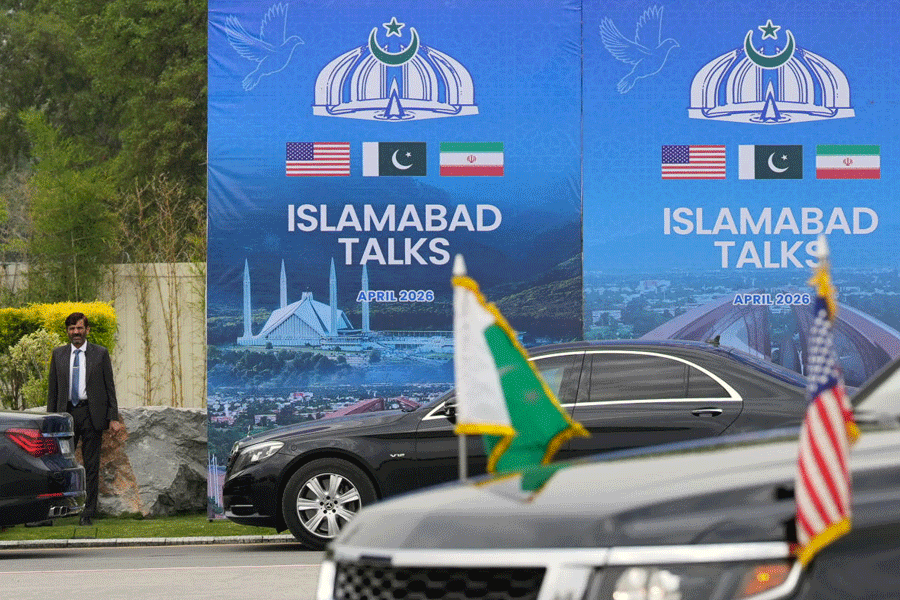
Top U.S. and Iranian officials gathered in the Pakistani capital Islamabad on Saturday to hold talks that seek to end their war in the Middle East that has killed thousands, roiled energy supplies and hurt the global economy.
Here are the key issues the two sides are expected to discuss, with Tehran insisting that formal talks can begin only after Washington gives commitments on a ceasefire in Lebanon and lifting sanctions on Iran.
Iran wants a ceasefire in Lebanon, where Israeli attacks on Iran-backed Hezbollah militants have killed nearly 2,000 people since the start of the fighting in March. Israel and the U.S. have said the Lebanon campaign is not part of the Iran-U.S. ceasefire while Tehran insists it is.
Iran wants the U.S. to unblock Iranian assets and end sanctions that have crippled its economy for years. Washington has indicated that it is open to significant sanctions relief but only in exchange for concessions from Iran on its nuclear and missile programmes.
Iran wants acknowledgment of its authority over the Strait of Hormuz, where it aims to collect transit fees and control access in what would amount to a huge shift in regional power. The U.S. wants it opened for oil tankers and other traffic without any limitations, including tolls.
Iran is expected to demand compensation for all damage during the six-week war. The U.S. has not commented on this.
Iran wants to be allowed to enrich uranium, which Washington has ruled out and President Donald Trump has insisted is non-negotiable.
Israel and the U.S. both want Iran's missile capabilities to be dramatically curtailed. Tehran has said its formidable missile arsenal is non-negotiable.
Iran wants withdrawal of U.S. combat forces from the region, cessation of war on all fronts and a commitment to non-aggression. Trump has vowed to retain military assets in the Middle East until a peace deal is reached and warned of a major escalation in fighting if it failed to comply.