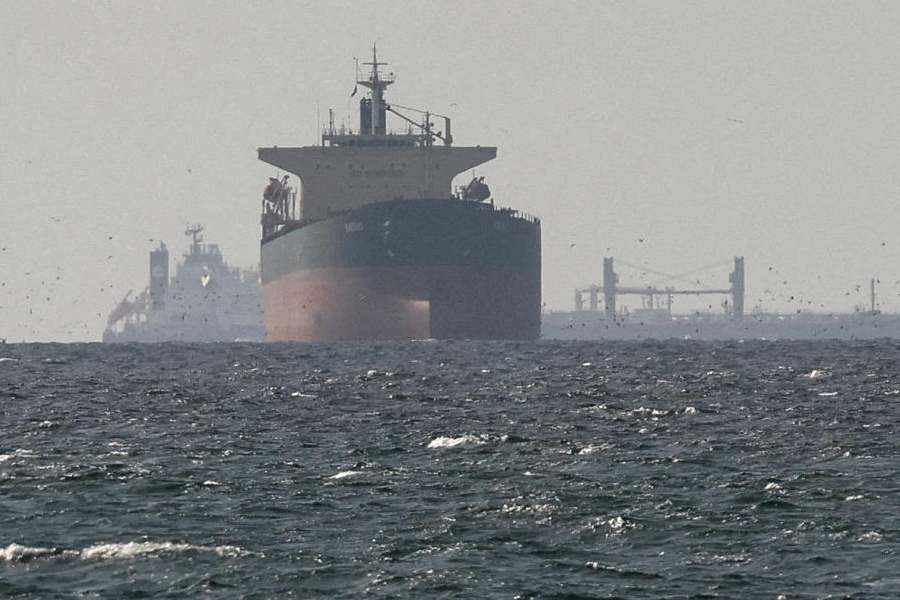
The war in West Asia has caused the "the largest supply disruption in the history of the global oil market", the International Energy Agency (IEA) said on Thursday, as Iran stepped up its attacks on tankers in the region.
Before the war, 20 million barrels of oil passed daily through the Strait of Hormuz, the narrow waterway off Iran’s southern coast. That amount has plunged to "a trickle", the IEA said in its monthly report, since Iran warned that ships passing through were at risk of attack.
This week, the 32 member states of the IEA agreed to release 400 million barrels of oil from their strategic reserves, the most ever and the first coordinated release since Russia’s full-scale invasion of Ukraine in 2022.
But the move did not immediately arrest the rise in oil prices. The price of Brent crude, the global benchmark, climbed briefly back above $100 a barrel on Thursday, about $30 higher than it was at the end of February, before the US-Israeli military assault on Iran. The supply disruptions caused by the war showed little sign of abating with tankers in the Persian Gulf on fire after coming under attack and Iraq closing its oil port terminals.
As Gulf countries struggle to export their oil, they have curtailed production by at least 10 million barrels a day, as oil storage fill up. Exports of other refined products and liquefied petroleum gas is also effectively at a standstill, the IEA said.
The widespread cancellations of flights in West Asia caused by closed airspaces and disruptions to liquefied petroleum gas supplies are expected to curb global oil demand by one million barrels a day in March and April, the agency added.
Gasoline prices are front of mind for many consumers, but the IEA is cautioning that other fuel supplies are at risk because of the war. “Diesel and jet fuel markets look to be particularly vulnerable to an extended loss of Middle East production and exports, given limited flexibility elsewhere to increase output,” the agency said in its report.
The effect of the supply disruptions has been rippling around the globe. Some countries have taken measures to control fuel demand and shield customers from high costs.
New York Times News Service