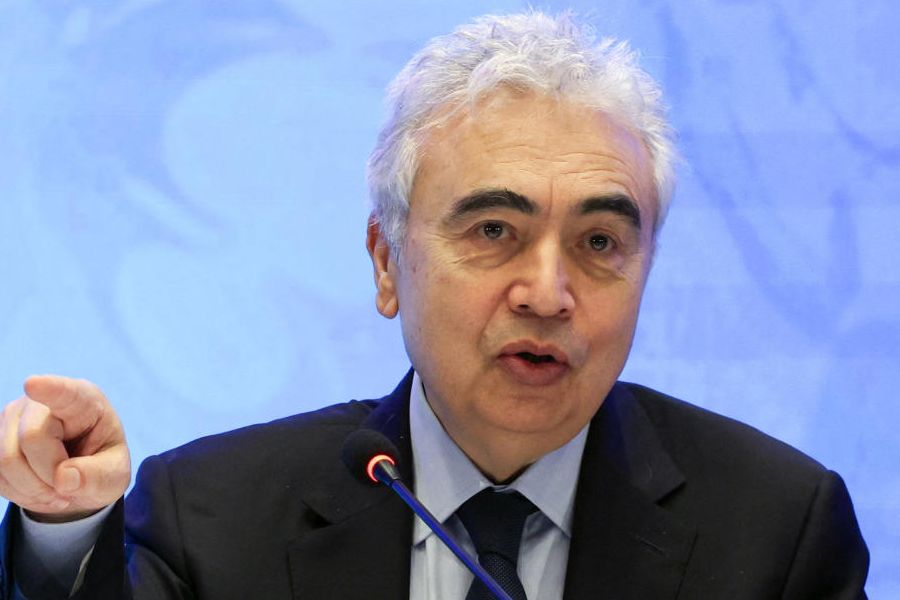
The global energy market is facing a prolonged disruption, with Fatih Birol warning that it could take months to restore oil and gas flows from the Gulf amid the ongoing conflict involving the US, Israel and Iran.
“It will be six months for some (sites) to be operational, others much longer,” Birol told the Financial Times. He said, the world is facing what could be the most severe energy crisis in history.
Birol, who heads the International Energy Agency, said policymakers and markets were underestimating the scale of the disruption, with nearly one-fifth of global oil and gas supplies effectively stranded in the region.
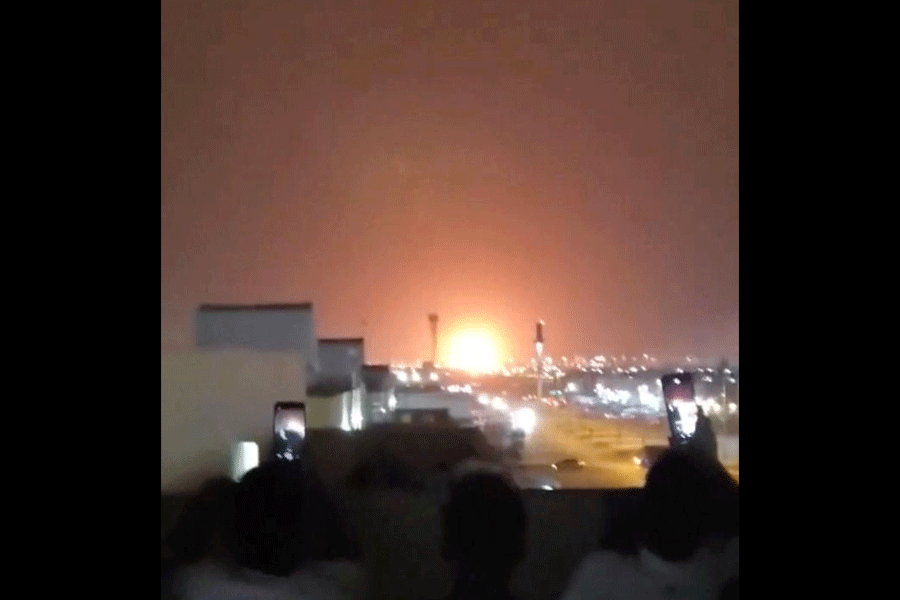
The conflict has severely impacted shipments through the Strait of Hormuz, a critical route that carries about a fifth of the world’s oil and liquefied natural gas.
Exports through the narrow waterway have nearly come to a halt, tightening global supply and pushing up prices.
The IEA has already agreed to release 400 million barrels of oil from emergency reserves to stabilise markets, with the United States contributing the bulk. The agency has also proposed a series of demand-side measures to ease pressure on consumers.
These include working from home, reducing highway speed limits by at least 10 kmph and avoiding air travel where alternative modes of transport are available.
“We have recently launched the largest ever release of IEA emergency oil stocks – and I am in close contact with key governments around the world, including major energy producers and consumers, as part of our international energy diplomacy,” Birol said in a statement.
“In addition to this, today's report provides a menu of immediate and concrete measures that can be taken on the demand side by governments, businesses and households to shelter consumers from the impacts of this crisis,” he added.
The supply shock has raised concerns over inflation globally, particularly in import-dependent economies across Asia, Europe and Africa. Higher fuel costs are expected to push up transport and food prices, putting additional strain on households.
While renewable energy has become more cost-competitive in recent years, oil remains critical for sectors such as fertilisers and plastics, making the impact widespread.
“These crises regularly occur,” said James Bowen of ReMap Research. “They are a feature, not a bug, of a fossil fuel-based energy system.”
China and India, the world’s two most populous nations, are both exposed to the disruption, though China’s larger renewable energy base has helped reduce some of its dependence on imports.
In Europe, governments that had earlier sought to cut reliance on fossil fuels after the Russia-Ukraine War have also turned to alternative suppliers, including liquefied natural gas imports.
Developing economies are expected to be hit the hardest. Countries with limited reserves and high dependence on imported fuel are already facing shortages and rising costs.
Some nations, including Bangladesh and Thailand, have started rationing fuel and drawing on reserves to manage the situation.
Experts say countries with stronger renewable energy capacity are better placed to absorb the shock, while others may face prolonged economic strain if disruptions continue.