Four Indian-origin figures from medicine, technology and politics are set to take their seats in the House of Lords in the New Year, marking a fresh round of Labour nominations under Prime Minister Keir Starmer.
Professor Geeta Nargund, fertility specialist and founder of CREATE Fertility; Uday Nagaraju, technology entrepreneur and founder of AI Policy Labs; Neena Gill, former Member of the European Parliament; and Shama Tatler, a Brent councillor, have been nominated as Labour peers.
Downing Street confirmed the appointments earlier this month, with formal approval granted by King Charles III.
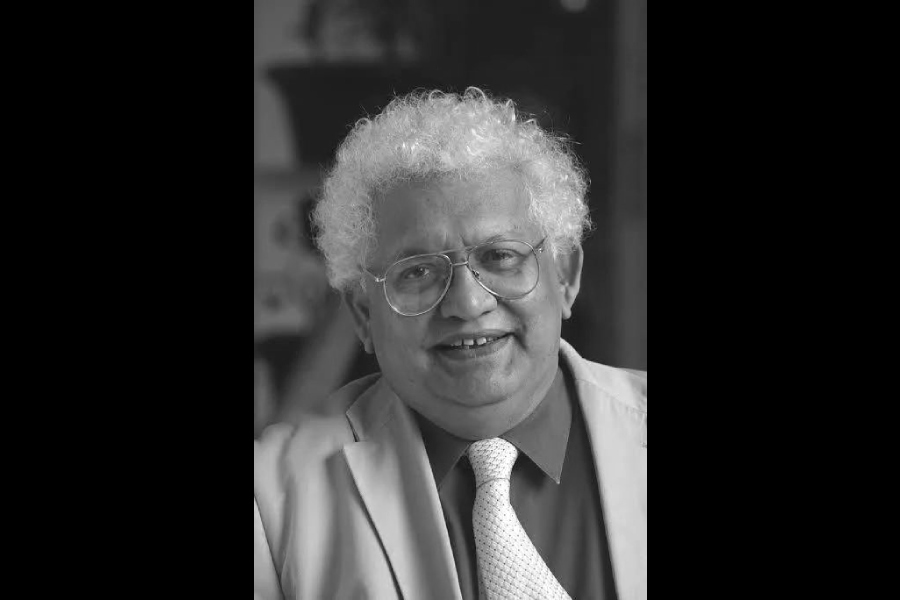
Professor Geeta Nargund is best known for her work in women’s health and reproductive medicine.
Her citation from the UK Prime Minister’s office describes her as: “Professor Geeta Nargund is a women's health expert, academic, founder, diversity champion and a campaigner for gender equality."
“She is the Founder of Create Fertility and served as its Medical Director until July 2025. She is the Founder and Trustee of Health Equality Foundation (formerly known as Create Health Foundation). She has dedicated her career to tackling wider health inequalities and improving access to reproductive choices and care globally,” it adds.
Uday Nagaraju brings over two decades of experience in the technology sector to the Upper House. A Labour Party adviser and consultant, he has been recognised for his work linking artificial intelligence with public interest outcomes.
His citation notes his elevation for a “strong commitment to artificial intelligence (AI) for societal good”.
“With over two decades of experience in the technology sector, Uday has provided strategic leadership in performance testing and digital transformation, helping organisations deliver reliable, high-performing technology solutions," it says.
“He is the Founder of AI Policy Labs, a not-for-profit organisation dedicated to advancing responsible AI. Uday also led the Mahatma Gandhi Future Leaders Programme, a mentorship initiative promoting political leadership among British Indian members of the Labour Party. His latest venture, AIPL Nova, in its early stages, aims to develop tools to help organisations navigate the opportunities and challenges of AI," it adds.
Neena Gill, who was awarded a CBE for services to the community, was born in Ludhiana and moved to the UK at the age of 10.
As an MEP before Brexit, she played a key role in shaping legislation in the European Parliament, working on issues ranging from financial regulation to digital content.
Her official citation says: “Since 2013, she has served as the chair of Sikhs for Labour, a national campaigning organisation. She also has extensive experience as a CEO in the housing/not-for-profit sector, as senior executive in a tech multinational and as a non-executive in the charitable arena," reads her official citation for peerage.
Shama Tatler, a councillor from Brent in north-west London, is considered part of a younger generation of British Indian politicians within the Labour Party. She currently serves as vice-chair of the Labour Indians diaspora group.
Reacting to her nomination, Tatler said: “It is an extraordinary honour and a profound privilege to have been asked by the Prime Minister to enter the House of Lords as a Labour peer.”
“My career has been rooted in public service... I am honoured to be the first Jain to serve in the UK Parliament – a moment of great pride for me, my family and the wider Jain community, whose values of compassion, service and non-violence have guided me throughout my life,” she added.
The four Indian-origin peers are part of Labour’s list of 25 nominations, a move widely seen as an attempt by the Starmer government to reduce the Conservatives’ numerical advantage in the Upper House.
The Opposition Conservatives have received three new peerages, while the Liberal Democrats have been allotted five.
The nominations also come at a time when the Labour government is working on its manifesto promise to remove hereditary peers from the House of Lords.