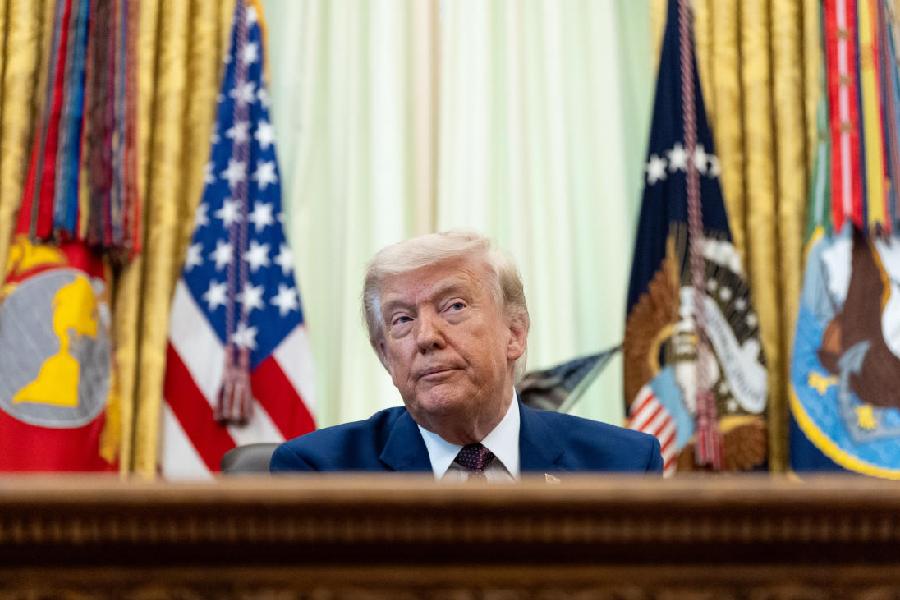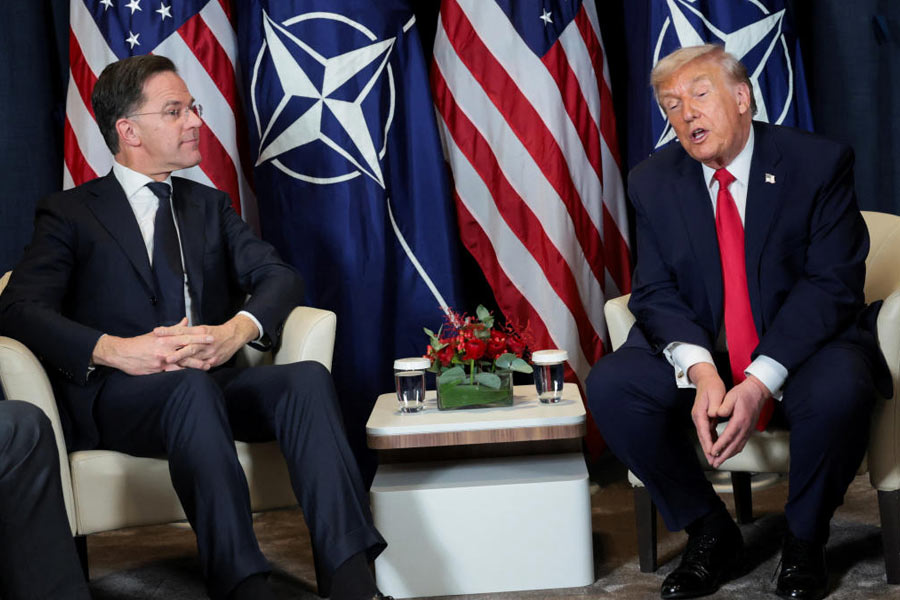
US President Donald Trump abruptly stepped away from threats to impose tariffs and use force over Greenland on Wednesday – after weeks of rhetoric that rattled allies and raised fears of a transatlantic rupture – following pushback from aides, market jitters and talks with Nato Secretary General Mark Rutte on the sidelines of the World Economic Forum in Davos.
From tariff threats to talk of a deal
Trump had threatened over the weekend to impose rising tariffs on US-bound exports from eight European countries as leverage to acquire Greenland, a Danish territory of about 57,000 people. The remarks shook allies and revived fears of a new global trade war.
But travelling in Davos, Trump said Washington and its allies could forge a deal over Greenland that addresses US security concerns in the Arctic without resorting to force or tariffs.
“It’s a deal that everybody’s very happy with,” Trump told reporters. “It’s a long-term deal. It’s the ultimate long-term deal. It puts everybody in a really good position, especially as it pertains to security and to minerals.”
“It’s a deal that’s forever,” he added.
On his Truth Social platform, Trump later said the US and Nato had “formed the framework of a future deal with respect to Greenland and, in fact, the entire Arctic Region,” adding that “based upon this understanding, I will not be imposing the Tariffs that were scheduled to go into effect on February 1st.”
Military option taken off the table
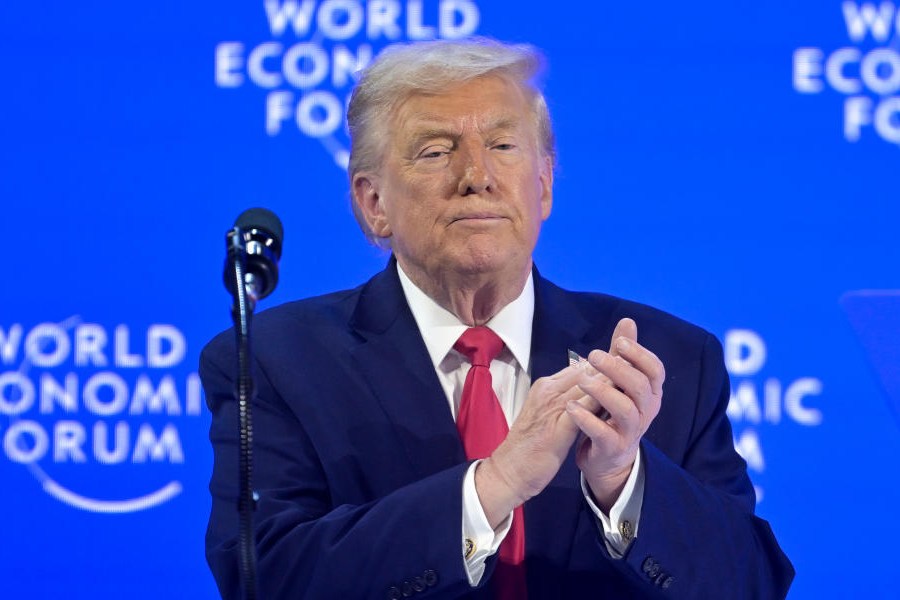
Earlier in the day, Trump acknowledged unease in financial markets and explicitly ruled out using force in a speech to global business and political leaders.
“People thought I would use force, but I don't have to use force,” Trump said. “I don't want to use force. I won't use force.”
The shift helped spark a rally on Wall Street, with the S&P 500 posting its biggest one-day percentage gain in two months after sharp losses a day earlier linked to Trump’s more hawkish comments.
Nato talks and Rutte’s comments
The reversal came after Trump met Nato Secretary General Mark Rutte in Davos. Rutte later said the sensitive issue of Greenland’s sovereignty was not discussed.
“That issue did not come up anymore in my conversations tonight with the president,” Rutte said in an interview on Fox News’ “Special Report with Bret Baier.”
“He (Trump) is very much focused on what do we need to do to make sure that that huge Arctic region – where change is taking place at the moment, where the Chinese and the Russians are more and more active – how we can protect it.”
A Nato spokesperson said: “Negotiations between Denmark, Greenland, and the United States will go forward aimed at ensuring that Russia and China never gain a foothold – economically or militarily – in Greenland.”
Trump said he had tasked Vice President J.D. Vance, Secretary of State Marco Rubio and envoy Steve Witkoff to take part in further discussions. No date or venue has been announced.
Denmark insists on sovereignty
Denmark welcomed the de-escalation but stressed that any outcome must respect its sovereignty and Greenland’s right to decide its future.
“What is crucial for us is that we get to end this with respect for the integrity and sovereignty of the kingdom (of Denmark) and the right of the Greenlandic people to self-determination,” Danish Foreign Minister Lars Lokke Rasmussen told public broadcaster DR.
Greenland’s government did not comment.
Russia, meanwhile, downplayed the dispute. “What happens in Greenland is of absolutely no consequence to us,” Russian President Vladimir Putin said, according to Russian news agencies.
Behind the scenes: aides push back
Trump’s retreat capped weeks of internal policy turmoil, according to two sources familiar with the discussions. Senior aides scrambled to accommodate the president’s demands while trying to calm allies alarmed by talk of tariffs and military force.
White House officials had pushed a less provocative approach, with several key members of Trump’s team unenthusiastic about using force to seize the Danish territory, the sources said.
Asked about reports that aides were not seriously pursuing military options, White House spokeswoman Anna Kelly said: “The White House does not rule out options for President Trump unless he does so himself.”
“He announced today that he will not use force to take Greenland, and the entire administration will follow his lead,” Kelly added.
A familiar pattern of threats and reversals
The episode underscored how Trump’s long-running fascination with acquiring Greenland continues to collide with diplomatic and political realities. Since returning to office, he has repeatedly issued hardline threats on tariffs and other policies, only to soften or reverse course under economic, political or market pressure.
Trump first floated the idea of acquiring Greenland in 2019 and revived it after his return to power, arguing the island is vital to US national security as competition with Russia and China intensifies in the Arctic. Greenland and Denmark have consistently rejected the idea, saying the territory is not for sale.
For now, Trump has stepped back from confrontation, insisting a negotiated framework can meet US security goals without force or tariffs — even as the precise shape of any deal remains unclear.