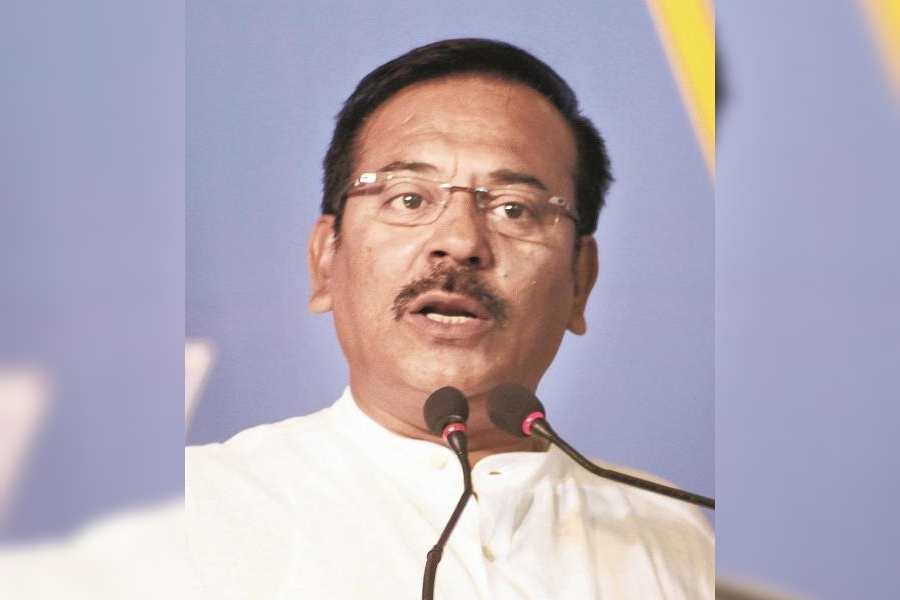
Mahfuz Alam, a key figure behind last year’s violent uprising that led to the fall of the Bangladesh government, on Sunday distanced himself from the National Citizen Party (NCP) amid internal discord over the party’s decision to pursue an electoral alliance with the Jamaat-e-Islami.
In a Facebook post, Alam said he would not be a “part of this NCP,” as divisions within the party deepened following the proposed alliance. The rift has resulted in a memorandum signed by 30 senior leaders opposing the move and the resignation of two high-ranking party officials.
The 2024 street agitation, known as the July Uprising, was spearheaded by the Students against Discrimination (SAD) platform. In February this year, a significant faction of the movement evolved into the NCP, reportedly with the backing of interim government chief Muhammad Yunus.
Alam, who previously served as information and broadcast adviser — a role equivalent to a cabinet minister — stepped down shortly before the Election Commission announced the schedule for Bangladesh’s 13th parliamentary elections on December 11, amid speculation that he could contest a key seat.
“Under the prevailing circumstances, my respect, affection and friendship for my July comrades will not be erased. But I am not becoming part of this NCP,” Alam wrote.
Rejecting speculation about his electoral ambitions, he said “it is not true that I was given a proposal from the Jamaat-NCP alliance but keeping my long standing position is more important than becoming a Jamaat-NCP alliance (candidate) from any Dhaka constituency”.
Last year, Yunus introduced Alam to former US president Bill Clinton during a visit to the United States, referring to him as the “brain behind the whole revolution” of July 2024 and describing the uprising as a “meticulously-designed” movement.
The violent protests culminated in the ouster of then prime minister Sheikh Hasina’s Awami League government on August 5, 2024. Earlier this year, the interim administration disbanded the Awami League through an executive order, barring it from contesting the parliamentary elections scheduled for February 12, 2026.
Despite maintaining no formal position within the NCP, Alam is widely regarded as the party’s ideological “guru,” known for his unconventional political views.
His remarks came just hours after NCP convenor Nahid Islam announced that the party had joined a Jamaat-e-Islami-led alliance to build broader political unity ahead of the polls. Islam, however, clarified that the decision did not reflect ideological alignment with Jamaat.
NCP joint member-secretary Mushfiq Us Saleheen, the first signatory to a memorandum titled “Principled objections to a potential alliance in light of the accountability of the July Uprising and party values”, told reporters on Saturday night that the document had been submitted to the party convenor.
The memorandum raised objections to the proposed alliance, stating that it contradicted the NCP’s declared ideology, its stance on the July Uprising, and broader democratic ethics. It highlighted Jamaat’s controversial political legacy, including its opposition to Bangladesh’s independence and alleged involvement in genocide and war crimes during the 1971 Liberation War, calling these incompatible with the country’s democratic values and the NCP’s principles.
The document further alleged that Jamaat’s student wing, Chhatra Shibir, had recently infiltrated and undermined other political parties, while spreading misinformation and propaganda to implicate the NCP in various incidents.
The memorandum became public after NCP senior joint member-secretary Tasnim Jara, a medical doctor, resigned on Saturday evening and announced her decision to contest the upcoming parliamentary election as an independent candidate from a Dhaka constituency.
Hours later, NCP joint convenor Tajnuva Jabeen, also a doctor, announced her resignation in a Facebook post, describing the alliance as “a political strategy carefully engineered and brought to this point”.
The daily “Ittefaq” reported that most female leaders within the NCP opposed any alliance with Jamaat or other religion-based parties.
Meanwhile, Bengali daily “Prothom Alo” earlier reported that discussions were held between the NCP and former prime minister Khaleda Zia’s Bangladesh Nationalist Party (BNP) over a possible seat-sharing arrangement, though no agreement was reached. “Since then, NCP talks with Jamaat have progressed positively,” the report said.
The BNP has since emerged as a frontrunner in the evolving political landscape, with its former ally Jamaat — a partner during the 2001–2006 tenure — now positioned as its principal rival, amid the absence of the disbanded Awami League.