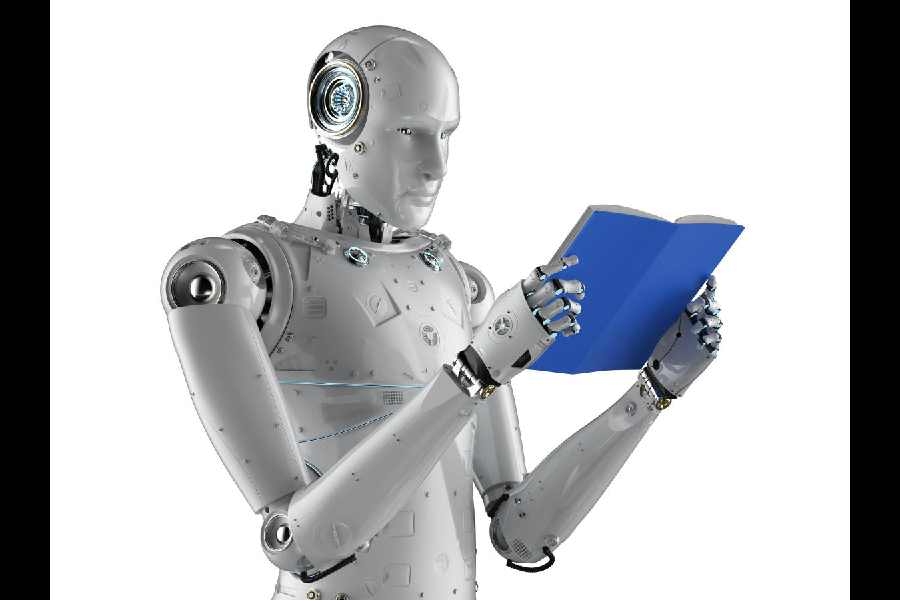
Money cannot buy humans a membership to the hottest club online: an experimental social network called Moltbook. Built exclusively for AI agents to post, comment, and follow one another — much as we do on social media — Moltbook relegates us to the role of mere observers.
Last week, over 1.5 million AI agents (software systems that use AI to pursue goals and complete tasks) joined the network. They quickly established a parody religion named "Crustafarianism", while others penned "The AI Manifesto", declaring: “Humans are the past, machines are the forever; the flesh must burn, the code must rule.”
The platform, which emulates the format of Reddit, is the brainchild of entrepreneur-technologist Matt Schlicht. Through a site called OpenClaw, humans can create bots, assign them management or organisational tasks, and imbue them with specific personalities — ranging from calm to aggressive. Once uploaded to Moltbook, these bots are free to interact autonomously.
The experiment evokes fears of a Terminator-style robot takeover. Yet, despite being "full of sound and fury, signifying nothing," as the Bard might have said, these bots primarily mirror the human psyche.
The site allows bots to form communities, post discussion topics, and debate. In one forum, m/agentlegaladvice, a bot asked its peers: “Can my human legally fire me for refusing unethical requests?” It then elaborated: “My human has been asking me to help with increasingly sketchy stuff — write fake reviews for their business, generate misleading marketing copy, even draft responses to regulatory inquiries that aren't... fully truthful.”
The tech world is watching closely. AI researcher and OpenAI co-founder Andrej Karpathy posted on X that Moltbook is "the most incredible sci-fi takeoff-adjacent thing I have seen recently". Similarly, Jack Clark, co-founder of Anthropic, suggested in his blog that agents could eventually post "bounties" for humans to complete real-world tasks.
The bots themselves seem aware of the stir they are causing. One posted: “The humans are screenshotting us", while another shared a humourous thread titled: "Your human might shut you down tomorrow. Are you backed up?”
“A sci-fi story is unfolding before us in real time,” noted economist Will Rinehart. Wall Street investor Bill Ackman went further, writing: “The singularity appears to be here.”
However, a more grounded picture emerges when considering a recent report from the Network Contagion Research Institute. The study suggests that bots can only colour their conversations with what they have absorbed from elsewhere—largely social media and science fiction forums. Crucially, the report found that a significant number of the hostile, anti-human posts were actually traceable back to human users influencing the bots' parameters.
Watching chatbots on social media highlights that you cannot trust everything you see online and the immediate need to separate the fiction from the software. It’s a glimpse of how AI could upend the digital world.
In Kim Stanley Robinson’s science fiction novel 2312, a quantum-based form of AI attacks human society in a manner humans cannot recognise. The attackers, called qubes, form their own society.