 |
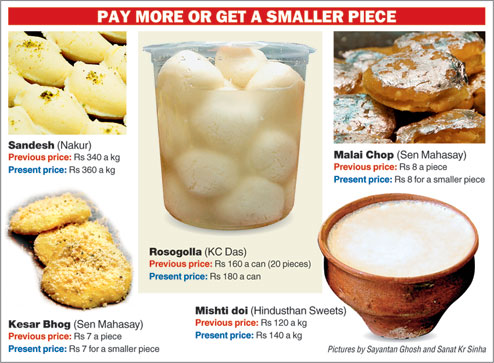
Rosogolla at KC Das is costlier by Rs 20 a can. So is a kilo of sandesh at Nakur and mishti doi at Hindusthan Sweets. Kesar Bhog at Sen Mahasay has maintained price status quo but is a size smaller.
If you are planning to indulge your sweet tooth this Puja, be ready for a pocket pinch.
Several sweet shops across the city have either tweaked their prices or have slightly changed the size of their offerings in an attempt to beat the rising cost of production, forcing many to rework their menu during the five days of festivity. Others who have not hiked the prices say they might have no other option but to join the bandwagon soon after Puja.
“There is no way out. Almost everything that goes into making sweets has become dearer and it’s difficult to survive without raising prices. We took a hit for a while and decided to increase the price of our mishti doi by Rs 20 a kilo only recently,” said R.K. Paul of Hindusthan Sweets in Jadavpur.
Paul, the secretary of the Sweetmeat Traders’ Association of West Bengal, said those who hadn’t raised prices yet would be forced to do so soon.
But why hike prices at the start of the festive season?
Sweet-shop owners say they couldn’t have waited longer to do so without incurring huge losses.
The price of sugar, the main ingredient in sweets, has more than doubled over the last two years, exceeding Rs 40 a kilo against an average of Rs 18-20 in 2010.
But the trigger for a price review seems to have been the increase in the cost of commercial LPG.
“The price of a 19kg commercial LPG cylinder has gone up by nearly Rs 300. Even in September, a cylinder was priced Rs 1,403. In October, we paid Rs 1,598 for one,” said Amitava Dey of Felu Modak at Rishra, in Hooghly.
Apart from sugar and commercial LPG, sweet makers are spending more on key ingredients like pistachio — up from Rs 1,200 to Rs 1,600 a kilo — and saffron have increased manifold over the past few months.
“We have not yet raised prices but after the festive season, there seems to be no alternative but to do so,” said Dey of Felu Modak.
With the pollution control board cracking the whip on the use of coal and diesel in kitchens, most sweet shops have switched to commercial gas that is more expensive. On an average, a sweet shop requires around 40 such commercial LPG cylinders a month. The larger ones consume many more.
“We have decided to raise only the price of our canned rosogolla by Rs 20 to retain customers. It’s difficult to stay afloat in this business in Calcutta,” said Dhiman Das of KC Das.
Insiders said higher returns from the company’s Bangalore outlets were helping keep the famous brand alive.
While some have raised prices, others have decided to play with size.
“Even the price of milk has gone up by around Rs 6 a litre. To beat the rising cost of ingredients, we have decided to slightly reduce the size of some of our signature sweets like Kesar Bhog and Malai Chop while maintaining the prices. The same holds true for the rosogolla,” said Sandip Sen of Sen Mahasay.
The one good thing about Calcutta’s favourite sweets becoming smaller is the increase in the number of pieces in a packet weighing a kilo.
Although some of the famous names like Balaram Mullick and Radharaman Mullick and Bhim Chandra Nag have managed to keep prices unchanged, those in the business say it is just a matter of time before they do.
Is your favourite sweet on the price hit list? Tell ttmetro@abpmail.com