The Supreme Court’s directive to the Bengal government to release 25 per cent of dearness allowance arrears to its employees by March 31 has prompted the Opposition to dub it a setback for chief minister Mamata Banerjee before the polls.
The Opposition accused the Trinamool government of squandering crores from state coffers in "futile legal battles" and engaging highly paid lawyers in an attempt to deny employees their rightful dues.
Welcoming the top court’s clarification that DA was not a discretionary grant but a right, the BJP, the Congress and the CPM termed the verdict the outcome of the employees' united struggle against the Mamata administration.
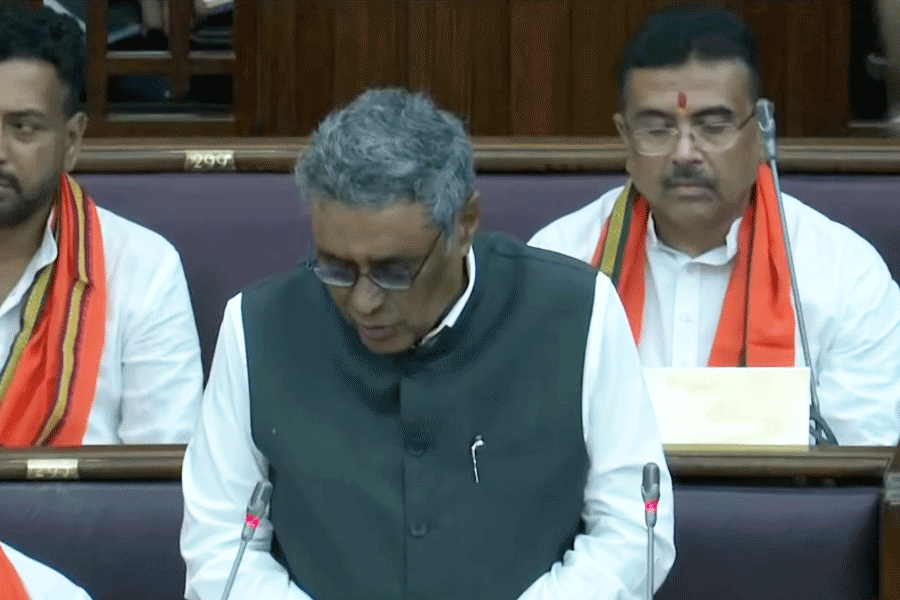
Bengal BJP chief and Rajya Sabha MP Samik Bhattacharya said Mamata’s repeated assertion that DA was merely a “grant” had been rejected by the Supreme Court. “The verdict is the victory of the united, uncompromising struggle of state government employees. I salute this fight for rightful entitlement and extend my heartfelt congratulations to all state government employees,” Bhattacharya said.
Leader of the Opposition Suvendu Adhikari said: “Today, the country’s highest court has made it clear that dearness allowance is a legally rightful entitlement of employees, not a grant.”
In a post on X, Adhikari alleged that despite losing legal battles from the tribunal to the Calcutta High Court, the Chief Minister had continued to spend crores of public money by engaging top lawyers solely to deprive employees of their rightful allowance.
“When employees protested, police batons came down upon them, yet they patiently carried out their duties and, relying on the country’s legal system, fought through legal channels. This victory is the triumph of their collective struggle, and I salute this uncompromising fight for rightful entitlement,” he said.
CPM state secretary Md Salim claimed Mamata had no intention of paying DA.
“Employees had to struggle to win their rights,” Salim said, expressing doubts over the Mamata government’s intent to implement the SC order in letter and spirit.
Former Congress MP Adhir Ranjan Chowdhury described the Supreme Court’s order as “appropriate” and “logical”, reiterating that DA was a matter of right for employees.
He accused the Trinamool government of misusing large sums of public money in the legal battle by engaging highly paid lawyers in a desperate attempt to deny employees their dues.
“Government funds were abundantly misused to deprive employees by creating obstacles. This clearly shows how anti-employee this state government is,” Chowdhury said, advising the government to make adequate budgetary provisions to clear the dues as directed by the top court.
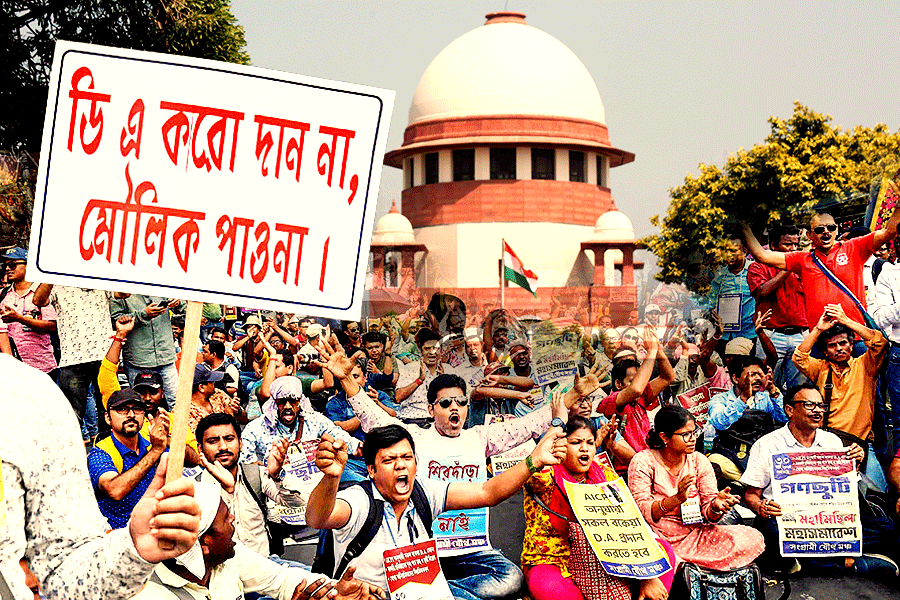
Employee organisations warned the state government against any delay in implementing the order.
Bhaskar Ghosh, convener of the Confederation of State Government Employees, which fought the legal battle, stated that if the government attempted to dilly-dally over paying 25 per cent of the dues by March 31, it would face “unprecedented” agitation.
“The fight for DA is a fight for government employees’ pride and prestige,” Ghosh said.
Trinamool leader Manoj Chakraborty, one of the founders of the party-affiliated West Bengal State Government Employees Federation, however, called it a "great verdict".
“It is indeed a great verdict, and I would urge the state government to clear 25 per cent of the dues by March 31 as directed by the Supreme Court,” said Chakraborty, who is also the chief mentor of the Nationalist Pensioners’ Association.
He further urged the state government to pay the remaining 40 per cent of the dearness allowance due under the Sixth Pay Commission recommendations, adding that timely implementation would help ease mounting discontent among employees.