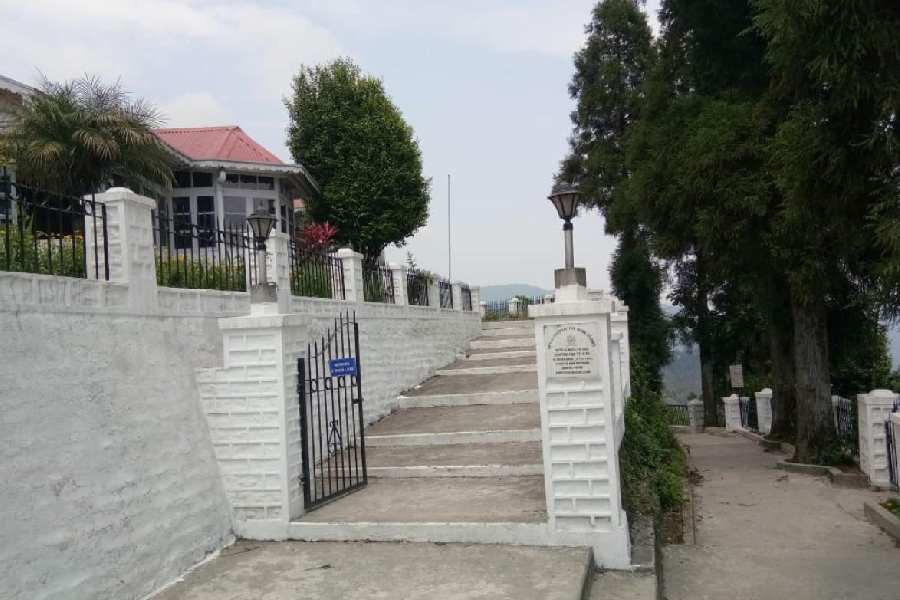
Netaji Subhas Chandra Bose’s house in the picturesque outskirts of Kurseong is meticulously maintained, preserving the memories of the great leader. However, the state heritage commission has yet to declare it a heritage property.
The house, in Darjeeling’s Giddepahar, houses the Netaji Museum and Centre for Studies in Himalayan Language, Society and Culture since 2000. Photographs and items used by Bose are displayed there.
Ganesh Pradhan, the current officer-in-charge of the Centre, said they had approached the state heritage commission nearly eight years ago with a formal request to grant heritage status to the Netaji Museum.
“We were asked to submit all relevant details on February 20, 2018. We complied immediately, but have not received any response from the commission so far,” Pradhan said.
The building was purchased in 1922 by Sarat Chandra Bose, Netaji’s brother, from Peter Leslie — a deputy superintendent of police posted in Assam. Members of the Bose
family soon became frequent visitors to the hill town.
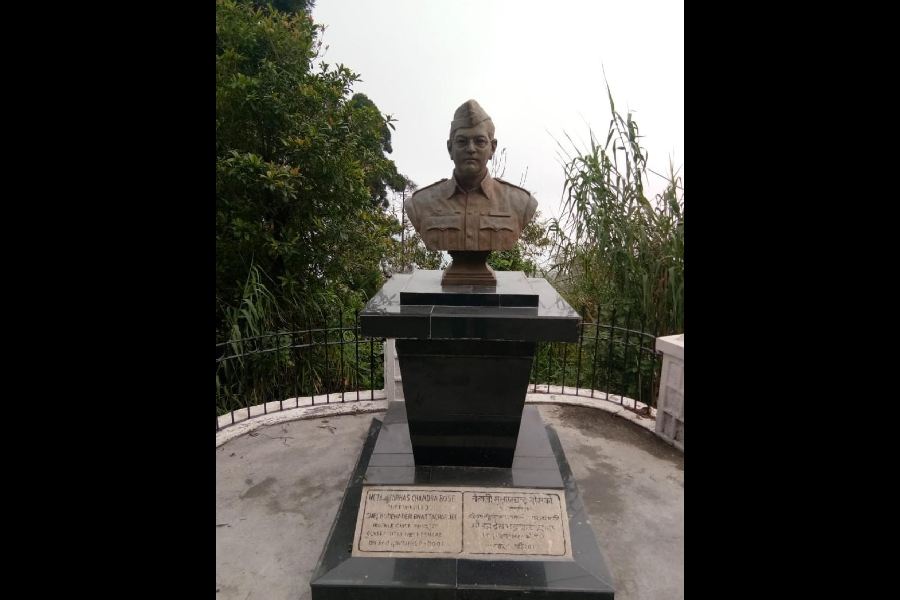
A bust of Netaji Subhas Chandra Bose on the museum presmises
Some relatives of Bose continued to visit the house until 2010, except during the Gorkhaland movement in 1986.
“When Netaji was placed under house arrest in 1939, he spent six months at the Kurseong residence. During this time, he wrote his speech for Congress’s Haripura session, letters to Rabindranath Tagore and the country’s first Prime Minister, Pandit Jawaharlal Nehru. He also wrote around 22 letters to Emilie Schenkl, whom he is believed to have married in January 1942,” Pradhan said.
Spread over nearly two acres of land, the building has three large rooms furnished with writing tables, chairs, almirahs, shawls and several personal articles used by Netaji. Four smaller rooms display an extensive collection of photographs.
Residents had earlier appealed to the state government for renovation of the structure. In 1997, the state PWD began restoration work and completed it in 2000. The property was then handed over to the Netaji Institute for Asian Studies, which functions under the state’s higher education department.
“Then chief minister Buddhadeb Bhattacharjee inaugurated the renovated building in 2000. There was also a proposal to establish a research centre here in 2002, but it has yet to materialise,” Pradhan added.
Like every year, Netaji’s birth anniversary will be observed at the Centre on January 23 in the presence of several eminent and veteran residents of the hill town, with the hope that the museum will finally receive its long-awaited recognition.
“We hope the state heritage commission will accept our demand. This house deserves a heritage status,” said Pradhan.