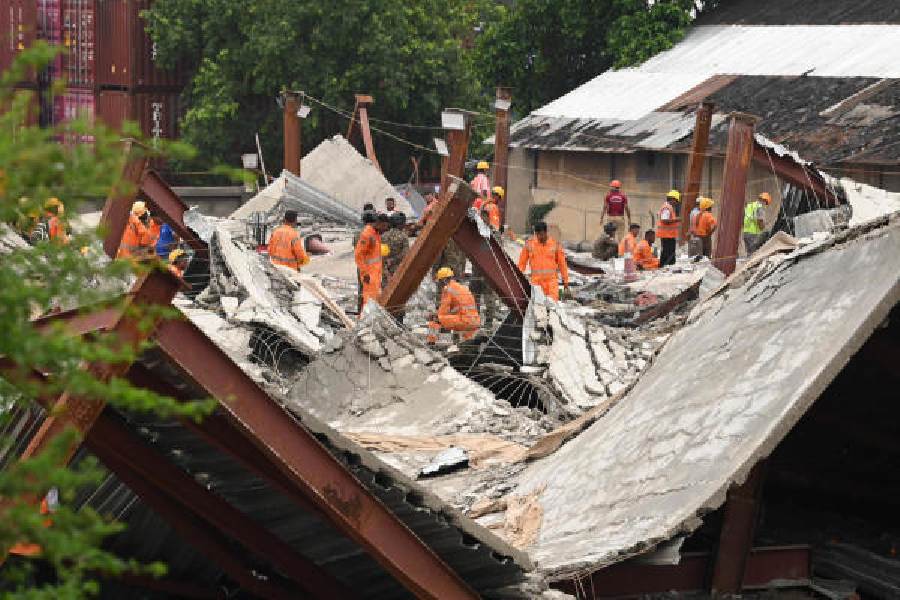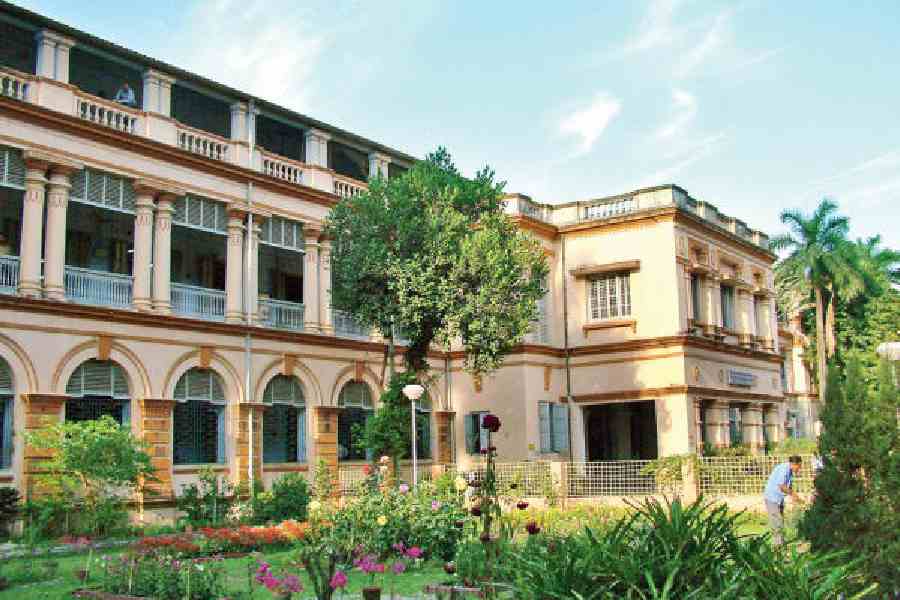
The Supreme Court has set aside a Calcutta High Court judgment that had ordered the demolition of certain residential and other properties constructed by a private firm on a plot near the Visva-Bharati University at Santiniketan in Birbhum district.
The high court had ordered the demolition of the properties constructed by M/s Aarsuday Projects & Infrastructure on the 0.39-acre plot, which, according to the high court, was like preserved land falling in the category of “khoai” land.
A bench of Justice Vikram Nath and Justice Sandeep Mehta saddled seven PIL petitioners with a fine of ₹1 lakh as it noted that they had failed to disclose before the high court at the time of the PIL filing that they, too, owned residential premises in the vicinity of the same site.
“Any interference with privately owned property, including by way of demolition or deprivation of its beneficial use, must therefore rest on a clear statutory foundation and be preceded by due consideration of all relevant factual and legal circumstances, which exercise appears not to have been undertaken in the present case,” the Supreme Court said while setting aside the high court verdict.
The apex court passed the directive while allowing an appeal filed by Aarsuday Projects & Infrastructure (P) Ltd and the local government authorities, challenging the August 2013 judgment of the high court.
The high court had directed the demolition of the building constructed by Aarsuday and and ordered the developer to pay compensation to the tune of ₹10,00,000, which was to be used for the restoration and preservation of the area in question.
Allowing the appeal, the Supreme Court observed:”...the high court had passed the impugned order based on the PIL filed by Jogen Chowdhury and six others, alleging that unregulated and indiscriminate construction activity in and around Santiniketan had resulted in serious degradation of its cultural and environmental heritage, undermining the ideals and objectives underlying the establishment of Visva-Bharati University.
“It is also evident that the writ petitioners...did not place on record any contemporaneous documentary evidence or admissible material to establish that the disputed construction was, in fact, raised on ‘khoai’ land.”
“Upon an overall consideration of the material placed on record,... it becomes evident that neither of the aforesaid reports furnishes any clear, contemporaneous, or objective material establishing that the subject plot on which the disputed construction was raised was itself ‘khoai’ land or that construction was totally impermissible thereupon,” the bench said.