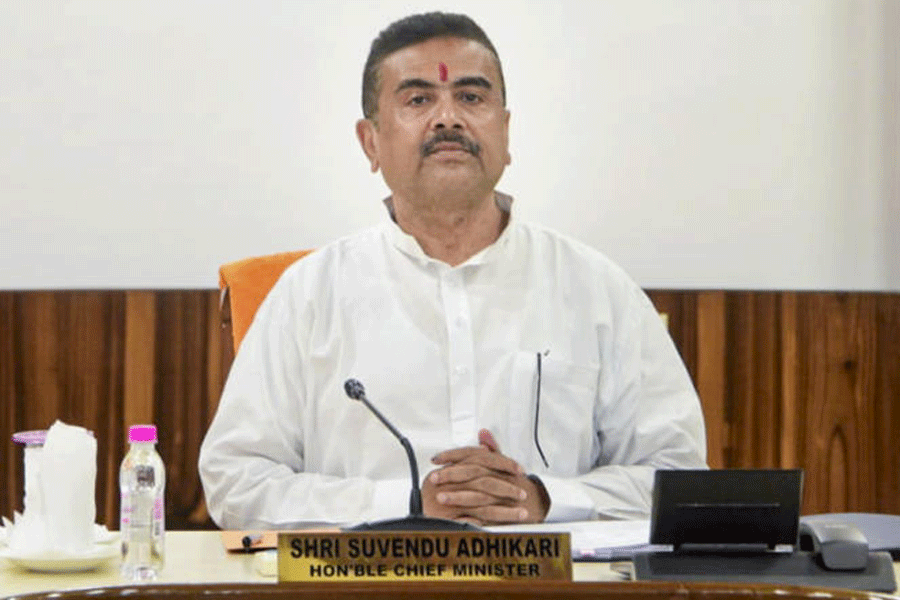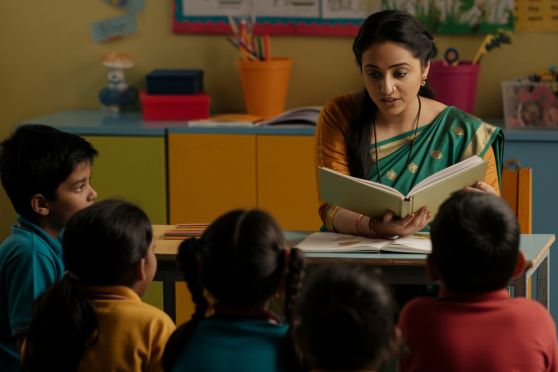
The Suvendu Adhikari government on Thursday banned private tuition by teachers of government and aided schools.
The state education department has directed district inspectors of schools at the primary and secondary levels to examine allegations of teachers conducting private tuition and take necessary action accordingly.
An order signed by the deputy director of school education (administration) and addressed to the inspectors states: “It is pertinent to mention that as per the power conferred under the Section 28 of RTE Act, 2009... the education department issued a notification... which stated that no teacher working in school shall engage himself/herself in private tuition or private teaching activity in any manner whatsoever in compliance with the section 28 of the RTE Act, 2009.”
The order adds: “In addition, as per... education department notification... no teacher shall engage himself/herself in any sort of private tuition for personal gain.... However, the teacher shall cooperate in the matter of remedial coaching organised by the institution.”
Section 28 of the Right of Children to Free and Compulsory Education (RTE) Act, 2009, prohibits teachers from engaging in private tuition or teaching activities.
The provision aims to ensure that teachers focus on delivering quality education within the formal schooling system.
However, the prohibition largely remained on paper. With classroom teaching standards in government-run institutions reportedly declining, many students are forced to rely on private tutors for academic support.
Thursday’s order notes that the department received a notice from the National Human Rights Commission regarding alleged violations of Section 28 of the RTE Act, and a Calcutta High Court directive.
According to the order, a complainant alleged that teachers were “flagrantly violating” Section 28, and the court’s mandate “by engaging in illegal private tuition”.
An education department official said the complainant also accused teachers of “exploiting students” and threatening to lower academic scores if they did not take
private tuition.
Such practices “deprive private teachers of their livelihood,” the order states.
It is not the first time the education department has attempted to crack down on private tuition.

In September 2024, the Trinamool government had written to heads of government and aided schools, instructing that teachers should not engage in private tuition.
The circular, issued on September 23, 2024, followed a petition by the Private Tutors’ Welfare Association before the high court, alleging that some government and aided school teachers were engaging in private tuition, affecting their interests.
The department had then attached a list of alleged errant teachers along with the circular.
Ekramul Bari, a lawyer who represented the Private Tutors’ Welfare Association in the 2024 petition, said there had been no serious follow-up to the earlier directive. “We hope the department will seriously implement the bar on private tuition now,” Bari said on Thursday.
He added that many youths now depend on private tuition for their livelihood due to a lack of formal jobs. “The interests of private tutors are hampered when government school teachers engage in private tuition. Besides, when teachers receive a decent salary, why should they engage in private tuition?” Bari said.
Several school heads, who often struggle to ensure effective classroom teaching, welcomed the order.
Raja De, headmaster of Mitra Institution (Bhowanipore), said: “Teachers must focus on classroom teaching. They must be prevented from engaging in private tuition.”