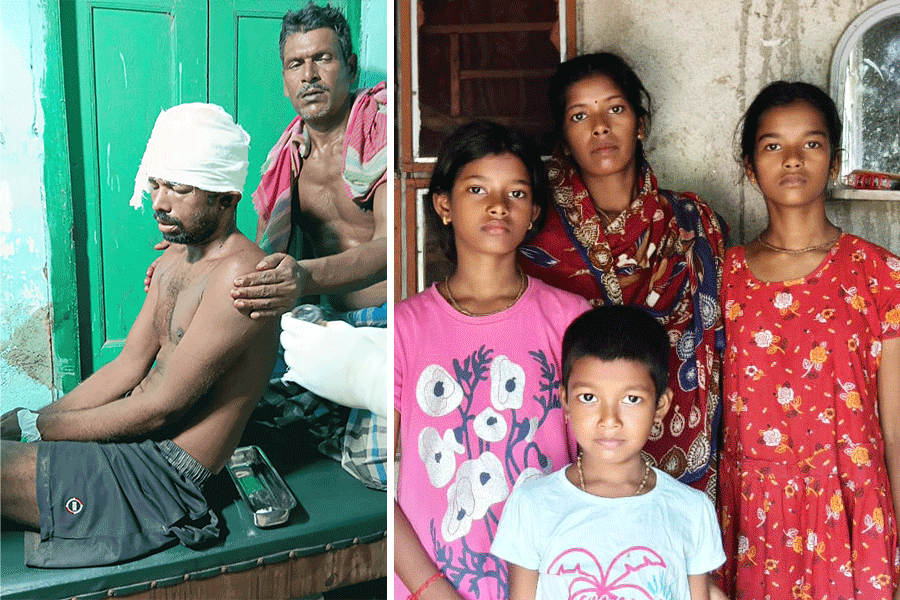
Just after dawn on Tuesday, in a narrow tidal channel deep inside the mangrove forests of the Sundarbans, a tiger lunged out of nowhere and attacked Gopal Naskar, a 35-year-old crab gatherer.
Naskar had entered the Gajikhali creek, part of the Sajnekhali range of the Sundarban Tiger Reserve (STR), five days earlier with four other men from his village. Like many others of this fragile delta who navigate the boundary between life and death every day, they were harvesting crabs from creeks patrolled by the apex predators.
What happened next doesn’t happen too often.
“We started shouting, making as much noise as we could,” Tapas Sardar, one of the men who was out with Naskar, told The Telegraph Online. “The tiger let go and ran.”
Naskar was first taken to Kultali Gramin Hospital and later transferred to the trauma care facility at Kolkata’s state-run SSKM Hospital in a critical condition. When The Telegraph Online spoke to Sardar on Wednesday morning, he said: “We’ve been kept in the dark, struggling to obtain clear updates on his treatment and were unable to speak to the doctor.”
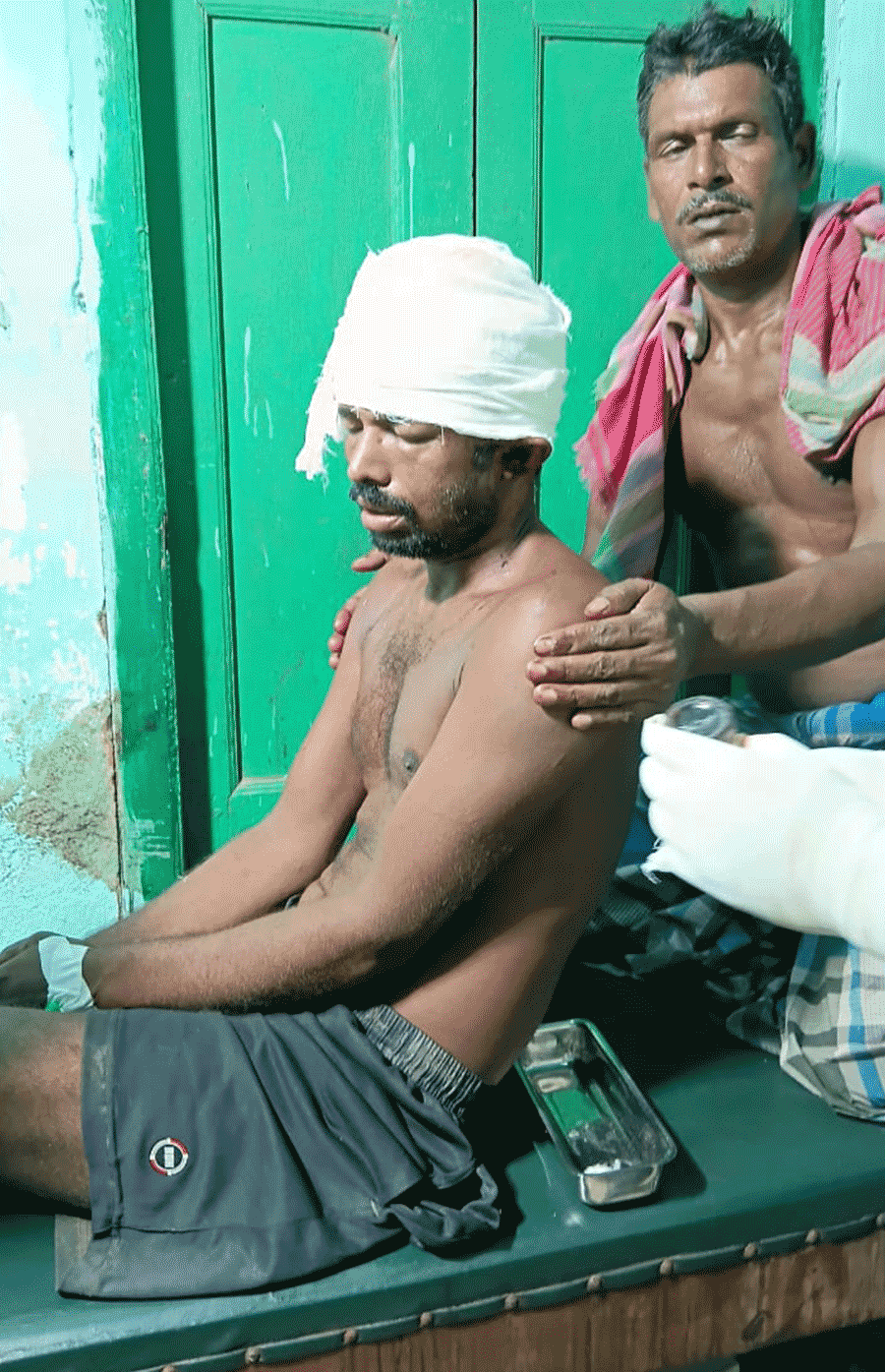
Gopal Naskar injured in a tiger attack in the Sundarbans.
Naskar died a short while later.
“Gopal died due to lack of medical facilities in Sundarbans and due to what is increasingly clear: – the utterly indifferent treatment or lack of it in Kolkata as alleged by his family,” Ranjit Sur of the Association for Protection of Democratic Rights (APDR) said. “Trauma care treatment cannot be farcical for patients who don’t have any influence.”
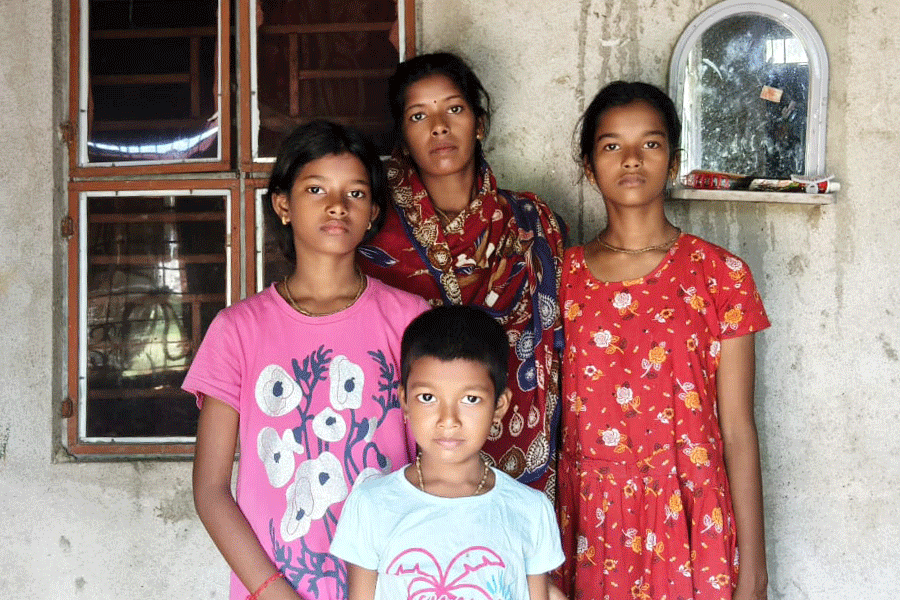
Gopal Naskar's wife and daughters.
The attack was part of a string of recent incidents that highlight the persistent risks faced by communities living along the edge of the world’s largest mangrove forest.
Over four days starting May 31, at least four fishermen and crab collectors have been killed in separate tiger encounters in the Sundarbans, including in Gajikhali and Haldibari, according to local residents and rights groups.
Two of the victims’ bodies are yet to be recovered, a recurring complication in the labyrinthine terrain where dense foliage and tidal currents often hinder search efforts.
Apart from Naskar, the list of the dead since May 31 reads: Gopal Chakraborty, 40, Goshto Jana, 55, and Ram Prasad Bagani, 47. The bodies of Jana and Bagani, who were killed in a pre-dawn attack according to witnesses, have not been found.
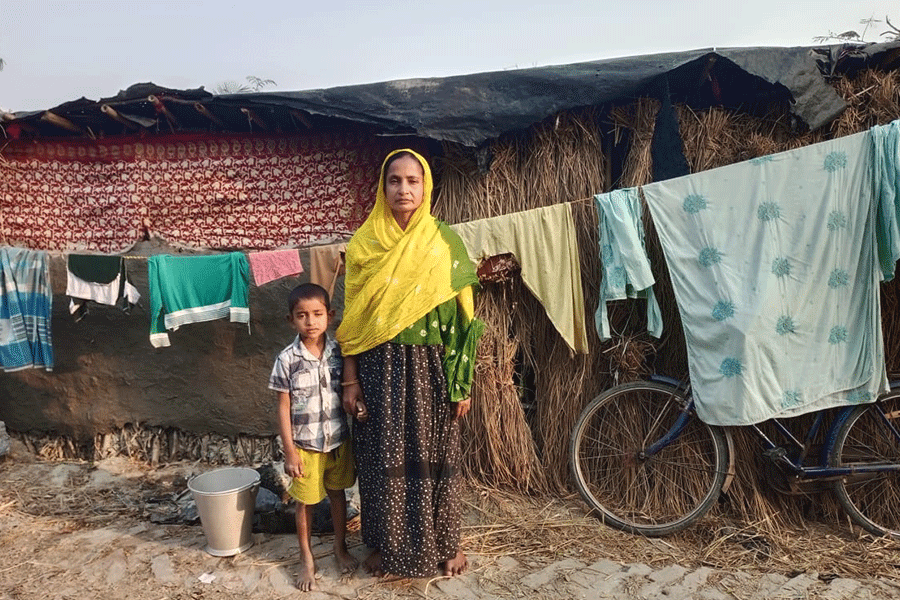
Fight for dignity and compensation
According to data compiled by the APDR, an organisation working with the families of those killed or attacked by tigers in the Sundarbans, at least 10 incidents of human-tiger encounters have been reported so far this year, resulting in eight deaths and two injuries.
The APDR has also written to the police about untraceable bodies but received no response yet.
Such disappearances carry consequences beyond grief for the family. Without the recovery of the bodies, which happens occasionally, it can be difficult for families to establish official proof of death, a requirement for accessing compensation and social support.
The Sundarbans, a Unesco World Heritage site, has long been a flashpoint for human-animal conflict. For residents of its remote islands, the forest is both a lifeline and a source of constant peril, since fishing, honey collecting and crab harvesting, occupations that require entry into tiger habitat, remain among the few available livelihoods.
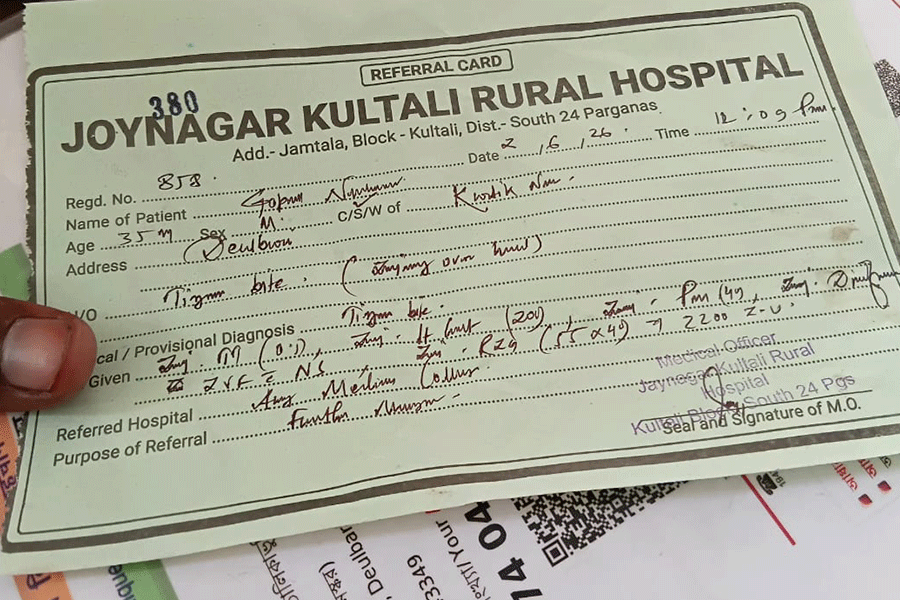
The referral card issued by Kultali rural hospital in the Sundarbans.
“These are not isolated events,” Sur said. “The question of compensation must be addressed, and it must be done without forcing people to take the legal route to receive compensation that is rightfully theirs.”
Under guidelines shaped by the Supreme Court, families of those killed in encounters with wildlife may be eligible for compensation as high as Rs 10 lakh. But local activists and residents say that bureaucratic hurdles — including the requirement to prove the deaths by locating the bodies — often delay or prevent payments altogether.
“There is also growing resentment among villagers, who accuse authorities of insufficient efforts to retrieve bodies after attacks. A serious allegation if found to be true,” Sur said. “If bodies are not recovered, it becomes very difficult to prove a tiger attack. For families, that can mean not just the loss of a loved one, but the loss of any financial support. It deepens poverty in communities that are already on the edge.”
The frequency of the attacks suggests the presence of a maneater in the “attacked forest compartment,” in the opinion of Soma Sarkhel, a researcher on man-animal conflict specialising in the Sundarbans.
“One must also remember that STR [Sundarbans Tiger Reserve] and its associated forest divisions is a designated tiger territory,” she said. “To prevent such accidental deaths, there is no single measure. Rather alternative livelihood opportunities, intervention of local entrepreneurs and increasing awareness not to venture into the prohibited zones must be raised among the fringe people.”
The Kultali block, where some of the attacks have taken place, remains the second-most impacted region in India, according to a recent Wildlife Trust of India (WTI) report titled ‘Human-Tiger Mitigation and Coexistence Project across India and Bangladesh’.
Key strategies recommended by the project include deployment of rapid-response teams, promoting alternative livelihoods to reduce reliance on forests, using nylon net fences to protect villagers from tigers and looking for tech-driven solutions like drones to prevent attacks.
When The Telegraph Online had reached out to Naskar’s family on Wednesday morning, they were hopeful. His father, his wife and three daughters — Laboni, 13; Shraboni, 11; and Sonamoni, 8 — were waiting for his return home.
Not only will Naskar not return, going by precedence, just like several “tiger widows”, his wife Menoka and the wives of the others killed since May 31 will now have to wage a battle for compensation and dignity they might never win.