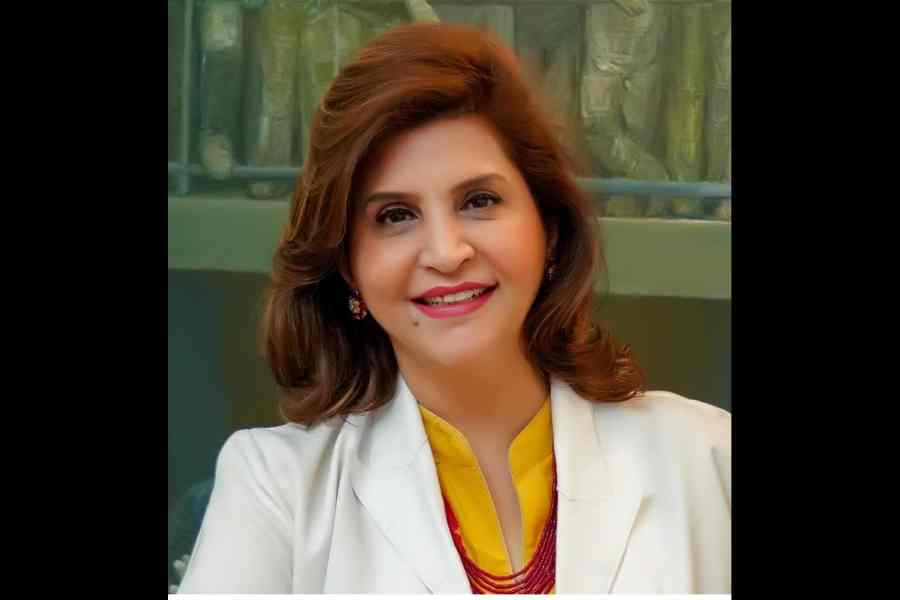
More than 40 per cent of India’s population is children, and focusing on children’s health can reduce the burden of diseases in adults in future, the president of the Indian Academy of Paediatrics said on Wednesday.
The focus must also remain on improving children’s quality of life rather than just working to reduce infant mortality, malnutrition and stunting, said Neelam Mohan, the academy’s president.
Mohan was in Calcutta for the 63rd annual conference of the Indian Academy of Paediatrics, Pedicon 2026, which held from January 16 to 20.
Mohan added that India was at a crossroads. While stunted growth or malnutrition were still realities for the country, some children are overweight or obese.
“We have to focus on the quality of life and not only the survival of children. The challenge now is to ensure a good quality of life for children,” said Mohan, also the senior director at the department of paediatric gastroenterology, hepatology and liver transplantation of Medanta-The Medicity, Gurugram.
“If we do not focus on children now, it will increase the burden of diabetes, heart diseases or other non-communicable diseases when they become adults,” she said.
“On the one hand, we have stunting and malnutrition in children, while on the other, there are overweight children,” said a doctor.
Mohan noted that vaccination rates fall short of the desired levels, with only around 75 per cent of the child population receiving vaccinations, and there is a significant under-reporting of mental health issues among children.
India’s universal immunisation programme, under which all children are supposed to receive free vaccines against nearly twelve diseases, starts from birth and continues till a child attains 16 years of age.
Doctors said vaccine hesitancy, myths that vaccines can harm and follow-up vaccinations were the challenges. “People tend to think that vaccines are required till one or one-and-a-half-years, but they rarely come for a catch-up vaccination at 10,” Mohan added.
Doctors also harped on missing mental health issues in children. One in seven adolescents in India has mental health issues, but nearly 80 per cent of these are not identified at the right time. The lack of an adequate number of trained psychologists and the lack of awareness among people about mental health conditions were to blame, said doctors.