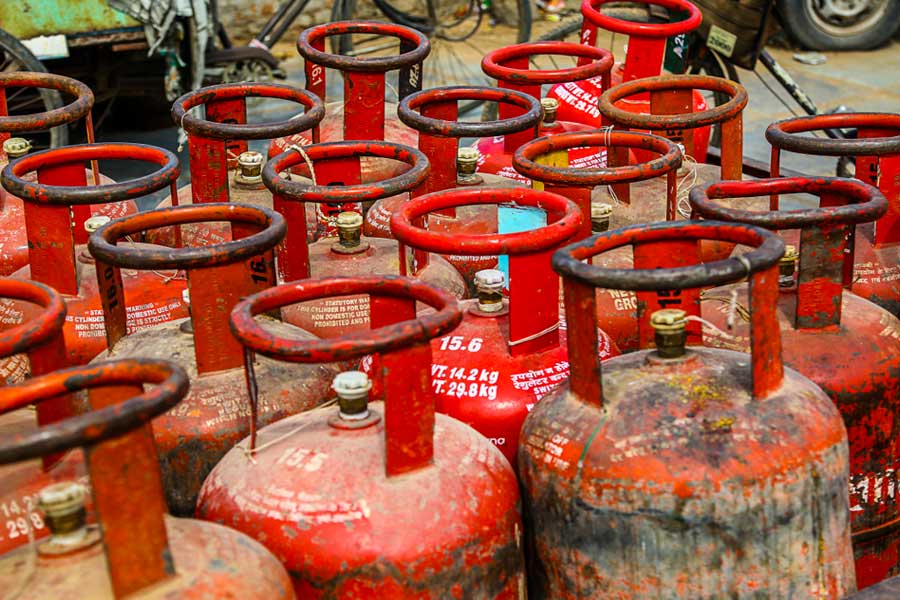
A flood of phone calls from customers desperate for domestic LPG cylinders has crippled the centralised servers of oil and gas companies, distributors said on Wednesday.
Distributors and company officials described the situation as a classic case of panic booking triggered by the war in West Asia.
An Indian Oil official said: “No system is designed to handle so many calls. One single customer made 1,050 calls on Wednesday. Our system crashed because of the enormous surge in call volume. We have increased the bandwidth and hope the system will be restored soon.”
Uniformed staff delivering LPG cylinders to doorsteps in vans were allegedly attacked, and cylinders snatched in some cases.
The Centre imposed a 25-day gap between refill bookings for domestic cylinders. Stricter curbs have been placed on the use of commercial cylinders, with the Centre asking oil companies to prioritise essential services such as hospitals and schools over commercial establishments.
Chief minister Mamata Banerjee accused the Centre of not being prepared for the situation, 11 days into the war. “The Centre should have taken proper stock of the inventory and given consumers a brief window before imposing the curbs,” she told ABP Ananda.
Indane, the flagship LPG brand of Indian Oil, is the largest domestic supplier in Bengal, serving nearly 50 lakh customers in the “Calcutta area”, which also includes North and South 24-Parganas.
Industry sources said Bengal has a combined customer base of around 2.75 crore domestic LPG consumers. On average, around 5 lakh cylinders are supplied every day. “For the past few days, around 10 lakh applications have been reported daily,” said a source.
Sources in Indane said that before Friday (March 6), around 1 lakh refill booking requests were registered daily in this zone. On Friday, the number rose to around 1.45 lakh. On Saturday, it climbed further to about 1.9 lakh.
Other oil companies experienced similar disruptions, though on a smaller scale.
Distribution agencies had long queues throughout Wednesday, as many people could neither book a refill nor check the status of their booking, forcing them to visit agency counters. Some companies allow bookings through apps, but most customers still rely on phone calls. Since the servers were down, staff at counters were unable to provide much assistance, worsening the crisis.
“This is a classic case of panic buying,” said Bijan Behari Biswas, spokesperson for the Indane LPG Distributors’ Association in Bengal. “Many people have cylinders at home, but they are afraid they might not get another one soon. They are scrambling to secure another at any cost, and that has led to this crisis.”
Biswas owns Gas and Gadgets, a distribution agency in Behala. Around 2pm on Wednesday, nearly 50 people were waiting outside his outlet at Manton Supermarket on Diamond Harbour Road.
“I have been trying to book a cylinder for the past two days. Every time I call, I am told the number is either invalid or busy. The single cylinder I have left has been in use for the past five days,” said Behala resident Sambhu Naskar.
Nearly 100 people were waiting outside an agency on Suresh Sarkar Road in Entally around 1.30pm.
Madhumita Biswas, 60, said she had been waiting for over two hours. “I have only one cylinder left. My mother is 85 and needs her meals on time because of health issues. I don’t know what will happen when this cylinder runs out. I cannot book on the phone,” she said.
Ramkrishna Chakraborty, secretary of the Indane LPG Distributors’ Association, also blamed panic among consumers. “Many customers want to stock up because they are worried about the future. In reality, the situation is not that bad. It would be difficult to find a home where cooking has stopped because of a lack of cylinders,” said Chakraborty, who owns an agency in Dum Dum.
He said there had been a 20% dip in the production and supply of domestic cylinders from oil companies.
Attacks on LPG cylinder delivery personnel were reported from Karaya in south Calcutta, and Dum Dum and Madhyamgram in the north. Some distributors said delivery staff were now reluctant to go out for deliveries.
In some areas, delivery vans were stopped by employees of restaurants facing closure because of commercial restrictions. “They offered extra money for the cylinders. When the delivery men refused, they were beaten up,” a distributor said.