The state government will install cloth-bag vending machines in markets within three months and start imposing fines on people using single-use plastic bags after the machines are set up, municipal affairs minister Agnimitra Paul said on Tuesday.
Paul, who inspected several canals across the city to assess drainage preparedness ahead of the monsoon, was asked whether the new BJP government had a plan to tackle Calcutta’s plastic menace.
Engineers of the Kolkata Municipal Corporation (KMC) have frequently blamed plastic bags clogging gully pits and manholes for delays in clearing waterlogged roads. Pumps at drainage pumping stations have also stopped functioning at times after plastic became entangled in motors.
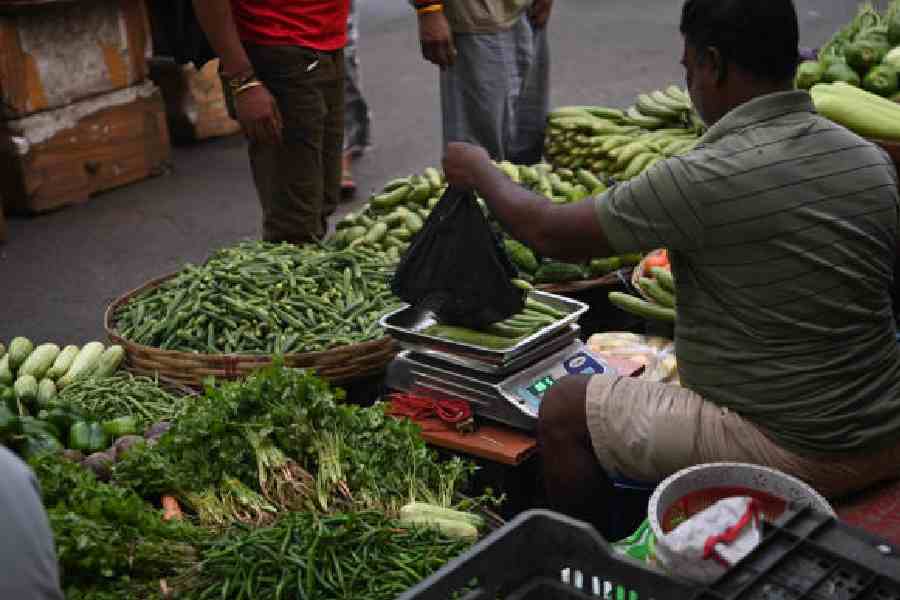
Although single-use plastic bags were formally banned in July 2022 in Calcutta and elsewhere in Bengal, they remain widely available across markets.
From grocery stores and milk booths to fish, meat, fruit and vegetable sellers, single-use plastic bags continue to be used routinely.
Over the years, various state government agencies continued to disagree over who should lead enforcement of the ban.
“We will install cloth-bag vending machines in markets. We will do so within three months. We will start imposing fines on people who use the bags after the machines are set up,” Paul said.
The minister also appealed to residents not to throw plastic bags indiscriminately, saying they eventually choke drains and worsen water-logging.
Plastics less than 120 microns thick are loosely categorised as single-use plastic. They have little value in the recycling market.
Waste-management experts said such products cannot be recycled. Instead, they remain in the environment for years, breaking down into microplastics and nanoplastics that mix with soil or enter water bodies.
The World Health Organisation said in a 2022 publication that microplastic particles “have been detected in air, water, soil, food and beverages, indicating that exposure of humans to these particles is ubiquitous”.
Waste segregation
Paul also said morning waste collectors would stop picking up garbage from households that fail to segregate dry and wet waste within seven days. “There are cities where waste is segregated into six categories. We are asking people in Calcutta to separate waste into just two types: wet waste and dry waste,” she said.
The Trinamool-run KMC introduced waste segregation at source across all 144 wards in December 2022, expanding a programme that began in seven wards in 2010 and was later extended to 20 more wards in 2020.
The citywide segregation drive, however, never fully took off. In recent months, segregation has become minimal.
At several compactor stations, dry and wet waste are no longer separated and are dumped together. Garbage carts collecting waste from households each morning also carry mixed waste.