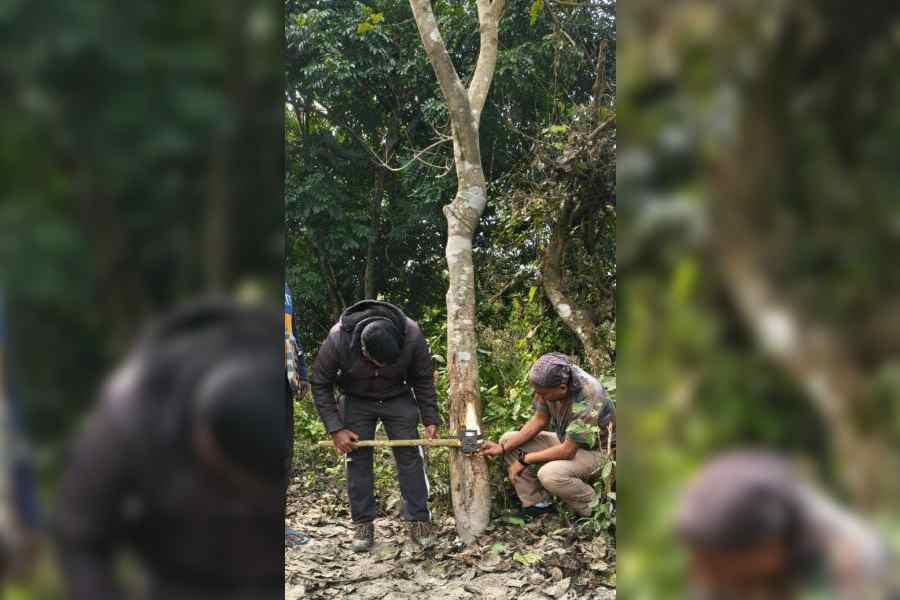
At least 210 cameras have been installed at the Jaldapara National Park in Alipurduar district to strengthen wildlife monitoring in the sanctuary.
A source stated that the cameras cover 212 square kilometre area of the park. This is the first time such a large-scale camera deployment has been undertaken in Jaldapara.
The sanctuary has been divided into 105 grids, with two cameras — one infrared and one white flash camera — in each grid. The white flash cameras capture high-resolution images during the day and the infrared cameras enable image capture at night, helping document nocturnal and elusive species.
Forest officials said the grids were carefully demarcated based on landscape features, habitat connectivity, animal movement corridors and public movement patterns to ensure comprehensive coverage and minimise the chances of missing wildlife movement. Field staff have already been trained to collect and manage data from the
camera traps.
The data generated through this exercise is expected to play a critical role in park management by:
- Helping understand movement patterns and habitat use, especially in sensitive and high-activity zones
- Strengthening anti-poaching and protection strategies by identifying critical areas frequented by wildlife
- Supporting science-based decision-making for habitat management, grassland restoration and corridor protection
- Enabling long-term monitoring of biodiversity trends and evaluation of management interventions
- Assessing population status, distribution and relative abundance of key wildlife species
“This is the first time such a large number of cameras have been installed in the sanctuary,” said Nabikanta Jha, the assistant wildlife warden of Jaldapara. “These cameras will help us collect data on any animal crossing the camera sites. The visuals will allow us to understand animal movement, area-wise species presence, feeding patterns, food availability and prey–predator relationships.”
Another forest official said the cameras could also help capture images of rare species moving through the sanctuary.
Jaldapara National Park is renowned for its rich biodiversity, particularly the one-horned rhinoceros. The park is home to nearly 350 rhinos. The sanctuary also houses four species of deer, leopards, elephants and several other animals.
Poachers often target Jaldapara. Forest officials said the camera network would also aid in tracking trespassers and strengthening vigilance against illegal activities.
Several hardcore poachers active in the sanctuary have already been arrested and authorities said they remain determined to prevent further illegal operations.