Boys can cook, girls can play kabaddi.
In the Sundarbans delta, where social prejudice often hardens into tradition, a programme initiated by a Calcutta-based social organisation is challenging deeply rooted notions of what boys and girls are “meant” to do, using play and everyday skills to impart lessons in gender equality.
The initiative is being led by Rupantaran Foundation, which began work in several remote villages of the Sundarbans in 2018 with the support of the local administration.
At one level, the effort encourages girls to cross the invisible boundaries that confine them to courtyards and homes, urging them to take up outdoor sports generally meant for boys. On other hand it asks boys to step into kitchens and learn cooking, treated in traditional societies as the responsibility of women and girls.
Together, both attempt to dismantle prejudice that has passed, unquestioned, from one generation to the next.
The social experiment that started in the Joynagar-I block has since expanded to other parts of the delta.
That slow but visible change was on display on Thursday at Haripur in Namkhana, where the culmination of years of effort took the form of a public competition.
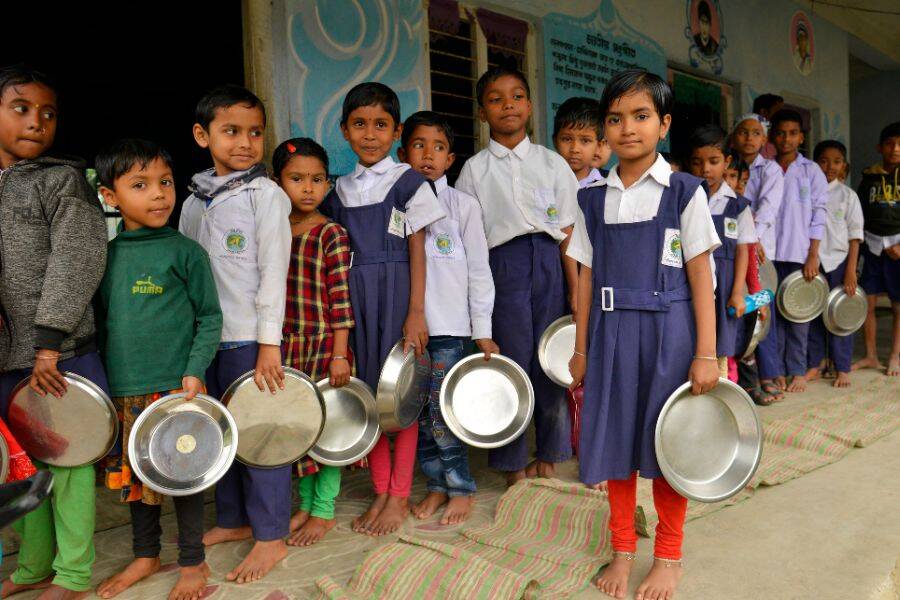
As many as 386 boys and girls from 33 villages participated, each taking part in activities traditionally associated with the opposite gender.
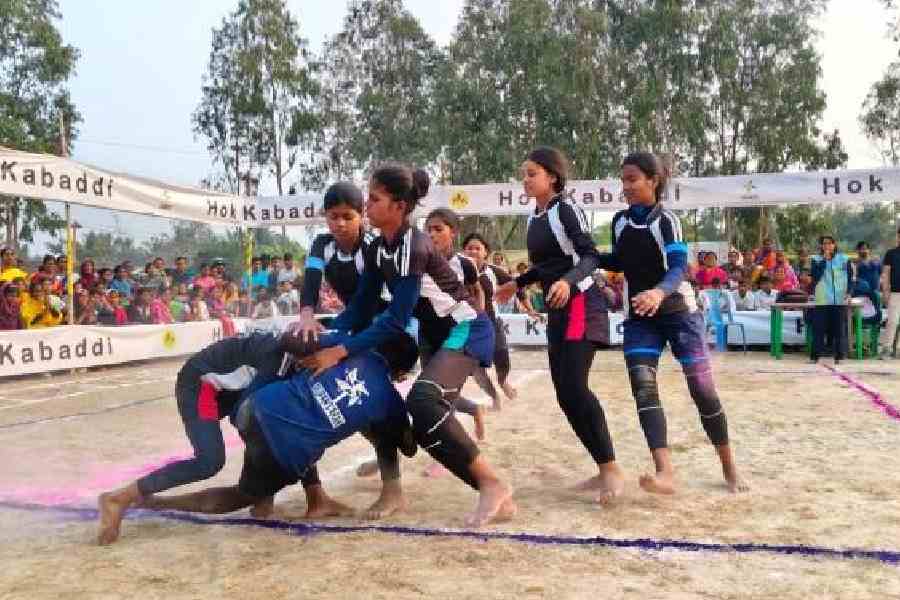
Girls played kabaddi, a physically demanding contact sport, while boys competed in a “Cook King” contest, presenting dishes prepared by their own hands.
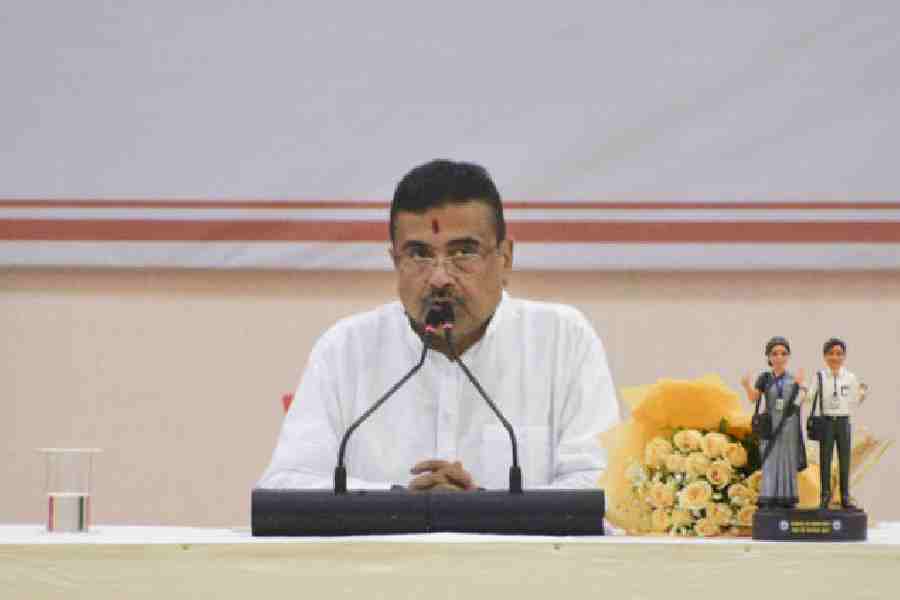
“Since 2018, we have been trying to bring Sundarbans girls to play outdoor games beyond their courtyards,” said Smita Sen, secretary of Rupantaran Foundation, speaking to The Telegraph.
“Teenage girls are often afraid of stepping into what is seen as the ‘boys’ field’ because of restrictions at home. After our first 'hok kabaddi' programme in 2018, we saw several girls take to sports. Many of them can travel by train or bus, yet they hesitate to play in open fields because of social barriers.”
According to Sen, consistent lessons in gender equality have helped girls push back against these constraints. “Crossing the courtyard, they are gradually becoming eager to play outdoor games,” she said.
Boys are also taught that gender equality begins at home, and that the kitchen is not an exclusive domain for women. “We wanted to break this deeply entrenched notion that men do outside work while women remain confined to household duties like cooking,” Sen said.
"From childhood, girls are given cooking utensils and boys are given bats or balls. In this division, we forget that cooking is a skill—an essential life skill that everyone, regardless of gender, should know. That is why we organised the Cook King competition alongside kabaddi.”
The journey, particularly for girls, has not been easy. “The path was full of challenges against so-called social norms,” said Sen, also the founder and director of the organisation. “It took seven years to clear the way for girls in different parts of the Sundarbans, where gender disparities are still widespread.”
Rupantaran found that poverty and repeated crises —cyclones and the Covid-19 pandemic among them — had further deepened discrimination.
“Girls were deprived of education, nutritious food, their liberties and rights, and were often forced to work as breadwinners,” Sen said.
“Even those who managed to go to school were not allowed to play outside the courtyard. We simply tried to bring them out and encourage them to live healthier lives.”
Tulika Das, chairperson of the West Bengal Commission for Protection of Child Rights, who judged the competition, expressed satisfaction at the visible shift in attitudes among children and parents alike. “This is a very meaningful endeavour,” she said.
At the end of the day, the girls of Mousuni Island emerged champions in kabaddi, while the boys of Patharpratima won the Cook King competition.
Small victories, perhaps, but symbolic steps in a larger struggle for gender equality in the Sundarbans.