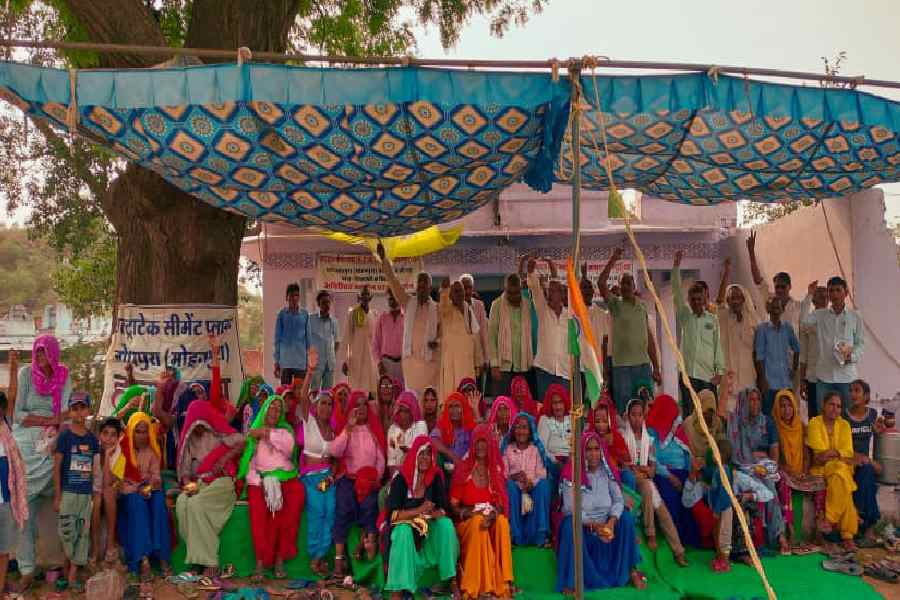
Labour experts and activists on Sunday cited a substantial reduction in allocations under a key employment-linked incentive (ELI) scheme and "inadequate" funds provision for the national rural job scheme VB-G RAM G to question the government's commitment to direct job creation.
The government has slashed the budget allocation for the Pradhan Mantri Viksit Bharat Rozgar Yojana (PMVBRY), an ELI scheme, by over 90 per cent in the revised estimate (RE) for 2025-26 over the budgetary estimate (BE).
The government has allocated ₹95,692 crore to Viksit Bharat Guarantee for Rozgar and Ajeevika Mission (Grameen) (VB-G RAM G), which will replace the Mahatma Gandhi National Rural Employment Guarantee Act (MGNREGA) from 2026-27. Experts believe that the allocation is much less than the required funds, as the VB-G RAM G scheme seeks to increase the guaranteed days of employment per year per household to 125 days from 100 days under the MGNREGA.
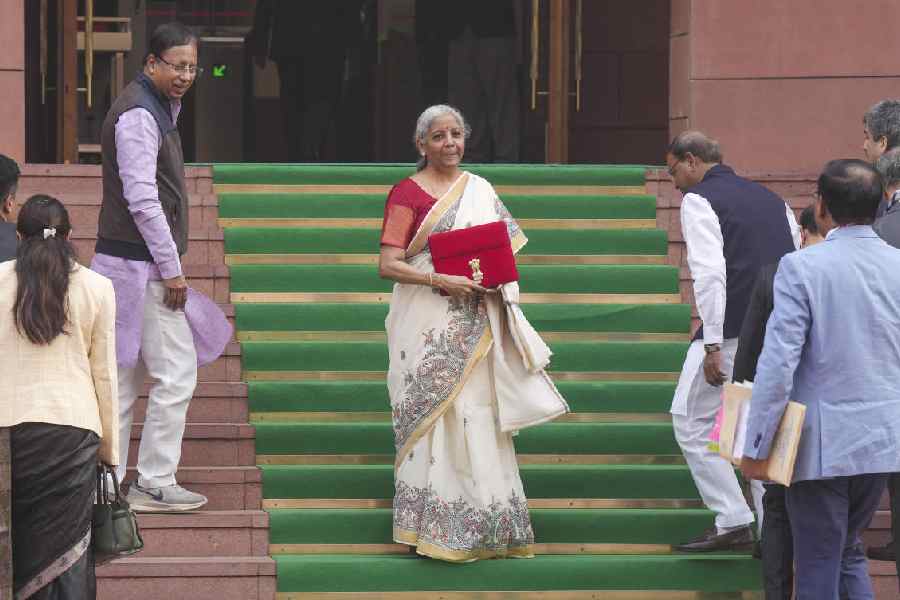
Finance minister Nirmala Sitharaman on Sunday allocated ₹20,083 crore for the PMVBRY for 2026-27. The scheme was announced in the budget for 2024-25, immediately after the NDA won the 2024 general election.
The government had allocated ₹20,000 crore for the scheme in the BE of 2025-26, but reduced it to ₹848 crore in the RE of the same financial year.
The ELI scheme aims to benefit an estimated 1.92 crore first-time formal sector employees engaged in jobs created between August 1, 2025, and July 31, 2027. It offers employees a wage incentive of up to ₹15,000, paid in two instalments. First-time employees with monthly salaries up to ₹1 lakh are eligible for the scheme.
The PMVBRY also seeks to incentivise employers to generate additional jobs by providing them up to ₹3,000 per month for two years for each additional employee with sustained employment for at least six months. Establishments with fewer than 50 workers will be required to hire at least two additional employees, and those with 50 or more workers will have to hire five additional workers on a sustained basis for at least six months to avail of the benefit.
Labour economist Prof. Shyam Sundar, an adjunct professor at MDI Gurgaon, said the government usually creates jobs by either boosting infrastructure or directly investing in job schemes. The ELI and VB-G RAM G schemes are aimed at creating jobs directly.
“Direct employment creation does not appear to be the strategy of the government. The ELI scheme is a good programme to create employment directly. But reduction in funds and the delay in implementation have affected the performance under this programme,” Sundar said.
He welcomed the announcement for the expansion of the semiconductor sector in the budget, saying it would create indirect jobs.
Sundar said the VB-G RAM G scheme might see a decline in popularity and performance as the funds-sharing formula had changed. Now the states will have to bear 40 per cent of the expenditure, up from 10 per cent under the MGNREGA.
The NREGA Sangharsh Morcha, a civil society organisation, said the budget documents also gave no indication on when the VB-G RAM G scheme would be notified and what the state-wise “normative allocations” were likely to be.
“This uncertainty and confusion are putting state governments in a difficult position, as they have to make plans in the dark, including significant budget allocations,” it said in a media release.