Calcutta High Court on Wednesday disposed of a petition by the Trinamool Congress on its right to privacy after the Enforcement Directorate told the court they had not seized anything from the two I-PAC locations raided on January 8.
Justice Suvra Ghosh was supposed to hear two petitions, one by the ED and the other by Trinamool.
The petition by the ED, which demanded the return of the “documents and electronic evidence” that were allegedly taken away by chief minister Mamata Banerjee during the ED’s search-and-seizure operation, was not heard on Wednesday because a similar petition is pending before the Supreme Court.
The Supreme Court will take up on Thursday the ED’s plea to direct the CBI to register FIRs against Mamata, the Bengal DGP, the Kolkata Police commissioner and other officials for offences relating to dacoity, robbery, attempt to murder and house trespass during the raids on I-PAC.
The Bengal government has also filed a caveat seeking to be heard before any order is passed on the ED’s plea. The hearing is listed before a bench of Justice Prashant Kumar Mishra and Justice Vipul M. Pancholi.
In the other petition before the high court, Trinamool prayed that its political data be protected.
“Our only prayer is that, being a political party, we have our right to privacy. We want our political data to be safeguarded. We have the right to privacy, even on the basis of political ideology, and political data forms a part of political ideology,” senior advocate Menaka Guruswamy said, representing Trinamool.
Arunava Ghosh, veteran lawyer and constitutional law expert, told this newspaper: “In India, the right to privacy is a fundamental right under Article 21 of the Constitution. Plans and programmes are also treated as the ideology of a political party, which it has a right not to make public. As privacy is a fundamental right, political parties have the right to collect data and not make them public.”
Appearing for the central agency and the central government, additional solicitor-general S.V. Raju opposed Trinamool’s prayer and said no document had been seized by the ED during the January 8 raids.
“Nothing was seized by the ED. Rather, Mamata Banerjee took away the documents. If there is a petition, it should be against her,” Raju said.
At this point, Guruswamy said that if the Centre was putting it on record that the central agency did not seize anything, the party’s petition may be disposed of.
Justice Ghosh said no seizure was made by the ED during the searches conducted at two locations and that the panchnama submitted by the agency reflected no seizures.
“On this ground, the petition is being disposed of,” the judge said.
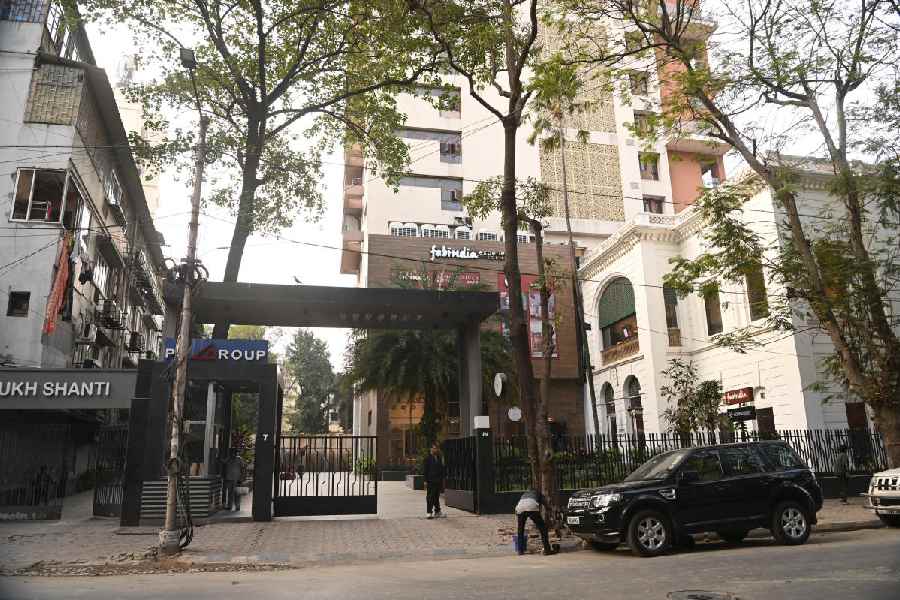
On January 8, the ED raided the home of Pratik Jain, the chief of the political consultancy I-PAC that works closely with Trinamool, and the company’s office at Salt Lake Sector V in connection with a case of alleged coal pilferage and money laundering.
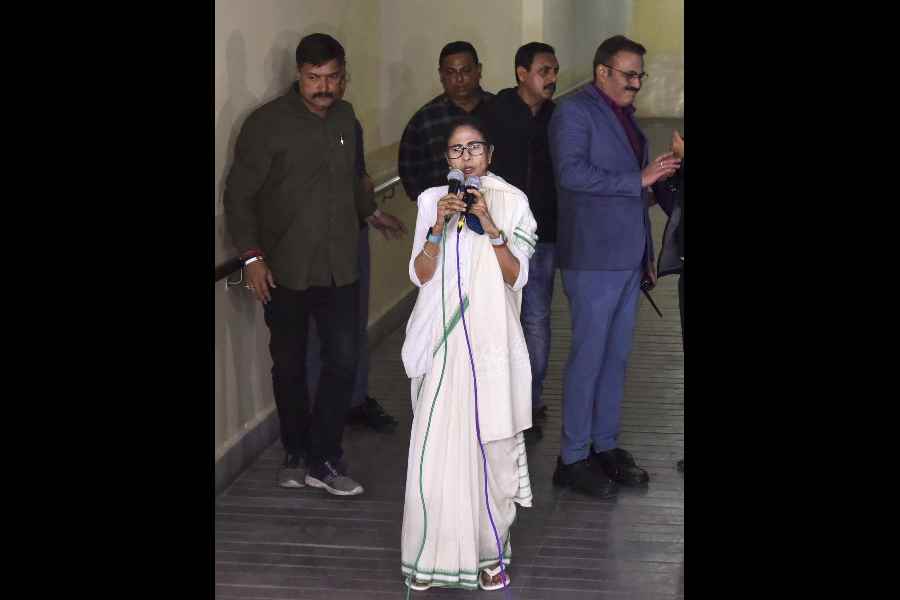
Mamata had entered both sites during the raid and claimed after stepping out of Jain’s Loudon Street home that she had retrieved“sensitive” political data related to the upcoming state elections and the ongoing SIR that the ED allegedly wanted to steal.
During Wednesday’s hearing, advocate Raju said Subhasish Chakraborty, who filed the petition on Trinamool’s behalf, was neither present at the spots where the searches were conducted nor was directly affected by the raids.
Being a third party, Raju said, Chakraborty was bound to divulge the source from where he obtained the information based on which the petition was filed.