 |
 |
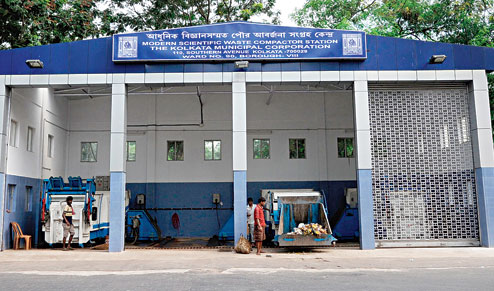
| The shed housing four compactors on Southern Avenue; (above) one such compactor. Pictures by Sanat Kumar Sinha |
People passing by Southern Avenue may have been surprised seeing four large containers under a shed on the southern pavement. They are compactors the Calcutta Municipal Corporation has procured to improve the city’s solid waste disposal system. Metro decodes the functioning of the machines and how they will help improve the city’s environment.
What is a compactor?
A compactor reduces the volume of solid waste by squeezing it and draining out the water that swells up the matter.
Where are they kept?
Compactor stations have been built at Kalighat, on Southern Avenue and near Ballygunge military camp in south Calcutta. In the north, a station has been set up in Tallah Park.
How many compactors are in use?
Fifteen, and one is on standby. Four more will come.
How do they help in waste management?
The covered compactors have replaced open vats in some places, sparing residents and passers-by the unbearable stink of exposed waste. Once filled with waste, a special lorry called the Prime Mover carries a compactor to Dhapa without any stink coming out or waste falling on the road.
What is the disposal system?
Hand-pulled carts that collect waste from houses in the morning bring it to the compactor stations and dump the matter into the bin attached to each compactor. The bins transfer the waste to the compactors. Packer plates inside the compactors squeeze the waste and reduce its volume.
What is the capacity of a compactor?
A compactor can hold 70 cart-loads of waste. Four lorries would be needed to carry that much waste.
How much has the CMC spent on the project?
Around Rs 22 lakh on a compactor and Rs 26 lakh on each Prime Mover (there are five such lorries).
What are the monetary benefits of the move?
The use of compactors saves fuel as one vehicle carries waste earlier carried by several.