The impending Bengal Assembly polls marks a return of the Bengali bhadrolok in the state’s politics.
A section of the nominees from both the ruling Trinamool and the main opposition, the BJP, are presentable, articulate and possess the ability to make cogent arguments irrespective of the political ideology they adhere to.
During the early Raj days when Calcutta was the capital, the bhadrolok – a coming together of three distinct social castes, the Brahmins, the Kayasthas and the Baidyas – emerged.
To the privileges that these classes held socially was added access to the English education system that further opened doors to employment in the British administration, added to the prestige quotient and thus ensured and bolstered their clout over the larger Bengali society.
The Encyclopedia Britannica says that between the years of 1793 – when Lord Cornwallis’s permanent settlement came into act – and 1820, the estates changed hands from the existing landlords, the zamindars to the Calcutta-based entrepreneurs who were minting money thanks to their proximity to the British ruling class.
“Many were absentees. The social link between landholder and cultivator had been broken, cash nexus replacing traditional rights. In Calcutta itself, these same rentiers formed a fashionable and intellectual society from which came the first significant cultural contacts with the West. It was composed of the prosperous section of the three upper Bengali castes, with such others as gained acceptance by their wealth or education. Collectively, this literate class of gentry was known as the bhadrolok (“respectable people”).”
For over two centuries the bhadrolok has been the guiding spirit of Bengal’s social, cultural and political milieu.
In the 19th century, the first generation of educated professionals that included teachers, doctors, lawyers and journalists came from the bhadrolok section of the society, largely centred around Calcutta.
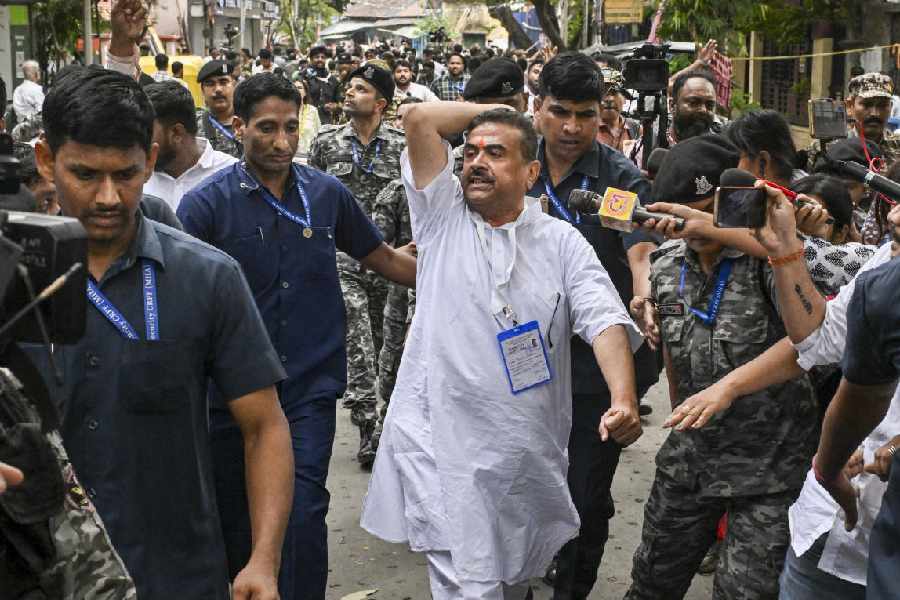
Cut to the present. Both the Trinamool and the BJP have fielded multiple candidates from this very section.
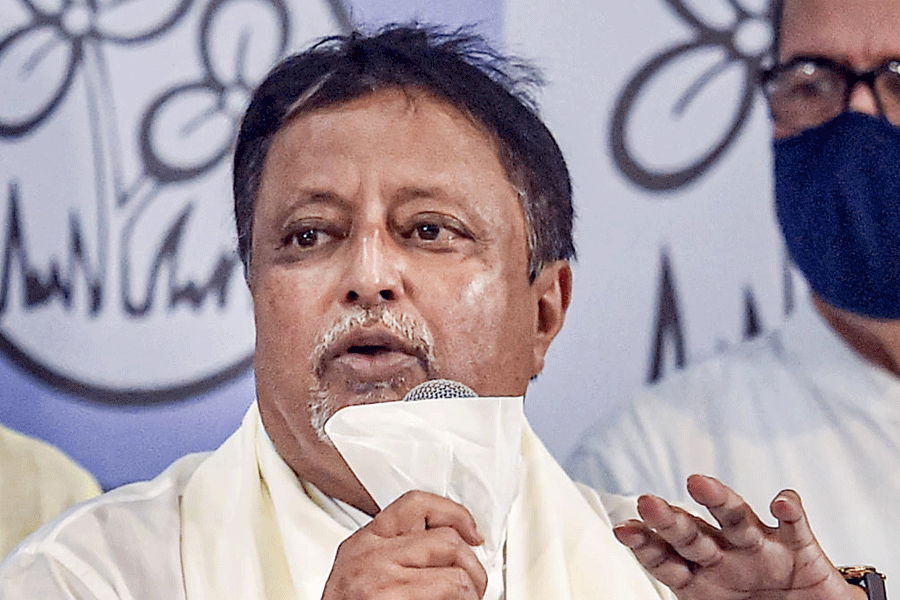
Apart from the bhadrolok feature, The fine-print in the list chief minister Mamata Banerjee released last Tuesday marked a departure from a practice that is synonymous with the ruling party in Bengal and an end of the Mukul Roy era in Trinamool and Bengal’s politics.
Birthed from the Congress nearly three decades ago, the Trinamool since coming to power has turned into a political behemoth. Much of the credit or the blame for it lies on the former all-India general secretary Roy, the last five years of whose life was divided equally between the Trinamool and the BJP.
Elected for the first time in his long political career from Nadia’s Krishnagar North, Roy remained on paper a BJP legislator while holding the Trinamool flag.
The late Roy had made a career out of breaking elected municipalities and panchayat boards run by rival political parties. That trend was visible in the 2021 Assembly polls when the BJP (Roy was then in the BJP) opened its doors wide for members from the Trinamool and even the Left parties.
The only success story to have emerged five years back was Suvendu Adhikari, a former Trinamool and a minister in the Mamata Banerjee government who made the switch.
During his days in the Trinamool, Suvendu too had followed Roy’s policy of encouraging defection and used it to perfection to weaken the Congress in its stronghold.
Of the 13 people on the Trinamool list who had formally joined the party hours before Mamata announced the candidates on March 17, only one came with political baggage.
In 2021 the local film and television industry was split into two with a vast section aligning and contesting on a Trinamool ticket and the BJP wrapping up the rest.
This time the so-called movie stars have been kept at a distance by both the parties, except for a few exceptions.
The Trinamool has dropped sitting MLAs like the actor Kanchan Mallick for “non-performance”, while those like Raj Chakraborty and Arundhati Maitra have been retained.
The BJP too has fielded only those from the film and television world who have spent years with the party.