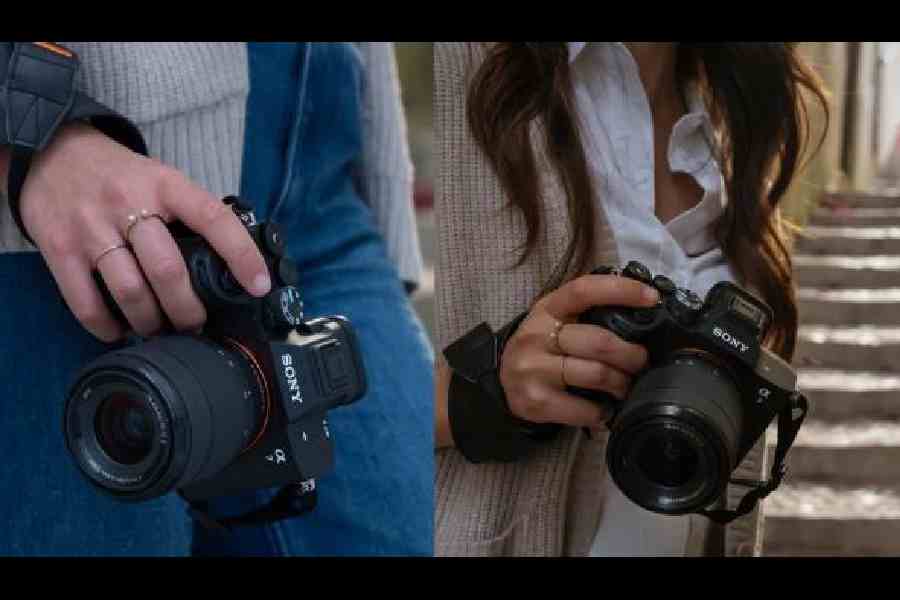
The Sony ILCE-7V has been one of the most anticipated launches among camera enthusiasts. The fifth generation in the popular Alpha 7 full-frame mirrorless line-up is powered by a newly developed partially stacked Exmor RS CMOS image sensor with approximately 33 effective MP (megapixels). It delivers improved dynamic range performance compared to its predecessor, and the 33MP partially stacked image sensor is impressive.
Here’s what Mukesh Srivastava, head of imaging business, Sony India, told us about the new offering. (Sony ILCE-7V body is priced at ₹255,990 and ILCE-7V M-kit, which will be available from February, comes for ₹270,490.)
The ILCE-7V brings AI processing and faster autofocus. How do these upgrades change the real-world shooting experience for creators?
The ILCE-7V integrates the AI processing unit into the BIONZ XR2 engine, delivering a substantial leap in autofocus speed, accuracy and reliability. For creators, this means less time worrying about settings and more time focusing on the moment. With AI-driven real-time recognition AF, the camera tracks subjects such as people, animals or vehicles more accurately and 30 per cent faster than before, even in low light. This allows photographers and videographers to shoot with confidence, especially in fast-paced or unpredictable scenarios such as sports or wildlife. It’s about making advanced technology accessible so creators can focus more on storytelling.
The camera is positioned for hybrid creators. In simple terms, how does it balance strong stills with professional-quality video?
With the newly developed partially stacked Exmor RS CMOS image sensor, the camera allows capture speeds up to approximately 4.5 times faster, thanks to increased readout speed. Combined with the BIONZ XR2 processor, it offers high image quality with minimal distortion. The camera features a high-resolution 33MP sensor with excellent dynamic range and rapid continuous shooting at up to 30fps with full AF/AE tracking, making it ideal for capturing fast action. For decisive moments, pre-capture enables the camera to record a series of images starting up to one second before the shutter is fully pressed.
The ILCE-7V also offers professional-grade video options such as 7K oversampled 4K at 60p for exceptional video quality, and 4K 120p in Super 35mm mode for smooth slow-motion footage. Features including AI-based auto-framing, enhanced in-body stabilisation and improved audio recording ensure that hybrid shooters do not have to compromise.
Sony’s Alpha ecosystem and community are strong pillars for the brand. How are you further strengthening this ecosystem for creators in India?
We are building more than just a product ecosystem; we are developing a creator community. Alpha Community is a space where knowledge is shared, skills are honed, and creators feel supported by both Sony and their peers. Through the Alpha Community platform, we offer extended warranties, exclusive workshops and learning modules such as Alpha Classroom, where experts guide users on techniques and gear.
Additionally, the new Alpha Community App makes it easier to register products, stay updated and join local events. We have also introduced “Ask an Expert”, a free one-to-one consultation service. To make the process seamless for users, we also offer the Creators’ App, which simplifies photo and video sharing from camera to smartphone. These initiatives are designed to support creators at every stage, from beginners looking to learn to professionals seeking advanced insights.
What is your outlook for the DI (digital imaging) market in 2026, and which segments or use-cases do you expect to drive growth?
I feel 2026 will be a year in which platforms, formats and audiences continue to evolve, and our role as a camera brand becomes even more central to how stories are told. Platforms such as the WAVES Summit signal a clear national intent: India is positioning itself as a global hub for content creation, broadcasting and digital storytelling. In 2026, we aim to deepen our engagement with India’s creative ecosystem by working closely with broadcasters, production houses, independent creators and institutions shaping the country’s media future.
One of the fastest-growing formats in India is micro-drama — short, episodic, mobile-first content rooted in local languages, culture and everyday stories. This format demands speed, flexibility and cinematic quality in vertical formats. We see a strong opportunity to support this segment with tools that help creators scale storytelling without losing authenticity. Broadcasting and news will remain a critical pillar in India, particularly as regional news, digital-first journalism and live reporting continue to grow. In 2026, the focus will be on mobility, reliability and rapid turnaround — enabling journalists and broadcasters to operate seamlessly across television, OTT and social platforms from a single capture ecosystem.
Equally important is India’s vast and ambitious amateur market. From students and first-time creators to small businesses, educators and local storytellers, this segment is redefining what “amateur” means. We have already begun working in this direction with our latest campaign, Farak Padta Hai, which highlights the value of using dedicated cameras over smartphones when it comes to preserving memories.