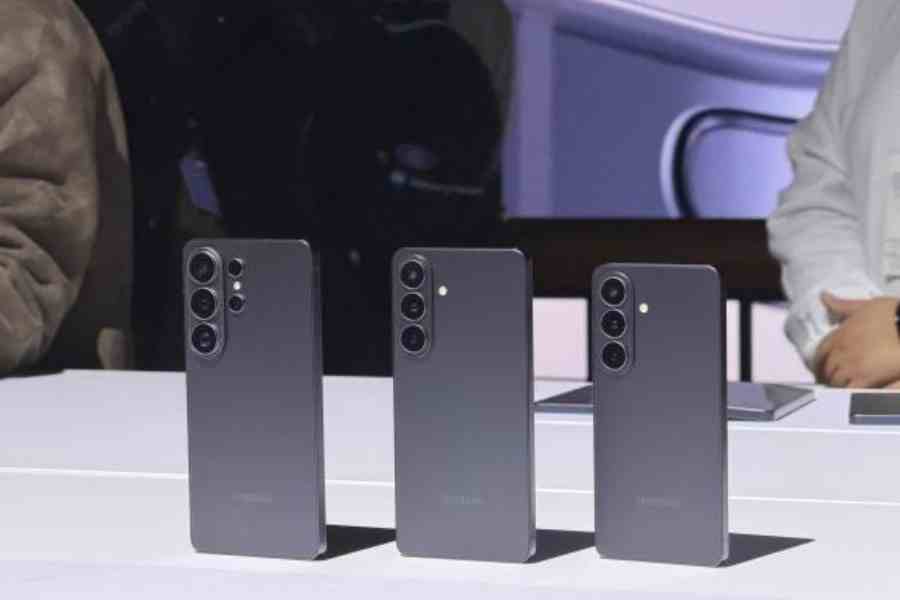
Artificial intelligence is, quite inevitably, everywhere these days, and our smartphones are certainly no exception to the rule. Many of the current AI flourishes are designed primarily for the casual user — think of those quirky tools that transform your friend’s selfie into a faux oil painting. It’s all a bit of fun, really, and brings a touch of joy to the everyday; few would lodge a complaint about that. At the same time, one must acknowledge that AI has the potential to play havoc across social media if left unchecked. These features aren’t going anywhere, and Samsung clearly understands the assignment.
With the new Galaxy S26 Ultra, the South Korean company has taken steps to ensure AI remains as safe and controlled as possible. Yet, despite the clever software, what truly catches the eye are the improvements made to the hardware and the camera department.
Serious upgrades to the camera
The main snapper boasts a 200MP Quad Bayer (Type 1/1.3) sensor, which is about as good as it gets in the mobile world. However, the real magic lies in how the device gathers light. This year, we’ve been treated to a proper aperture upgrade, moving from f/1.7 to a much faster f/1.4. In plain English, this means the sensor can drink in far more light, resulting in vastly superior low-light photography while creating a lovely shallow depth of field.
There is also a substantial difference — again, in the light-gathering department — with the 50MP 5x telephoto camera. We’ve moved from a somewhat sluggish f/3.4 to a nippy f/2.9, making it far more efficient than rival setups. While the ultra-wide camera sticks with the familiar 50MP Quad Bayer sensor and f/1.9 aperture, it still produces good close-up shots.
The camera kit on the S26 Ultra is actually a bit of a triumph. Most amateur photographers prefer a 2x or 3x zoom for daily snaps. While many manufacturers simply get away by using digital interpolation — cropping into the main sensor’s resolution — Samsung has bucked the trend by providing a dedicated 3x optical camera. Even at 10MP, the framing and clarity you get from this
lens are genuinely impressive; these are the sorts of photos you’d actually want to hang on your wall.
The final piece of the puzzle is the selfie camera, which remains the dependable 12MP (f/2.2) autofocus unit from the Galaxy S25. Samsung is, however, leaning into AI processing for those tricky low-light moments. It analyses noise patterns specific to each individual lens and tidies them up beautifully.
Another clever bit of kit that deserves more chatter is the handling of shutter speed. If you’ve ever tried to photograph energetic pets or toddlers, you’ll know you need a phone that can freeze motion. Within the Advanced Photo Mode Controls, you can now “force” a minimum shutter speed — for example, from 1/30 right up to a crisp 1/1000 — ensuring your shots stay sharp even when things get a bit frantic.
Cinematic video and steady horizons
Turning our attention to video, the big news is the inclusion of the APV Log codec or Samsung’s Advanced Professional Video tool. It’s all about the cleverness of the compression; no matter how much movement is in your shot, the quality doesn’t fall off a cliff. These files are also a doddle to edit on a computer using professional software like DaVinci Resolve.
It is worth noting, though, that Log files are absolute storage hogs, so you’d be wise to plug in an external drive. One brilliant advantage of APV is that it locks the frame rate — be it 24, 30, or 60 fps — ensuring your footage stays perfectly in sync across multiple devices.
Another feature you’ll likely find indispensable is Horizontal Lock. The camera crops into the frame so that even if you rotate the phone a full 360 degrees, the horizon stays perfectly level. You do lose a bit of the frame to make the maths work, and it isn’t available in super high-res or slow-mo, but having action-cam stability inside a posh smartphone is a proper level-up.
AI that actually earns its keep
The hardware is only half the story; the other half is what you can do with those images once you’ve captured them. This is where the AI comes out to play. Imagine you’re at a pizzeria, and just as the food hits the table, a hungry friend nicks a slice before you can get the “gram-worthy” shot. You can simply tell the device to “make the pizza whole again”. Give it a few seconds and, Bob’s your uncle, the pizza is restored.
Samsung and Google have a long-standing partnership in the generative AI space, but Samsung has pushed the boat out here. Beyond the “oil painting” filters, there are genuinely helpful tools for removing pesky shadows or reflections on glass. Of course, not everyone wants their life filtered through an algorithm — we’ve all seen enough “AI slop” on our feeds lately. It’s up to the individual to decide how much digital wizardry they actually want.
That said, some features are undeniably useful. For instance, you can snap a photo of a grubby document and the AI will scrub away stains, iron out wrinkles, and straighten the edges. It’s brilliant for admin. It can also summarise your emails, screen your calls, and help you find that one specific car registration document buried amongst thousands of photos.
In the realm of photography, erasing a small distraction from a background is now incredibly precise on the S26 Ultra — giving you professional-grade editing without the expensive software subscription. You can even play with lighting filters to recreate the “golden hour” at high noon. If you’re worried about authenticity, there is a label: all AI-altered photos come with a clear watermark.
Privacy all the way
This is Samsung’s thinnest Ultra to date, and at 214g, it feels remarkably light for such a powerhouse. They’ve stuck with the comfortable rounded corners, which have now been adopted by the standard S26 and S26+ as well. While the industry went mad for titanium recently, it wasn’t always great for heat. Samsung has returned to an aluminium frame and revamped the vapour chamber, ensuring the phone stays cool even when the processor is working flat out.
The protection is top-tier, too, with Corning Gorilla Armor 2 on the front and Victus 2 on the back. But the real “party trick” is the display. It’s a gorgeous 6.9-inch Dynamic AMOLED 2X screen, but the headline feature is Privacy Display. If you’re on a crowded train or sitting in a cafe, you can toggle this on to protect your sensitive data. When you look at the screen head-on, it’s crystal clear, but to anyone peeking from an angle, it looks like a completely black screen. You can even customise it to trigger only for certain notifications or apps. It’s a brilliant bit of security for the modern world.
Take the call
Regarding the battery, you’re looking at a 5,000 mAh cell designed for longevity, paired with the remarkably efficient Snapdragon 8 Elite Gen 5. With Super Fast Charging 3.0, you can hit a 75 per cent charge in about half an hour, and wireless charging has been bumped up to 25W.
Ultimately, the Galaxy S26 Ultra remains the gold standard for Android users who want to create. It records native 8K video entirely on-device... no waiting for the Cloud like some of its rivals. The white balance is neutral, the dynamic range is superb, and the night mode is so good you’ll rarely need to touch an editing slider. If we’re being picky, it would be nice to have a manual sharpening control for Log recording, but that’s a niche gripe for the 5 per cent of pro users.
At a time when many smartphone upgrades feel a bit “samey,” Samsung has delivered a device that genuinely feels “Ultra.” Between the Privacy Display and the significant aperture jumps in the camera, Samsung Galaxy S26 Ultra a formidable bit of kit.