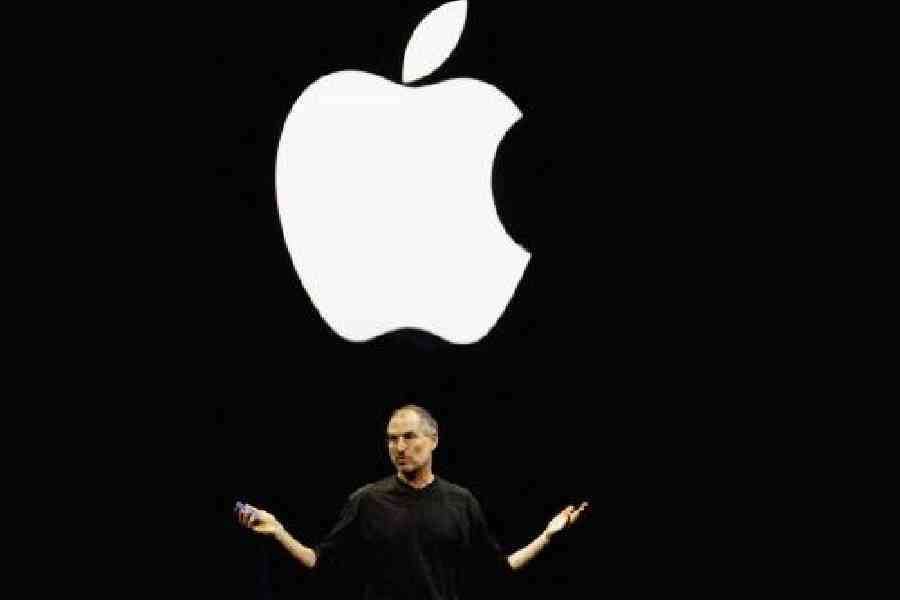
Steve Jobs made us choose sides. He pitted perfectionism against mediocrity. He championed the owning and controlling of primary technology versus a reliance on outside vendors.
He focused on capturing the zeitgeist of a generation rather than merely following trends, and looking ahead rather than finding comfort in past glories.These choices are simple and the lessons are timeless.
They are fundamental enough to be hardwired into the DNA of Apple, allowing the company to last half a century. In a world where the only constant is change — taking down tech companies every other decade (headwinds have got the better of BlackBerry, AOL, Nokia, Kodak, and Nortel) — Apple has remained a gold standard for most of its five decades.
At Apple Park in Cupertino — the company’s spaceship-style headquarters — the design reflects the same obsession with detail that defines its products. Open spaces, walking paths, and carefully planned work areas are meant to encourage collaboration, even as the company sits on one of the largest cash reserves in corporate history.
And yet, the influence of Steve Jobs still lingers. If youth is on one side, maturity is on the other. Perhaps that will be on CEO Tim Cook’s mind when he cuts a proverbial cake after waking up at 4am on April 1 — the day of the big 50.The secret to the company’s longevity is perhaps simple. In Cook’s words to this newspaper in 2023: “We always view ourselves as a toolmaker. We make tools for people to be able to express themselves creatively.”
The company’s hardware and services are used by engineers and coders, doctors and pilots, musicians and filmmakers, writers and painters, scholars and school students.
It’s a brand that attracts fierce loyalty. “I had come to know about Apple products while in college through computer magazines; however, my first actual ‘in-person’ encounter was in 2006 when I arrived in the US. It was a ‘Mac G’ series in a Dow Jones office. Two things I recall the most: the speed and efficiency of the machine and the radical looks compared to a regular PC. The Mac was like the Toyota of computers… it just wouldn’t break down or crash,” Anish Pyne, executive director at JP Morgan, tells t2oS over phone messages.
For many, the Apple hardware ecosystem continues to offer a solid foundation on which to build careers and businesses. Achieving that level of reliability, however, is not as easy as it sounds.
While loyalists praise this seamless integration, regulators in the European Union increasingly view it through a different lens. The friction between the user’s peace of mind and the regulator’s demand for an open market has become a defining tension for the company as it enters its sixth decade.
Chapter I
From the start, the company’s focus has been the general user — creating something that could change lives. Jobs, who co-founded the company with Steve Wozniak (yes, there was also Ronald Wayne, but more on him later), had his job cut out from the very beginning. “Some people say, ‘Give the customers what they want", he said, in one of his most-quoted statements. “But that’s not my approach. Our job is to figure out what they’re going to want before they do.”
At the launch of his latest book, Apple: The First 50 Years, David Pogue had an interesting way of explaining the importance of the company. He noted that around 2.5 billion people are carrying Apple devices — roughly 31 per cent of the global population. If these people were a country, they would form the largest nation in the world. He added that around 220 million iPhones are sold each year and that Apple earns $1 million in revenue every 90 seconds.
Unlike Samsung, which started out as a trading company, or Nokia, which began as a paper mill, Apple has always been in the business of technology. In five decades, the company has shaped the future of computers, music, movies, and mobile phones. It will always be the company that touched all these verticals — a lot of the credit for which goes to Steve Jobs. He was a visionary. Few executives in history suffered bigger setbacks than him… or enjoyed as much success. He led one of the biggest turnarounds in corporate history. This was a man who was a true son of Silicon Valley — born in San Francisco and raised in its freewheeling culture of innovation.
The toolmaking capabilities of Apple have touched generations. Take the case of singer Mali, or Maalavika Manoj, who knows the Apple ecosystem inside out. Her window into Apple’s world started with an iPod Shuffle. “My first Apple product was my dad’s gift to me on my 13th birthday. It was an iPod Shuffle. I instantly became the most popular girl in class when I got it because no one had one before,” the popular singer tells us.
Like Pyne, she too has been mesmerised by the reliability of the brand. “After all these years, I like how reliable Apple products are. Of course, it helps that I own a Mac, iPad, and an iPhone, so the interconnectivity within the Apple ecosystem makes things easier to share and use. I feel as though I have grown with the brand and I associate new products with a sense of accomplishment, especially because I remember being gifted my first MacBook Pro when I got my 12th-grade results and happened to do well. And then buying the SE after months of saving. It always felt like I earned it,” she said.
Many of the people interviewed for this article touched upon how they “grew up” with Apple. Varun Desai, who is a musician, producer, digital artiste, and the person behind the popular annual Jazzfest, says Apple has meant “different things” to him over the years.
“The early years were defined by the unique design that really set it apart from anything else out there. Then it was more about functionality — being able to do things, like with the iPad, with an ease that other devices couldn’t compete with. Being a tinkerer and PC user, I was also used to software crashing. I gravitated towards MacBooks and iOS because I couldn’t afford to have my computer crash in the middle of a performance. While I couldn’t get under the hood like I could with other systems, the Mac did its job better than everything else when it was about running a stable system at live events,” says Desai.
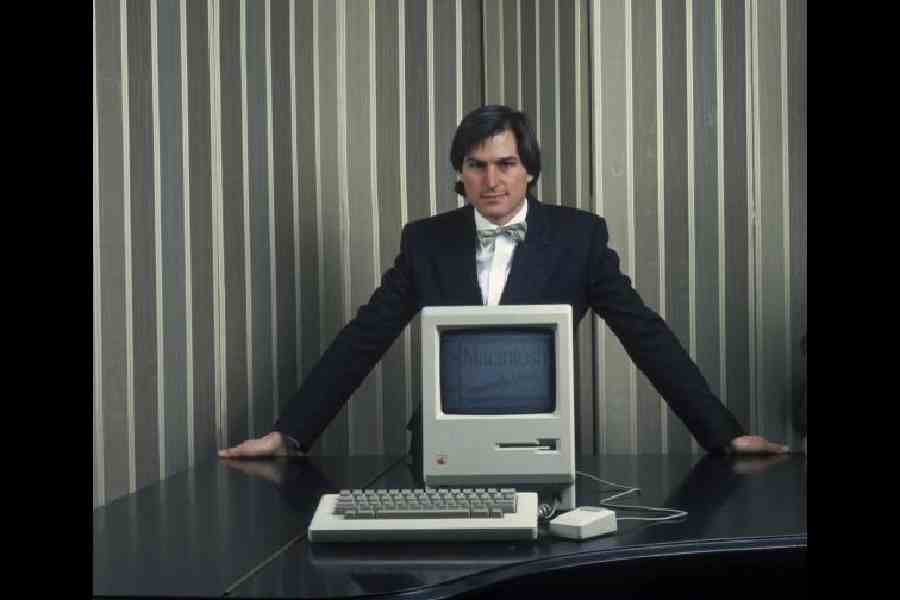
Steve Jobs with a Macintosh computer in 1984, the year Macintosh was launched. Picture: Apple
This is also the company that has pushed the definition of one’s profession, as it has done for Sandeep Ranade, a software engineer, Hindustani classical singer, educator, and creator of the Apple Design Award-winning app, NaadSadhana. His app is among the finest a classical musician can hope for. Apple’s App Store is the backbone of the entire ecosystem, allowing users all over the world to discover the finest apps.
“Apple has completely democratised the creative process. I started with GarageBand, Logic Pro, and Final Cut. These tools took the power of a multimillion-dollar studio and put it on a desk. With NaadSadhana, I’ve seen that evolution go even further. It has fundamentally changed how thousands of musicians, including me, practise, perform, record, and publish music, enabling use cases that were simply out of reach before,” Ranade tells us.
Chapter II
The two Steves — Jobs and Wozniak — always encouraged the general computer user to pursue dreams by pushing the boundaries of the tech world. Their philosophy — which still runs through the veins of Apple — has always put the user first. Without knowledge of command-prompt-level skills, one could simply get work done.
At this point, it is important to separate the mercurial nature of Jobs (there have been tales of him reducing employees to tears and more) from the transformative and historical figure that he was. His passion was always Apple, not chasing valuation. Two eras of his life define the brand: Steve 1.0 was a brash CEO who was eventually locked out of his own company, and Steve 2.0 was a calm and calculating leader who returned home in 1996–97 to save Apple from ruin.
The company was close to a financial debacle, but he returned — and how. Between those two eras were the “fizzy years”, NeXT and Pixar, where his sharper, more mature leadership style was forged.
Newspapers have always taught a lesson: everything that appears in print soon becomes yesterday’s news. And that has been the case with the tyrannical and raw side of Jobs. From time to time, films, documentaries, and books have tried to resurface those aspects, but it’s Jobs the innovator who lives on.
The Macintosh, the iTunes Store, the iPod, iPhone, and iPad are technological feats. The company is ageing, but Apple’s products have remained cool and aspirational. It is also about how the company’s products have always been made — how the two Steves got the ball rolling. These two would never have met had it not been for a mutual friend at Homestead High School. Bill Fernandez met Jobs in junior high school and got him interested in electronics. They went “back and forth to each other’s garages”, doing electronics projects.Across from Fernandez’s house moved the Wozniaks. It was only in high school that he and Woz started doing electronics projects together. Since Woz didn’t have a garage, he would visit that of Fernandez’s. At a recent Computer History Museum (CHM) appearance, moderated by David Pogue, Fernandez described the moment Jobs and Woz met. Next to Wozniak’s house was that of a Mr Taylor, who had an electronics store.When he closed his store, the stock was moved into his garage. “Jobs bicycled over to my house one day, so we could hang out. I needed parts, so I went across the street to Mr Taylor’s house. Woz, next door, was out on the street, washing his car. And I said: ‘Well, here are two electronics buddies, and they probably would like to know each other.’ Instead of going to Mr Taylor’s house, I turned left and said: ‘Hey Steve, I’ve got a friend here named Steve (Jobs) and you might like to meet him."
The story deepens. Then came the Apple I, followed by the decision to start a company to market it. On April 1, 1976, the two Steves signed a partnership agreement. There was a third name on that paper — Ronald G. Wayne, who had a 10 per cent share in the company. Jobs knew Wayne from their Atari days. Meanwhile, Wozniak was concerned about how the soon-to-be-formed Apple would own his work. He was very “proprietary” about the circuits he had designed. It was the moment he had to turn over full ownership to the company being formed.
Wayne had a “chat” with both. Soon, Jobs decided that Wayne would hold 10 per cent of the company, which would help if a tiebreaker was needed in the future. Literally a few days later, Wayne got cold feet. The two Steves had an order to produce 50 machines, the parts for which required a commitment of $15,000. Since this was a partnership, all of them were liable if the whole thing came “unglued”. Since Jobs and Wozniak didn’t have much money at that point, all eyes would have been on Wayne. He couldn’t stand the risk of a disaster.
Another character needs to be introduced here: Mike Markkula. Around November 1976, Jobs was looking for financing. He approached Atari founder Nolan Bushnell, at the company where he had worked. Bushnell suggested that Jobs should speak to venture capitalist Don Valentine, who had financed the video game company. Valentine, in turn, asked Markkula to take a look at what the two Steves were doing.At first, Markkula wanted to help them come up with a business plan. According to Owen W. Linzmayer’s book Apple Confidential 2.0, Markkula invested $92,000 of his own money. He also secured a $250,000 line of credit at the Bank of America. Jobs and Wozniak filed to incorporate Apple Computer on January 3, 1977. Markkula went on to write a three-paragraph memo called The Apple Marketing Philosophy.
The Steve Jobs Archive mentions: “Mike Markkula was more than Apple’s first investor and chairman: The former Intel executive set the foundation for Apple’s three-pronged marketing philosophy, which called for empathy (understanding customer needs), focus (eliminating distractions), and imputing (applying the same quality and rigour to a product’s presentation as you would the product itself).”
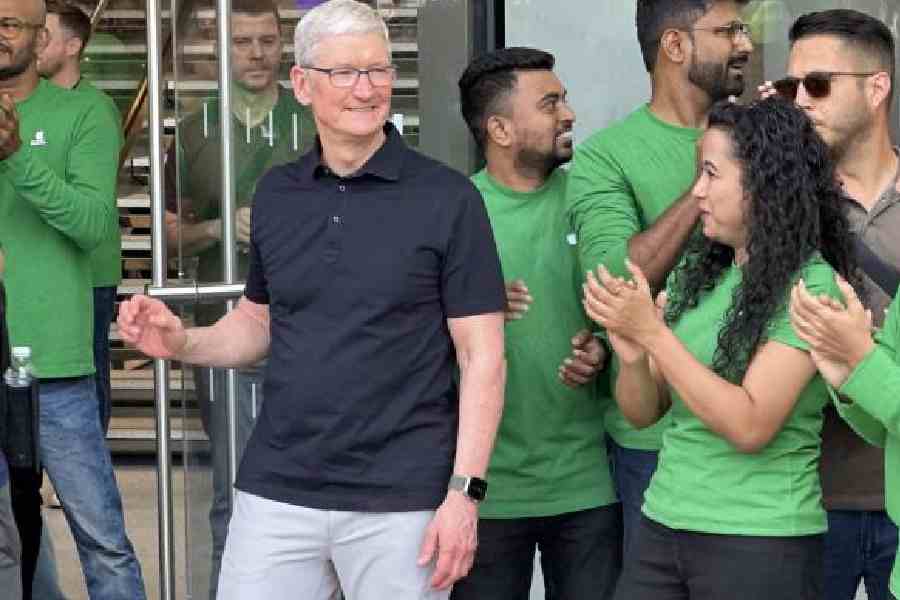
Apple CEO Tim Cook at the opening of Apple BKC store in Mumbai in 2023. Picture: The Telegraph / Mathures Paul
The initial upward trajectory of the company owes much to the Apple II, the all-in-one, ready-to-use computer. Before that, people had very little idea of what a computer could do. The idea of having your own computer was “radical”, and it also “set you apart”, as Chris Espinosa said in a recent interview. He remains an integral part of Apple’s history and is still with the company. The Apple II changed perception. It didn’t take up a room, and nobody had to timeshare it. The computer was such a hit that it sustained the company’s finances for many years to come.
Chapter III
But finding the successor to the Apple II was a challenge. It was also the time Jobs brought in a man named John Sculley, who was CEO from 1983 to 1993. Before that, he was the president of Pepsi. Jobs, being a brilliant marketing mind, persuaded Sculley to join after five months of talks. He told the Pepsi executive: “Do you want to sell sugar water for the rest of your life? Or do you want to come with me and change the world?”
The two, at first, got along well, but slowly things came unglued. Sculley touched upon the era when he worked with Jobs during an interview with The Telegraph some years ago. “Steve had very strong opinions,” he said.
Sculley recently set the record straight: “In 1985, Steve had introduced the Macintosh Office. It was a big deal for Steve because there would be a LaserWriter and the Macintosh. The problem was that Steve was not an engineer.”
Jobs wanted to “cut the marketing on the Apple II” to lower the price of the Mac. Ultimately, the matter went before the board, which sided with Sculley. Jobs left soon after.By the time the 386 processor came out from Intel and Microsoft Windows 3.1 arrived, the folks at Apple were left wondering what was next. There was also a group within Apple that wanted the company to license software, as Microsoft did. It was not a clever strategy, Sculley felt. He was fired.
The company was in a tailspin. By 1996, there were a number of Mac models, and most of them were hard to tell apart. Further, the operating system had become dated. During the tenure of Gil Amelio — the man who was CEO for the shortest time in the company’s history — Apple acquired NeXT Computer, which Jobs had founded in 1985. Jobs was back at the company and ultimately became the CEO. It was the beginning of a new journey. His job was to bring Apple back from near-bankruptcy.
He changed the product line and introduced an ad campaign that is still remembered today: “Think Different,” which saluted “the crazy ones, the misfits, the rebels, the troublemakers”. He also brought in another important figure. Tim Cook had left IBM for Intelligent Electronics and, in 1997, had taken a job at Compaq. Six months later, he met Jobs.Jobs also saw the potential of another man who had been at Apple since 1992 — the legendary designer Jony Ive (he left Apple in 2019). His design philosophy, which turned industrial design into art, has been stamped on many iconic Apple products — the original iMac, iPod, iPhone, iPad, Apple Watch, and more. He was also deeply involved in designing Apple Park. Once, Jobs referred to Ive as his “spiritual partner”.
In 1998, Apple introduced the iMac G3, a colourful, all-in-one desktop computer. Apple had its swagger back. The product that truly revitalised the company was the iPod, a portable music player. It showed that Apple wasn’t just a computer company. The device was paired with iTunes, which would help upend the recording industry. And that was followed by the answer to “what next after personal computers?” The iPhone arrived in 2007 and became one of the best-selling products ever.A few months before Jobs died in 2011, Tim Cook took over as CEO. The company continued to grow tremendously under Cook’s leadership.
One of the key pieces in this growth has been India. In 2023, the company celebrated 25 years in India with the opening of its first stores — Apple BKC in Mumbai and Apple Saket in Delhi. Since then, a number of new stores have been added.Apple has been on the minds of tech enthusiasts in India far longer.
The story of the birth of the Internet in India would be incomplete without a mention of eWorld, a short-lived online service that Apple introduced in 1994. A 2015 report sheds light on this interesting offering. Miheer Mafatlal had received beta accounts for the eWorld service because his company, MicroGiga, had been selling Apple computers as desktop publishing solutions in India. When eWorld launched, Shammi Kapoor, Mafatlal, and a few others were given accounts. It featured email, a search box, news, and Talk City, a community chat room.
We also forget the moment when actor Sameer Soni was seen in an advertisement for the Power Macintosh 7100/80 in 1996.In Calcutta, one person who understood the power of the Mac before most was the late adman Ram Ray, whose understanding of graphic design is now the stuff of history books. Before big ad agencies, Clarion had Macs.
UX designer Sajid Moinuddin was at the opening of Apple BKC in 2023. He stood in queue with his beloved Macintosh SE. We messaged him for the article. Moinuddin learnt about the importance of designing and typography from his father and he believes that Apple products will help him achieve his goals easily. “I was first exposed to Apple in the late ’80s through the Macintosh SE, thanks to my father, M.G. Moinuddin, who was a publication designer. I used to watch him work up close — designing mastheads and layouts on the Macintosh. For me, that was the first time I saw a computer being used creatively, not just technically. At a time when most systems felt rigid and mechanical, this felt fluid.”
What stayed with him? “The idea of WYSIWYG — what you see is what you get. You could actually see your design as you were making it. That was a big shift. It made the process immediate and intuitive. And then there was typography. The Mac came with beautiful typefaces at a time when that wasn’t common at all. You could play with kerning, spacing, all the finer details — things that mattered deeply in print design. It genuinely felt like the system was built keeping designers in mind.”
The capabilities of Apple are also not lost on the Harvard-educated technology entrepreneur, policy professional, and Apple expert Siddharth Rajhans.
“My first Apple product was actually an iPod Nano, gifted by a relative from the US when I was in high school. At the time, the idea that you could carry so much music in such a small device felt revolutionary. What made it even more special is that years later, I had the opportunity to get that very iPod box signed by Tim Cook during the launch of Apple Saket. It was a full-circle moment,” he tells us.
Cook told him about how unique the iPod looked. “Later, during my engineering years, my experience with the Mac became equally defining. Access to tools like Xcode required owning a Mac. Being able to code and explore app development on that platform was a turning point for me as a developer. So for me, the iPod and the Mac represent two formative experiences — one emotional, the other intellectual.”
For musician Neel Adhikari, it has been something of a seesaw ride with Apple. “Before I made the shift to Apple in 2010, I was an avid PC user. I used to build my own PCs, and I was aware at every point, while working, of what was going on with my machine — when it might get stuck or when a freeze was coming on. Once I moved to Mac, I unplugged from the inner workings of the machine. It wouldn’t mess up. I felt more stable. My work improved because I was concentrating less on the machine itself and more on the music. That is the legend of Apple,” he says over a call.
Soon, he was “sucked into all their products”.
“I have an iPhone, iPad, Mac Studio, MacBook Pro… and so on.” He has also been unhappy with some of the updates on the software front.
But the way Apple products ease the creative process is like no other brand. Ask Srijan Mahajan, who is on drumming duties for Parikrama. “I used to find music production very intimidating until I found Logic, when it just all fell into place easily,” he says.
Even for a veteran on the music circuit, Gary Lawyer, Apple holds a special place. “I used the iPhone 6 for many years and thought it to be a beautiful phone. I still miss it even though now I use the iPhone 13,” he says.
As the company prepares for the next 50 years, the definition of the “tool” is changing once again. We are seeing a pivot from the handheld screens that defined the iPhone era toward spatial computing, led by the Vision Pro. What’s next for Apple? We asked Cook in 2023 what message he would have shared with a 20-year-old version of himself.
“I would tell myself to remember that the joy is in the journey. Because all too often you forget that and you keep thinking about the next destination.”
Steve Jobs, obviously, has the final word — the ones he spoke at Stanford University’s commencement speech in 2005. These could well be his message for Apple: “On the back cover of their (The Whole Earth Catalog) final issue was a photograph of an early morning country road... Beneath it ere the words: ‘Stay Hungry. Stay Foolish."