Carlo Ancelotti is more than just a coach to Brazil. He is a messenger, like the postman of yore, entrusted with delivering Brazil’s message to the world — that football, even in this mechanised, AI-driven age, is still a simple, uncomplicated and beautiful game.
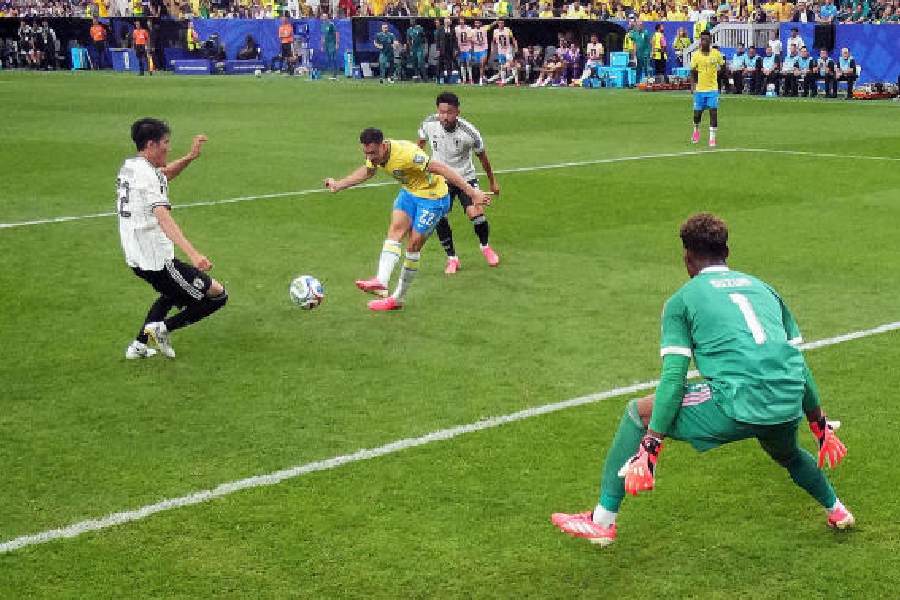
Brazil’s 2-1 win over Japan in the Round of 32 in Houston on Monday wasn’t quite the “jogo bonito” stuff that romanticises their football. Unlike their manager’s impeccably tailored Italian three-piece suit, it wasn’t a tidy game from the Selecao. But the familiar flair returned in the final 45 minutes, their flame of brilliance reignited — and Ancelotti was the man who lit it. One tactical tweak changed the game. Changed Brazil.
With their creativity lost in a jungle of Japanese legs in the first half, Brazil needed a swift change in approach. Ancelotti read the situation and gave his players simple instructions.
“Ancelotti asked us to put players in the box and try to cross,” midfielder Bruno Guimaraes, whose precision pass led to the winning goal, said after the game.
The result: having managed just 12 crosses into the Japan box in the first half, Brazil sent in 28 in the second. The relentless aerial pressure brought the goals, with Casemiro and Gabriel Martinelli, who turned out to be the perfect impact substitute, sending them through to the last 16.
As they took control of the game, the familiar Brazilian flourish emerged — like Vinicius Junior’s hypnotic run in the 57th minute, denied an equaliser only by the fingertips of Japan goalkeeper Zion Suzuki.
“This was the most complete game we have played at the World Cup,” Ancelotti said afterwards, with characteristic calm.
But he wouldn’t have dared think along those lines at half-time, when Brazil looked as crippled as their playmaker Lucas Paqueta, who had limped off with a thigh injury.
Brazil were 0-1 down, and the scoreline alone doesn’t capture the scale of the crisis. Starved of World Cup success since 2002, they have been knocked out in the quarter-finals in four of the last five editions. The one time they went further — the 2014 semi-final — ended in the infamous 7-1 humiliation by Germany. So in Houston, Brazil were 45minutes from another World Cup disaster; a loss would have been their earliest exit since 1966.
They were also up against a Japan side playing with the technical precision typical of their football culture. Operating out of a variant of their preferred 3-4-3, Japan stuck rigidly to their plan: take the lead, then sit in a deep block and deny Brazil the space to thread their short passing game. Having never won a World Cup knockout match, they had every reason to hold their nerve.
But shutting up shop too early against Brazil is always a gamble. The current squad may lack the sheer craft of past greats, but it’s still Brazil.
Ancelotti understood that. “At half-time, I said to the players to be patient, because sooner or later we would score a goal. But we had to keep our shape to ensure we did not compromise the game further,” he said.
That kind of conviction isn’t easily earned — but Ancelotti has it, built across a career with five Champions League titles and championships in all five of Europe’s top leagues.
As Brazil look to reclaim their place among football’s elite, Ancelotti may be their best bet. Turning chaos into clarity through a touch of creativity is a feat few modern managers can pull off.
And if he gets Brazil to the summit, the world may need a new phrase to describe their football. “Jogo bonito” might not be enough.