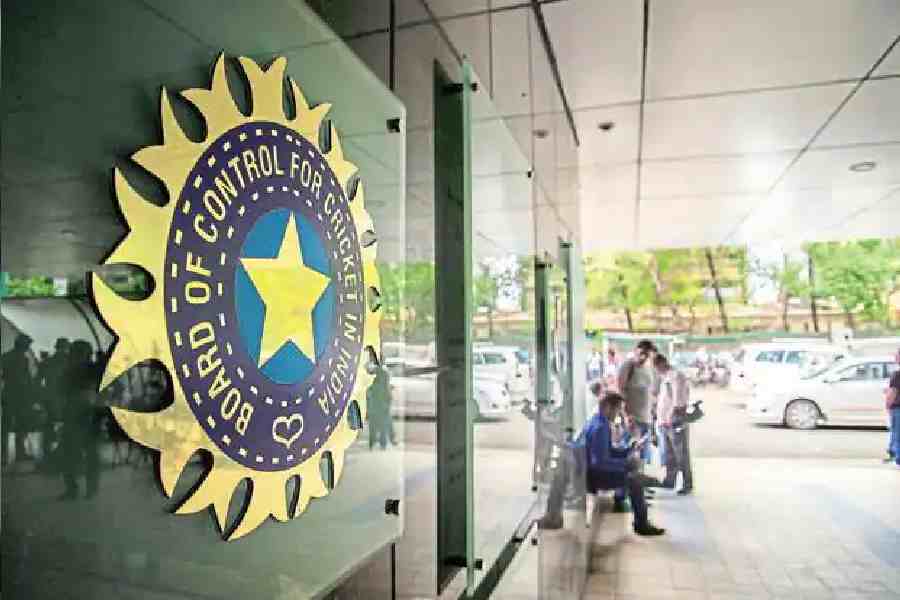
The Central Information Commission (CIC) held on Monday that the BCCI is not a public authority under the Right to Information (RTI) Act and thus not liable to answer any queries under the transparency law, overturning its own 2018 order in this regard.
The commission dismissed an appeal filed before the ministry of youth affairs & sports in 2017 seeking details under which the BCCI represents India and selects players for national and international cricket tournaments and enjoys government support for cricket infrastructure and security arrangements.
The ministry replied that the information sought was not available with it, and the application could not be transferred to the BCCI as it had not declared itself a ‘public authority’.
In its order, the CIC observed that it’s not appropriate to assume increased governmental supervision enhances the functioning of BCCI. It warned that superimposed government control could “disrupt a finely balanced economic structure”.
The commission also pointed out the Supreme Court-appointed Justice Lodha committee’s reform recommendations for transparency in sports administration were only advisory in nature and “and could not override the express statutory framework contained in Section 2(h) of the RTI Act.”
“The BCCI cannot be classified as a ‘public authority’ within the meaning of Section 2(h) of the Right to Information (RTI) Act, and the provisions of the Act are therefore inapplicable to it in the facts and circumstances of the present case,” information commissioner PR Ramesh said.
The commission’s order cited that the BCCI is a society registered under the Tamil Nadu Societies Registration Act. “BCCI is neither established by or under the Constitution nor created by any law enacted by Parliament or a State Legislature. The Commission further noted that the BCCI was not constituted through any govt notification or executive order”.
The order also mentioned that the tax exemptions offered to the BCCI can’t be construed as government funding. “Tax exemptions or statutory concessions available generally under law cannot be treated as “substantial financing” by the Government within the meaning of the RTI Act,” the order stated.
The Board is a registered charitable trust (under Section 12A of the Income Tax Act) for promoting cricket and enjoys tax exemptions on certain grassroots activities, but has to pay income tax on its commercial revenues arising from the IPL — broadcast rights and sponsorships.
It paid Rs 18,584.99 crore towards tax deducted at source receivable/tax paid under protest/advance tax
as on March 31, 2025, including Rs 9972.50 crore towards tax paid under protest/advance tax.
The ruling marked a reversal of a 2018 order which held the BCCI to be a public authority and directed its president, secretary and committee of administrators to designate central public information officers, assistant public information officers and first appellate authorities under the RTI Act.
The CIC had also directed the BCCI to proactively disclose information under Section 4 of the law and furnish point-wise replies to the RTI applicant.
The BCCI, however, had challenged the 2018 order before the Madras High Court, which, in September 2025, remitted the matter back to the CIC for reconsideration in light of the Supreme Court’s observations in the BCCI vs Cricket Association of Bihar case.