At a time when adults are busy sharpening their artificial intelligence skills to remain relevant in the job market, teenagers are souring on AI, at least long enough to make a point. There has been a marked uptick in sales of everything analogue or, at the very least, disconnected from the Internet — instant cameras and turntables, wired headphones and digital watches. The screen-saturated generation that grew up alongside the algorithm is now pushing back against it.
The mood was captured vividly earlier this year when former Google chief executive Eric Schmidt was booed — multiple times — while discussing artificial intelligence during a commencement address at the University of Arizona, US. Schmidt traced AI’s evolution from the personal computer and the smartphone to its proliferation across the Internet and social media. The audience grew restless when he drew a parallel between AI and the transformative impact of the computer. The message from the graduating class was unmistakable.
Though India-specific data remains limited, a clear picture of how young people in the West feel about AI has emerged from a study conducted by Gallup, the Walton Family Foundation and GSV Ventures, a venture capital firm focused on education technology. The proportion of respondents aged 14 to 29 who described themselves as hopeful about AI has declined sharply, from 27 per cent to just 18 per cent. Nearly a third of respondents said AI made them feel angry. Close to half of those surveyed said the risks of AI outweighed its potential benefits in the workplace — an 11-point jump from the previous year.
What is striking is not just the disillusionment but what young people are reaching for instead. The answer, it turns out, is not another app. It is texture, grain and friction. In other words, the deliberate imperfection of things made by hand and played through speakers you can actually see.
Vinyl is the clearest signal. For the first time this century, annual LP sales have crossed $1 billion. Last year, vinyl purchases reached $1.04 billion in the US, according to the Recording Industry Association of America, with Taylor Swift’s The Life of a Showgirl leading new releases at 1.6 million copies. These are not middle-aged collectors dusting off old habits. These are teenagers choosing to own something physical in a world that keeps telling them ownership is obsolete.
The same hunger for the tangible runs through the unlikely resurrection of the iPod. Discontinued by Apple in 2022, it is now selling on eBay for between $40 and $300 across Asia. What draws young people to it is not the hardware; it is the ritual. Loading music onto a device that does nothing else, that cannot ping you with a notification or serve you a recommended reel, has become a small act of rebellion. Pop musician Addison Rae understood this instinctively when she promoted her single Headphones On last year through videos featuring a third-generation iPod Nano, offering fans the chance to win the device itself.
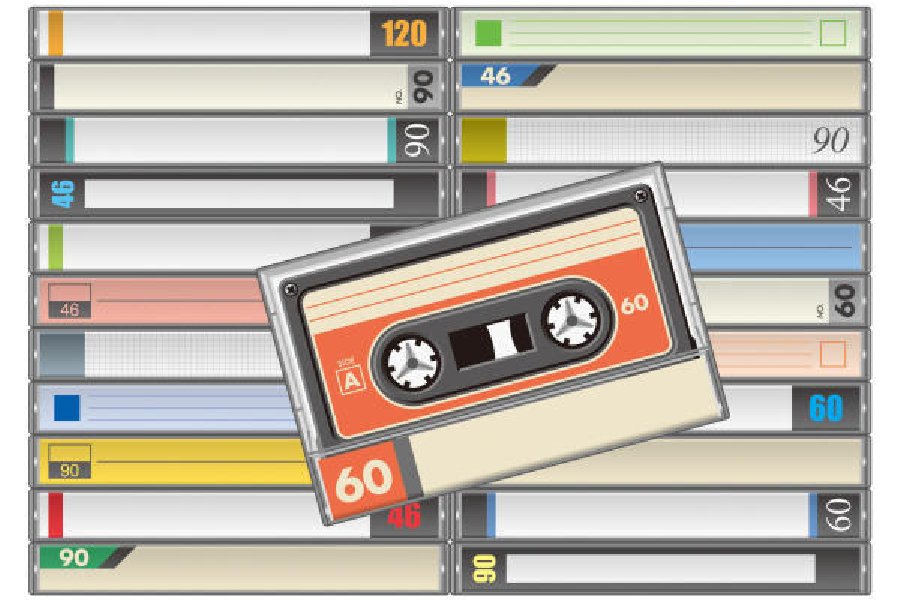
Cassette tapes follow the same logic. Lou Ottens, the Dutch engineer who invented the format, passed away four years ago, but his creation is stirring a new generation’s appetite for mixed tapes and tactile listening. Blank cassettes are selling for between ₹200 and ₹700 in India. American rock band The Strokes have leaned into the medium to promote their new song Going Shopping — a wink, perhaps, at a generation that is shopping very differently from what the tech industry expected.
In photography, the rebellion is just as visible. Despite smartphones offering 100x zoom, sales of point-and-shoot and instant cameras are climbing steadily, with Fujifilm and Kodak releasing new models to meet the demand. When young photographers are asked what they value in these images, almost all of them name the same qualities — texture and grain. The flaw, not the finish, is the point.
Even on their wrists and ears, the statement is consistent. Wired headphones — plugged in via a 3.5mm-to-USB-C adaptor, cable swinging freely — are a common sight again, chosen over wireless earbuds. The Casio WS-B1000 is being opted for over expensive smartwatches that bombard the wrist with standing alerts, calorie targets and active-minute goals. Young people, it seems, would rather just know the time.
Taken together, these choices describe more than a nostalgia trip. They describe a generation that grew up promised the future and has decided, on reflection, that it would prefer a little less of it. AI, it appears, is losing the one thing that no technology can afford to lose for long — the curiosity factor.