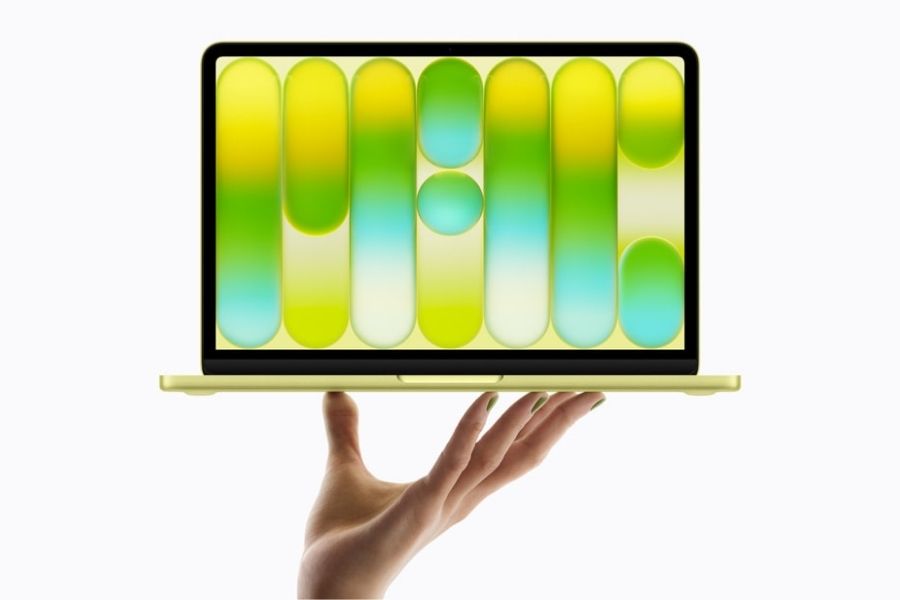
Apple may as well dub their new entry-level budget laptop, the MacBook Neo, the 'We-are-here-to-disrupt-the-market MacBook'.
Underneath its positioning as Apple’s most affordable laptop yet, at $599, lies a deeper story about semiconductors, supply chains and control. And why Apple may be better positioned than most of its rivals in an era of global chip constraints.
Over the past five years, the global computer industry has been constantly disrupted by shortages in key semiconductor components. PC manufacturers that depend on processors from Intel, AMD and Qualcomm often have little control over supply timelines or pricing, as the chip manufacturers are increasingly preferring to prioritise doing business with artificial intelligence companies.
Here’s where Apple edges ahead. The new MacBook Neo is powered by the A18 Pro, a chip originally designed for the iPhone 16 Pro. By repurposing that silicon for a laptop, Apple is showcasing a distinct advantage it holds over the rest of the PC industry – complete control over the processor, hardware and software.
Apple has been using its own custom chips in its laptops and computers for a while now, having dramatically improved battery life and performance. The A18 Pro chip promises to be faster than the first-generation M1 chip, and early glimpses have shown that the laptop is fast enough for regular day-to-day tasks. Using the chip from the iPhone allows Apple to leverage the enormous production volumes of its mobile chips, potentially insulating the MacBook Neo from the supply volatility and, most importantly, positioning the laptop in a lower price segment without depending on external chip vendors.
For years, the cheapest MacBook one could buy was the 13-inch MacBook Air, which retailed for around $999 (now $1,099). The MacBook Neo positions itself at the spending range of what many first-time laptop buyers in India are willing to spend.
The MacBook Neo gives you an all-aluminium body, a perfect companion to your iPhone, access to the Apple ecosystem and the general aura of owning a MacBook for around Rs 55,000. Most other laptops in this price range will offer you a plastic body and not-so-great battery life.
This makes it ideal for students and young professionals who need a lightweight laptop for their daily tasks and can take it on the go without having to worry about power running out.
That does not mean the MacBook Neo will automatically outperform its rivals.
Windows laptops in this price bracket often provide advantages that matter to many buyers. Larger storage options, additional ports and sometimes higher RAM configurations remain common selling points. Manufacturers can also move quickly to adopt new processors as they become available from Intel or AMD.
Still, Apple’s vertically integrated model allows it to optimise battery life, thermal performance and software behaviour in ways that are harder to replicate in the fragmented PC ecosystem.

But for all its strategic strengths, the MacBook Neo inevitably involves compromises.
Many prospective buyers would have welcomed 16GB of RAM as the base configuration, especially as modern applications and browser workloads continue to expand. Additional ports, faster charging and the return of features like MagSafe charging would also have made the device feel more future-ready.
Storage capacity is another area where Apple traditionally remains conservative compared with Windows competitors.
None of these trade-offs are unusual for an entry-level device. But they highlight the delicate balance Apple is attempting to strike: lowering the price of the MacBook without diluting the premium expectations associated with the brand.While the laptop is ideal for day-to-day tasks, don’t expect the laptop to hold up as well as other MacBooks when it comes to high-end creative (video editing and animation) work.
There’s one more caveat. Several users, especially the customer base the MacBook Neo wants to target in India, often use an iPad instead of an entry-level laptop for their day-to-day tasks. The iPad, however, gives the user a touchscreen and the ability to use the Apple Pencil for sketching and other creative work – something the MacBook Neo doesn’t provide. The cost of an iPad, its keyboard and the Apple Pencil is very close to the pricing of the MacBook Neo. So Apple does stand to potentially cannibalise its own product line.
Ultimately, the MacBook Neo may represent less of a conventional product launch and more of a strategic signal.
In a laptop market shaped by unpredictable semiconductor supply chains, Apple’s ability to design its own processors — and deploy them across multiple categories of devices — gives it a degree of flexibility that many PC makers simply do not have.
If the MacBook Neo succeeds, it could do more than attract first-time Mac buyers. It could demonstrate how control over silicon, software and hardware has become one of the most powerful competitive advantages in the modern computing industry.