|
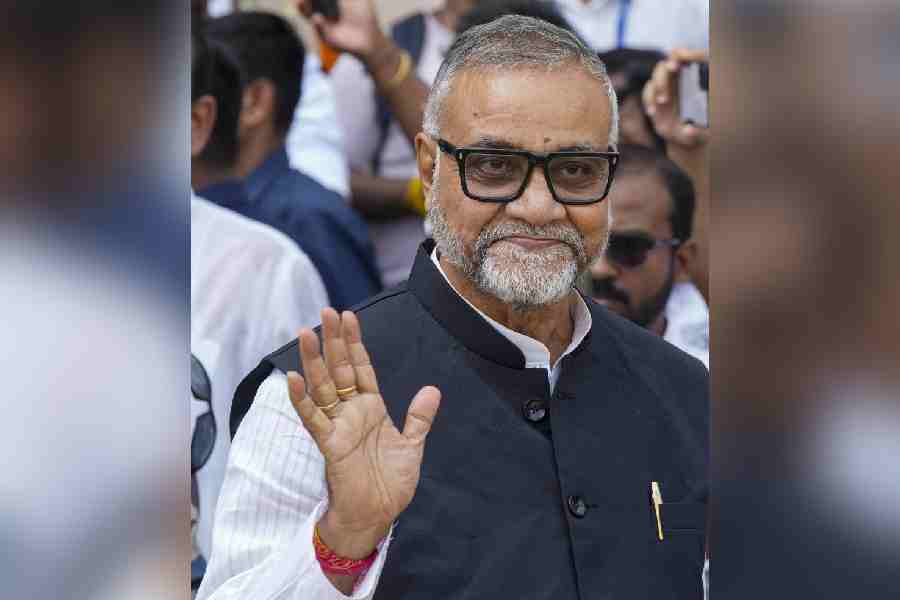
| STANDING FIRM: Justice Asok Kumar Ganguly |
Q: The West Bengal Human Rights Commission (WBHRC) was the first state human rights commission to be set up in the country in 1995. How did you find it when you took over as its chairman in April 2012?
A: Before I took over, the commission was functioning without a chairman for four years. A few things were indeed in disarray and I had to put things in order. But I don’t think it was exactly limping. It was only functioning without a head.
Q: What is the state of human rights in West Bengal?
A: Human rights violations are quite rampant in Bengal. There was a lot of expectation when a new party came to power in the state. I do not know how much of that has been fulfilled. But one thing is clear — the complaints are rising by the day and this reflects the state of human rights here.
Q: Has the number of complaints gone up lately?
A: The number of complaints has almost doubled in recent months. In 2011-12, the number of complaints filed was 5,456 and the number of cases in which recommendations were made was 33. But between 2012 and 2013 the number of complaints nearly doubled to 9,415 and 75 recommendations were made. From April to July 11, 2013, we received 726 complaints.
Q: The WBHRC has taken a strong stand in cases such as that of Jadavpur University professor Ambikesh Mahapatra. This week you asked the state government to pay Rs 2 lakh as compensation to farmer Shiladitya Chowdhury who was called a “Maoist” by chief minister Mamata Banerjee. Don’t you face pressures from different quarters to be less critical of the government?
A: We do try to be independent in dealing with complaints and giving recommendations. I don’t think we antagonise the state machinery in the process. But if we do, we are helpless, since our pledge is to uphold the human rights of the common man. I don’t think I am afraid of what I’m doing as I’m acting only after following proper procedure. I always remember what Vivekananda said, “Courage is life and cowardice is death”.
Q: Do you think state election commissioner Mira Pande’s right to lead a peaceful life has been violated by the campaign that has been conducted against her?
A: Mira Pande is doing an excellent job. When she found it difficult to carry out the duties enjoined on her under the law and the Constitution, she approached the court. I don’t think she committed a mistake in doing so. The criticism and the veiled threats that she has been getting for following the law are very unfortunate.
Q: The state human rights commission also hauled up the West Bengal Pollution Control Board in a case where the residents of an apartment complained of radiation from a cellphone tower installed in their building…
A: The secretary of the Pollution Control Board told the commission that the radiation emanating from the installation of mobile towers is beyond their scope of inquiry. They have given us a guideline circulated by the ministry of environment, which requires the Bengal government to set up state and district level committees to monitor these things. We have given notices to the state government to find out what has been done in this regard.
Q: Human rights activists say that though the commission is disposing of high-profile cases quickly, general cases are not being dealt with as fast. Is this true?
A: We are trying to expedite the time taken to give recommendations. Some old cases are pending, but most have been virtually disposed of.
Q: The Centre and the National Human Rights Commission have given funds to enable the online tracking of complaints lodged on your website. What is the status of this project?
A: We are in touch with the NHRC regarding the online tracking of complaints. There are some bureaucratic bottlenecks that we are trying to remove.
Q: Do you think the commission should be given more powers?
A: The commission’s recommendations should be made more meaningful. Even if they are not made mandatory, at least the state government should provide adequate reasons as to why it is not following the recommendations. However, we feel that even if our recommendations are not accepted by the state, they have an impact on civil society and trigger a lively debate on the civil and constitutional rights of citizens.
Q: If the commission’s recommendations are not obeyed, what can it do?
A: Not much. But the aggrieved party can always approach the court with our recommendations, which would definitely help build a stronger case.
Q: The police often complain that given the condition under which they work, it is impossible for them to function if they have to constantly think of complying with human rights. Your observations.
A: I don’t think the police can legitimately complain that it’s impossible for them to function if they comply with human rights. The Supreme Court and the high courts have given repeated directions to the police to comply with human rights laws in their functioning. The police are a branch of the executive wing of the government. And the government has to function keeping in mind constitutional values, which are basically human rights documents. If the police’s complaint is accepted, they will have to be given a charter to flout constitutional principles. This is an absurd claim.
Q: You are often called the most active human rights activist in Bengal. Your reaction.
A: I do not know if I am the most active rights activist in Bengal. But along with my two colleagues in the commission, we have been trying to address the grievances of the people on human rights violations. Our resources are limited and we do not have sufficient infrastructure. But still, we are trying.
Q: What are your priority areas?
A: There are many areas which need our immediate attention, such as prisoners’ rights and the rights of undertrials. I have written to the Chief Justice of the Calcutta High Court in this regard. We are also planning to hold a sitting of the commission in the districts to fast track the hearing of complaints. These are some of our priorities.