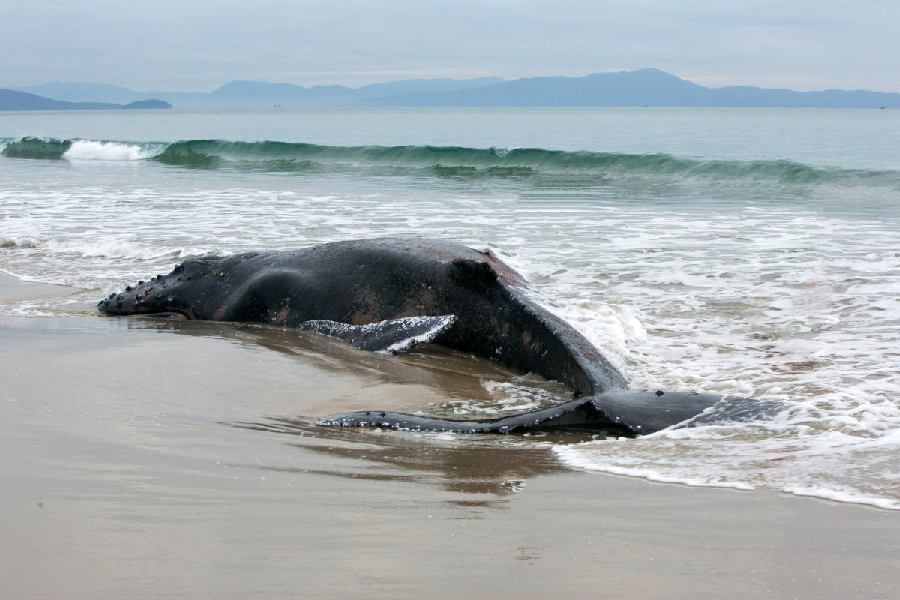
A study by the ICAR-Central Marine Fisheries Research Institute revealed a ten-fold increase in whale stranding incidents, from 0.3% between 2003 and 2013 to 3% between 2014 and 2023, in India’s southwestern coast. It mentions a combination of anthropogenic factors — high vessel traffic and fishing — and natural factors — shallow continental shelves — as reasons behind this spike. Historically, whale strandings have taken place due to natural causes such as illness. However, in recent times, strandings due to anthropogenic factors are a frequent occurrence not just in India but across the globe. As several whale populations recover from the threat of extinction, preventable tragedies such as anthropogenic strandings function as a bottleneck in population recovery efforts.
Some live stranded whales can be rescued if found at the right time and refloated properly. But often, proper equipment, such as inflatable lifting pontoons, and trained personnel — forest officials, veterinarians, marine biologists, and the like — are not available in times of need. Since whale stranding rescues require a lot of manpower and specialised equipment, organised endeavours that can immediately respond to stranding calls, especially in remote areas, are an urgent necessity.
In 2021, the ministry of environment, forest and climate change had issued guidelines to help create stranding centres at the national and state levels and also link rapid response teams with governmental and non-governmental entities that manage marine megafauna stranding. None of these well-intentioned plans has been realised yet. The MoEFCC guidelines also cover standard operating procedures that guide response efforts during strandings. But these lack proper outreach. This needs to be rectified since untrained responders can unintentionally complicate refloating efforts. Measures such as pasting the MoEFCC guidelines on notice boards near whale spotting areas, mentioning them in travel brochures, and having local authorities announce them over public address systems can help increase public knowledge.
According to the Zoological Survey of India’s Marine Biology Regional Centre, literature on marine mammals, including whales, is limited to stranding reports along India’s coasts. Data from only reported sightings are inadequate since not all stranded whales are reported or even found, especially if the stranding takes place in an isolated or inaccessible area. It stands to reason that the upsurge in India’s stranding incidents necessitate in-depth studies on these ocean giants. Extensive research in areas where shipping routes overlap with critical habitats, for instance, can help locate high-risk stranding zones.
India directly and indirectly protects all whale species through The Wild Life (Protection) Act, 1972, The Prevention of Cruelty to Animals Act, 1960, and state-specific Marine Fisheries Regulation Acts, among others. Moreover, it is a signatory to the International Whaling Commission that conserves whales and regulates whaling, the Convention on International Trade in Endangered Species of Wild Fauna and Flora that manages international trade in endangered species, and the Bonn Convention that conserves migratory species and their habitats. These offer proof that the conservation of whales is a priority for India. Given stranding management’s emergence as a critical aspect of whale conservation, India must prop up its refloating efforts right away.