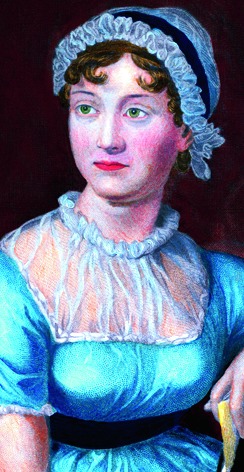

December is a holy month for Jane Austen fans. Not only was their favourite author born on December 16, but three of her novels were published at this time of year as well. In fact, Northanger Abbey and Persuasion - both published posthumously - complete 200 years in print in 2017, while Emma got there two years ago. (Northanger Abbey - the story of a young, naive girl who desperately wishes to be the heroine of a Gothic novel but instead finds herself in a quiet domestic story - is exceedingly funny, and easily one of Austen's best works.)
Many biographers of Austen like to highlight the docile love affairs and familial devotion in her adult novels; they also date her authorial career from Sense and Sensibility, published when she was 35. The truth, however, is that Austen was writing racy sketches and short stories at 11, and these adolescent works are arguably some of the best comic writings in English. Her characters displayed the classic traits of teenage girls gone wild: drunken binges, theft, fist fights, over-the-top emotions. There are torrid love affairs, solid friendships and, regularly, a deep disdain for older people.
At first, these stories seem to be a stark counter to the sober realism of her adult fiction. One of her characters, Anna Parker, writes her friend a nonchalant letter saying that, after having killed her parents, "I am now going to murder my Sister." The young Austen did not write about jealousies or secret crushes. She wrote for an audience - mainly friends and family - and anticipated their enjoyment. These stories were all about putting up a show, and outlined either too much action or none at all. Readers are told that the drunk hero of Jack & Alice "never did anything worth mentioning".
When Austen was in her teens, Mary Wollstonecraft was establishing a link between education for girls and the urgent need for political reform. Austen's teenage works deride the straitjacketed syllabus that was called 'education' for girls at the end of the 18th century; with women not allowed to attend university or have careers, education was intended to teach them to be good wives and mothers. And so the girls in the teenage Austen's stories refuse to be ladylike: while Alice Johnson gambles and stays inebriated all the time, Charlotte Drummond devours a feast of meat immediately after accepting two marriage proposals.
These clever, funny stories are still relatively unknown by even Austen's biggest fans, in part because they were published over 100 years after she died. They may have none of the restraint or elegance of her later fiction, but glimpses of their outrageous wit remain - in Elizabeth Bennet "jumping over stiles and springing over puddles" to reach Netherfield, or in Elinor Dashwood firmly asking for a stiff drink. In these moments, the voice of the young, rebellious Austen, who was far closer in thought to our time than she was to her own, returns once more.