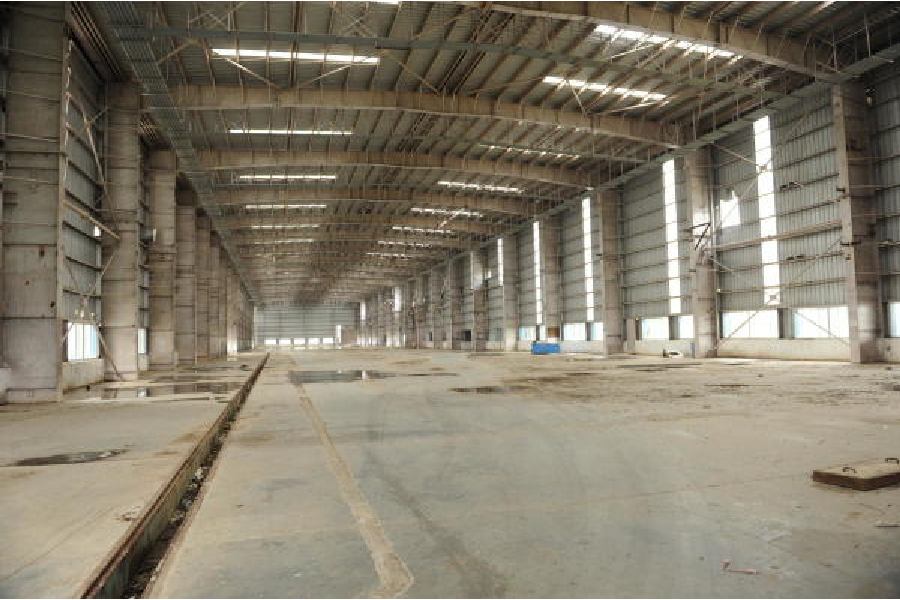
Private industry failed to flourish during the thirty-four years of rule by the Left Front. Through most of its tenure, the Communist Party of India (Marxist)-led coalition supported labour movements based on a single-minded rejection of ‘profit’, a dirty word in the Left parlance. Little wonder then that factories fled from the state and, towards the end of the Left’s term, the economy lay in tatters.
The Trinamool Congress came to power after the CPI(M), on waking up from its self-created wilderness, invited a business house to build a factory in West Bengal. The scheme began to take shape but the project had to be abandoned on account of opposition by we know who. The Tatas left not on account of their profit-making endeavour but because they had hurt the land-owners’ interests. The TMC cashed in on this and, supported by a strong anti-incumbency factor, came to power with a landslide victory.
The CPI(M), despite its many faults, had a philosophy guiding it: Marxism in some form. One wonders what sort of economic philosophy the TMC adheres to as far as at least employment is concerned. Nothing other than business conclaves held annually bore evidence of its economic vision. But no industrial concern worth its name showed willingness to set foot in the state.
Not that private enterprise does not exist in West Bengal. Yet the state of affairs is hardly comparable to the success evidenced elsewhere in India, such as in Tamil Nadu, Maharashtra and so on. Bengal’s primary economic activity continues to be agriculture, providing livelihood to around 70% of the population. On the other hand, the biggest share in Bengal’s gross state domestic product is contributed by the service sector. The latter, consisting of information technology, tourism, health, education and banking, among others, does not, however, appear to be employment friendly in a large way, perhaps on account of the nature of technology.
Under the circumstances, growth in income-generating employment is the call of the day. According to media reports, the adviser to the new chief minister has indicated that this is the area he too wishes to concentrate on. In addition, the state president of the Bharatiya Janata Party expects big-ticket investments to move towards Bengal. At this stage, the assurances are welcome fillips to a languishing economy.
True success for such planning requires the resurgence of private industry. Either existing industries in Bengal must expand or new ones should be lured to the state. Fortunately, unlike the CPI(M), the government in power is not allergic to profit earners. It may even give attractive incentives for profit-making. Special Economic Zones could well come up for discussion, once again.
An important issue that the state government will need to bear in mind though is that the barrier to employment generation in industry is not funds alone. The problem could lie, as with the service sector, in the rapidly changing face of technology. Even before the arrival of Artificial Intelligence (and as long back as the Tata exercise in Singur), public discussion often veered around the question of employment intensity of modern factories. Technical progress is likely to be biased against routine workers. An important task for the government, therefore, would be to locate industries in today’s highly machine-intensive world that offer significant job opportunities for blue-collar workers who must constitute the majority of the labour force. In this context, what acts in the government’s favour is that AI has not yet invaded West Bengal in a major way. Nor is the reserve army of unemployed labour in the state all that tech-savvy.
Given its massive victory, the newly-elected government is in a strong position to build the kind of healthy society where people will be ready, at least in the near future, to substitute pessimism with dreams of success. The BJP president has indicated the possibility of rare earth mining in Purulia and excavation of oil reserves in Ashoknagar. Apart from these, he informs that Bengal has manganese and gold reserves in Bankura and Kalimpong. Monetary empowerment of women is probably a step in the right direction. Probably, since sooner or later, society will need to integrate women in an important way within the workforce. Cash transfers aside, the government will be well-advised to invest in human capital formation specifically geared towards women so that when employment opportunities arrive, they become more actively involved in value creation in the market.
This apart, firms will be attracted towards the state on the basis of what J.M. Keynes described as long-term expectations. Will the state be able to come up with a business-friendly message? One that will endure? Especially so when two successive governments have left behind a ruined economy? The upcoming five years in power are not long enough for the economy’s image-building exercise. Lost opportunities need to be revived for creating a healthy atmosphere. For industry to move into Bengal, appropriate infrastructure ought to be in place. Private investors will not contribute to infrastructure building which, by its very nature, is almost freely available to the public. However difficult, the challenge lies in transforming an industrially shabby state into a shiny destination for investors. The government must plan to tackle this issue during its first term. If nothing else, it will be a confidence-building exercise.
As Keynes had observed, “It is safe to say that enterprise which depends on hopes stretching into the future benefits the community as a whole. But individual initiative will only be adequate when reasonable calculation is supplemented and supported by animal spirits, so that the thought of ultimate loss… is put aside as a healthy man puts aside the expectation of death.” West Bengal is not well-known as a bubbling source of investment induced by animal spirits. The government will have to arouse the sleeping lions of its own population in the first place and ensure that investors are not shown the door, once again, by an Opposition propelled by irresponsible groups.
Dipankar Dasgupta is former Professor of Economics, Indian Statistical Institute