Selective empathy
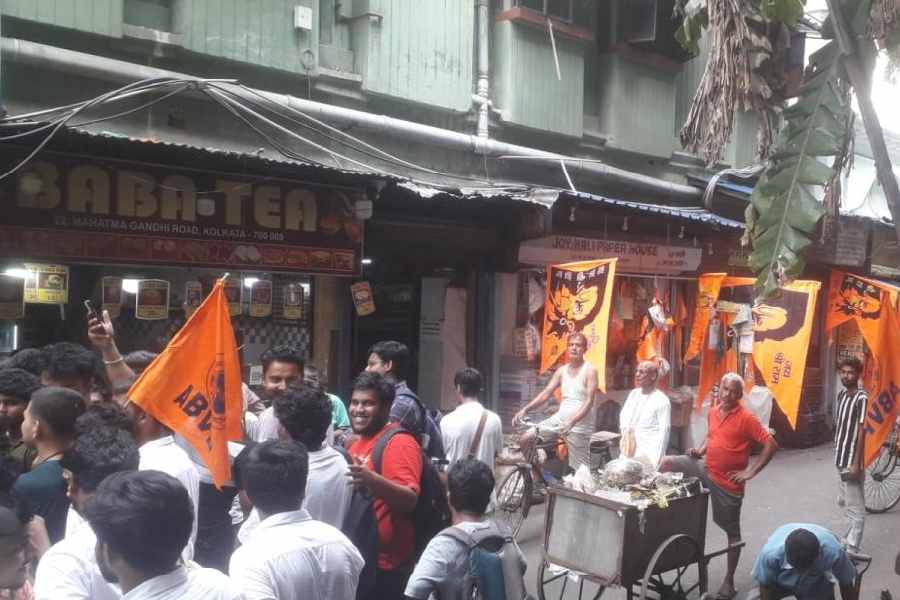
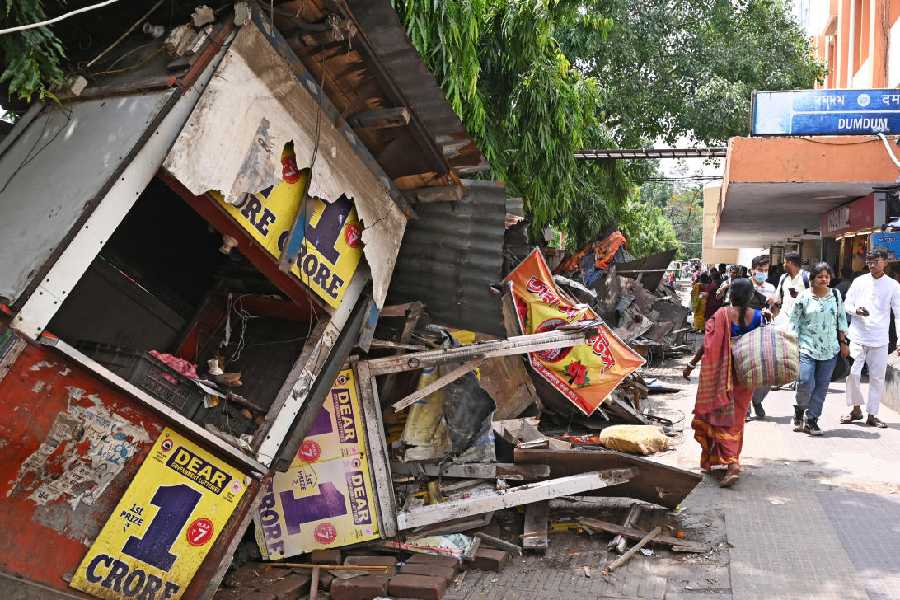
Sir — The loud cheering over the 'clean-up' of the Sealdah and the Dum Dum railway stations exposes the double standards in public empathy. Not long ago, many of the same voices were condemning the layoffs in the technology sector, describing corporate cuts as cruel and heartless. Yet, when railway hawkers lose their only source of income as a result of the demolition drive, those same people celebrate. Apparently, losing a job is only a tragedy if you work on a laptop and carry a corporate ID card. When a poor person loses his or her tea stall — built through decades of backbreaking labour — it is suddenly viewed as 'progress'. It seems that empathy is reserved for white-collar jobs while the struggles of the poor are dismissed as a cost of modernisation.
Indira Sen,
Calcutta
Work together
Sir — Private industry flourishes if both the Centre and the state government concerned work unitedly ("Tasks ahead", Jun 1). For its proposed project in Singur, the Tatas did not take the landholders into confidence. Crop lands were forcibly occupied. The court ultimately ruled that the acquisition of the 997 acres of land in Singur was illegal. After the Trinamool Congress came to power, no new industrialist was keen on investing in the state. Herein lies the role of the Centre. The Centre should have come forward to help the state attract investments.
Arun Gupta,
Calcutta
Sir — In his article, "Tasks ahead", Dipankar Dasgupta advocates for "growth in income-generating employment" and pinpoints the important task ahead for the new Bharatiya Janata Party government in Bengal: to "locate industries that offer significant job opportunities for blue-collar workers". During the decades of Left Front and Trinamool Congress rule, Bengal failed to attract private investment and businesses relocated or shut down in the state. The author remains optimistic about the new initiatives to usher in industries in Bengal.
Jahar Saha,
Calcutta
Sudden exit
Sir — K. Annamalai has parted ways with the Bharatiya Janata Party to launch a new political movement. The Bharatiya Janata Party's expansion beyond its traditional northern bastions has often relied on regional allies and local leadership. Across the Northeast, alliances and local formations paved the way for deeper political penetration. Tamil Nadu, however, has remained the toughest frontier. If Annamalai can mobilise constituencies under a distinctly Dravidian banner while retaining ideological proximity, the BJP may eventually secure through partnership what it has thus far failed to achieve through direct contest.
R. Narayanan,
Navi Mumbai
Sir — In December 2024, a shirtless man donning a green lungi flogged himself in protest against the erstwhile Dravida Munnetra Kazhagam government. That man was none other than K. Annamalai, the then Tamil Nadu BJP president.
Such devotion for politics is rare. Annamalai has now severed ties with BJP, the same party for which he had initially left his decorated service as an Indian Police Service officer. Annamalai has been credited with increasing the presence of the saffron party in Tamil Nadu and advocating strongly against tying up with the All India Anna Dravida Munnetra Kazhagam.
Yashi Bairagi,
Ujjain
Sir — K. Annamalai had resigned from his IPS post and joined the BJP. He raised the saffron party's profile in the Dravidian heartland. However, the party leadership sidelined him to accommodate the wishes of the AIADMK. This was a grave mistake by the BJP. Now, Annamalai is poised to start a new political party. This will definitely be a suicidal move given that the Tamilaga Vettri Kazhagam has been voted to power by the people of Tamil Nadu to usher in a change.
Sravana Ramachandran,
Chennai
Sir — K. Annamalai has garnered attention for his political moves. He may be drawing inspiration from the actor-turned-politician, C. Joseph Vijay, believing that a section of the youth is ready to support his political ambitions. However, unlike Vijay, whose popularity was built through a successful career in films, Annamalai does not enjoy a mass appeal.
Though he succeeded in creating some enthusiasm among the people during his tenure in the BJP, it remains doubtful whether that support alone can sustain his new political party. Whether he can establish a viable political alternative and replicate the electoral impact achieved by Vijay remains to be seen.
Rajakumar Arulanandham,
Tirunelveli, Tamil Nadu
Icon falls
Sir — A statue of the Argentine football legend, Lionel Messi, was removed from Calcutta's Lake Town area after the authorities found the structure had become unstable following a recent storm (“Red card Messi did not deserve”, Jun 2). This is not a sign of disrespect to Messi but circumstances compelled the move. The statue could cause a severe hazard to pedestrians and vehicles ahead of the monsoon season. It is expected that the state government would reinstall the statue in a prominent place in the city.
Deba Prasad Bhattacharya,
Calcutta
Sir — It is only in a land without heroes that we have to borrow heroes from other countries. Lionel Messi comes from Argentina, most of whose citizens would not be able to locate Calcutta on a map. That does not diminish Messi's achievements but it does highlight the shamelessness of our poverty in footballing talent. Messi is not a Bengali icon. It is time to give his statue a decent burial. Let us cultivate our own heroes and show them our respect.
S. Mitra,
Calcutta