Beyond exam halls
Sir — The traditional education system is failing, leaving students and parents anxious. This failure is especially stark today amidst the chaos of national examinations being cancelled because of structural lapses. Perhaps it is time to collectively rethink this mode of learning and consider homeschooling as an alternative. Homeschooling replaces toxic exam factories with a relaxed, customisable sanctuary where children can think freely, without being burdened by exam pressure. If such an approach was good enough for Rabindranath Tagore, it can certainly work for us as well.
Sobhita Roy,
Hooghly
Equal classroom
Sir — The Congress government in Karnataka has rolled back the ban on hijab in educational institutions imposed in 2022 by the erstwhile Bharatiya Janata Party government (“Karnataka rolls back hijab ban order”, May 14). The new order permits limited traditional, faith-based symbols, including turbans, sacred threads, and headscarves. Campuses cannot deny student entry on the basis of such attire. This follows a major controversy starting in Udupi in 2021 when Muslim students were denied entry into the classroom at a government college because they were wearing hijabs. The issue had then drawn global attention and triggered institutional clashes.
Bhagwan Thadani,
Mumbai
Sir — By enforcing a hijab ban, the then BJP regime in Karnataka created segregated, unequal spaces within educational institutions, undermining constitutional guarantees of equality, education, and religious freedom. The incumbent Congress government’s decision to revoke the ban reaffirms the foundational values of the Constitution. It also reflects the inclusive spirit of Karnataka’s social and cultural ethos.
S.S. Paul,
Nadia
Heavy burden
Sir — The austerity measures prescribed by Prime Minister Narendra Modi — deferring gold purchases, avoiding foreign travel, and reducing oil consumption — shift the burden of economic strain onto ordinary people instead of addressing the structural weaknesses (“Bitter pills”, May 13). It comes at a time of a weakening rupee, rising crude oil prices, surging import costs, and the slowing of foreign inflows following the closure of the Strait of Hormuz. Instead of calling for national sacrifice, the government must present a credible economic roadmap. India needs transparent governance, stronger domestic fundamentals, and long-term policy clarity rather than vague promises.
M. Jeyaram,
Sholavandan, Tamil Nadu
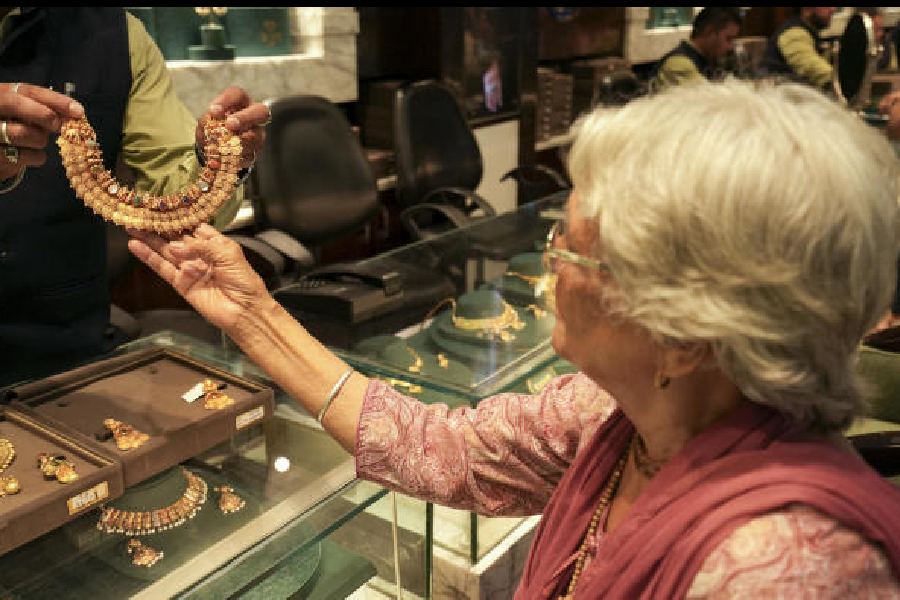
Sir — The hike in import duty on gold has led to a confrontation between India’s fiscal compulsions and its cultural psyche. While curbing non-essential imports is vital to stabilising the rupee, gold remains a sanctuary of security rather than a mere commodity. Taxation alone cannot dismantle inherited faith in gold; instead, it risks fuelling the grey market and social discontent. For this policy to succeed, the government must bridge the gap between economic nationalism and innovation.
Vijaykumar H.K.,
Raichur, Karnataka
Speed trap
Sir — Over the past decade, leading restaurant businesses have competed fiercely to provide fast, efficient, and hygienic food delivery. In this race for speed, customers often grow impatient over minor delays. Battling chaotic traffic, road rage, noise, and air pollution, delivery partners push themselves relentlessly to meet strict deadlines. Since a single negative customer review can jeopardise their livelihoods, delivery personnel are rarely in a position to argue with patrons. Yet social media continues to report frequent skirmishes between customers and delivery workers.
Ganapathi Bhat,
Akola, Maharashtra