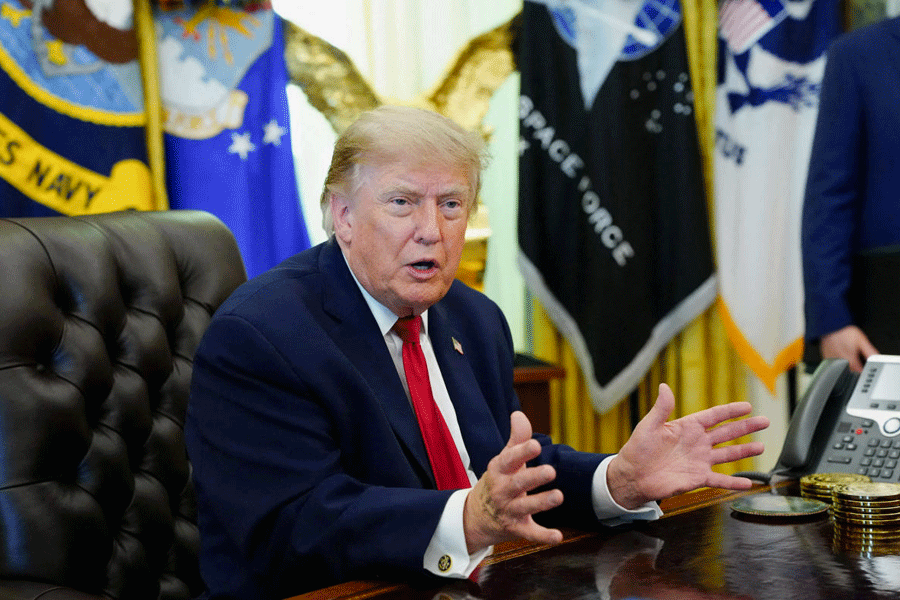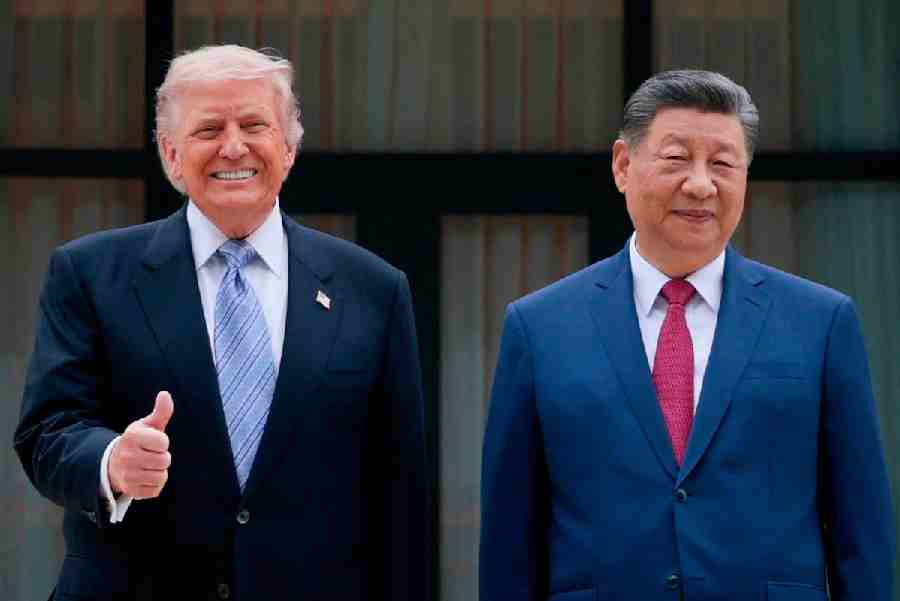
Over a day and a half in Beijing this week, the presidents of the United States of America and China lavished praise on each other, spoke of elevating their ties to new heights, and appeared to set aside their competition for global leadership. But as the US president, Donald Trump, departed from the Chinese capital on Friday afternoon, the stark realities of the US-China ties shone through, once again. For all of the choreographed attempts at bonhomie, there is little evidence that either the US or China got the other to budge on the key issues that the two nations are grappling with at the moment. Consequently, the tensions that inform this relationship continue to simmer. The Chinese president, Xi Jinping, spoke of ensuring that the US and China do not fall into the “Thucydides Trap”— the idea that an emerging power challenging an existing hegemon is a situation destined to end in conflict. Mr Trump, on his part, called Mr Xi a great leader, thanked his host profusely, and spoke of taking bilateral ties to unprecedented heights. They both spoke of expanding trade and investment relations: Mr Trump was accompanied by the titans of the tech and business world. But despite the multiple walks in scenic settings, Mr Trump and Mr Xi could not even agree on a joint statement.
The biggest foreign policy priority for the US at the moment is ending the war on Iran on respectable terms; Tehran, after all, has exposed the limitations of Washington’s hard power. For weeks, US officials have been saying that they want China to play a more active role in leaning on Iran to reopen the Strait of Hormuz. But China made it clear, during Mr Trump’s visit, that while it wanted the Hormuz Strait open and for the war to end, it blames America for the crisis. It has not signalled any desire to put pressure on Iran to compromise on what Tehran believes are its core interests. On its part, the US showed no signs of weakening its military support to Taiwan, a key demand from Beijing.
On his way back to Washington, Mr Trump told reporters that the two leaders had not discussed their tariff war at all even though their tit-for-tat use of escalating tariffs last year is only on pause for now. Strikingly, there was little overlap in the statements on the talks the two sides put out: the White House’s claims that the leaders agreed on curbing Chinese fentanyl threats to the US and that Beijing agreed to buy US oil did not figure in the Chinese readout. What was clear though was that neither side wanted to rock their inherently contested relationship further. That is perhaps a minor triumph. An unsettled world cannot afford a heated face-off between its two most powerful nations. But an uneasy understanding cannot be a substitute for a sustainable relationship. After two days of pomp and ceremony, US-China relations are no more stable than they were previously.