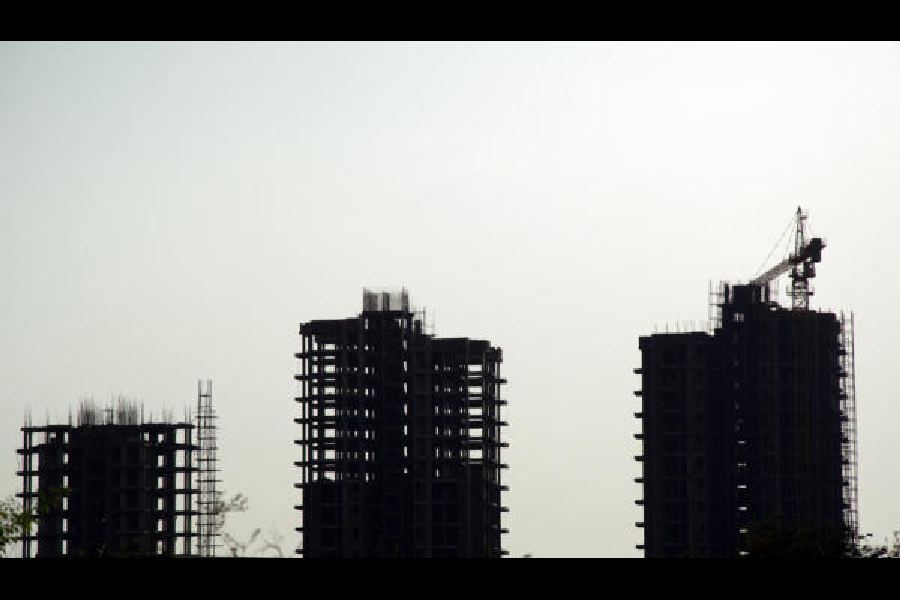
India’s cities are facing an acute housing crisis that threatens economic opportunity, social inclusion, and sustainable urban growth. Rapid urbanisation over the past several decades has driven unprecedented demand for homes while the supply of affordable housing has struggled to keep pace. Many low- and moderate-income households find themselves priced out by sky-high real estate costs caused largely by land scarcity in and around metropolitan cores.
According to recent data, India has an estimated urban affordable housing deficit of around 9.4 million units, a gap that experts project could rise to nearly 30 million by 2030 if current trends continue. Nearly 80% of this demand is concentrated among economically weaker sections and low income groups. According to the Economic Survey 2025-26, the share of affordable housing units, those priced below Rs 50 lakh, in India’s top eight cities has crashed from 52.4% in 2018 to a mere 17% by 2025, signalling a shrinking supply of accessible housing close to jobs and services. At the same time, vast tracts of publicly-owned land remain underutilised or idle, presenting a powerful opportunity to expand housing supply while reducing land-driven inflation in urban real estate.
Key government holdings managed by the Indian railways, the ministry of defence, and public sector undertakings could provide a foundation for mixed-income and affordable housing if brought into productive use. The Indian railways is one of the largest landowners in the country with about 4.90 lakh hectares (nearly 12.1 lakh acres) under its possession as of March 2024. Only around 1% of this land is used for commercial purposes and a tiny fraction has been leased for development, according to the railways minister.
The railways has earned around 3,129 crore rupees in fiscal 2024-25 from commercial land leases; yet the overall commercial utilisation remains limited. Even though only around 62,000 hectares (13%) were identified as vacant by March 2023, the comptroller and auditor general of India has reported that just 0.14% of that vacant land had been awarded to developers, and none of the awarded plots had been developed as of that date. These figures reveal a significant underuse of one of the largest land banks in urban India.
Similarly, the ministry of defence is the largest single landholder among Central ministries, administering roughly 17.99 lakh acres across India. Much of this land is required for training, ranges, depots and other strategic purposes. However, in a written parliamentary reply in late 2025, the ministry had acknowledged identifying about 45,906 acres of defence land as surplus to operational requirements and has circulated this inventory to other Central departments for potential public use. Delhi alone accounts for more than 800 acres of this surplus land, offering a rare opportunity near one of India’s densest and most expensive urban markets.
PSUs have also accumulated substantial land banks over the decades, much of which remains underutilised. In Telangana, for example, surveys indicate that nearly 12,500 acres were allotted to 11 Central PSUs around Hyderabad, of which between 4,000 and 5,000 acres are still unused or underused. Specific estimates suggest nearly 6,600 acres were unutilised across several operational units, with an additional 3,300 acres held by defunct PSUs. These idle land parcels, often in prime or developing urban locations, represent an unexplored supply that could be repurposed for housing and mixed-use development if clear policy frameworks are established. The argument for a comprehensive audit of unused and underutilised land across these public holdings is compelling. Without a systematic assessment of land ownership, size, location, legal status and current use, policymakers will continue to operate without the data necessary for evidence-based planning.
A Central inventory would provide a transparent foundation for inter-agency coordination, reduce duplication in record keeping, and enable effective urban redevelopment strategies. Leasing public land rather than selling it outright could preserve long-term public ownership while enabling urban housing solutions at scale. Clear, competitive lease terms with protections for affordable housing targets would reduce upfront costs for developers, making affordable projects financially viable even in high-value urban markets. Municipal housing agencies, state housing boards, and private developers committed to affordability could participate under regulated frameworks that ensure public benefit is embedded in every project.
Unlocking public land for housing also aligns with broader policy reforms needed to revitalise urban India. It would increase the supply of buildable land close to jobs and transport, ease land scarcity that currently inflates real estate prices, and integrate affordable housing into dynamic, mixed-income communities. International examples
show that public land banks can catalyse affordable housing when combined with regulatory incentives such as increased floor area ratios, fast-track approvals, and targeted subsidies.
Challenges remain around security considerations for defence land, title clarity, encroachment, and coordination between Central and state authorities. But these obstacles are administrative in nature, and can be resolved through strong governance, transparent processes, and political will. India’s urban future depends on innovative solutions that turn latent public assets into inclusive housing outcomes. Conducting a comprehensive audit of unused and underutilised land held by the Indian railways, the ministry of defence, and PSUs is a practical first step towards unlocking this potential. Doing so, the nation can make headway in addressing its deepening housing shortage and moderate real estate inflation while ensuring that public land serves the public good.
Fauzia Khan is Member of Parliament, Rajya Sabha, Nationalist Congress Party