The Narendra Modi government’s detect-detain-deport policy on “infiltrators”, involving the summary expulsion of illegal immigrants into Bangladesh without bothering with legal or diplomatic niceties, has triggered allegations of human rights violations and the victimisation of genuine Indian citizens.
It has also turned the spotlight on the difference between court-mandated “deportations” and executive-driven “pushbacks”, and prompted an indignant Dhaka to claim transgression of its territorial sovereignty.
International law recognises a country’s right to “deport” illegals, which is a legal process involving what may be long-drawn court or tribunal hearings, possible appeals, respect for the deportees’ human rights, and diplomatic coordination with the receiving country.
“Pushbacks”, in contrast, are extra-legal executive actions where migrants or refugees are forcibly pushed across an international border without due process, assessments of individual circumstances, or the chance to claim asylum.
Pahalgam aftermath
After the Sheikh Hasina government’s fall in Bangladesh in August 2024, India’s home ministry had directed the police forces of all the states and Union Territories to detect illegal Bangladeshi immigrants.
The drive was intensified after the Pahalgam terror attack in April last year, with the ministry issuing a new standard operating procedure that did away with diplomatic verification before pushing back suspected Bangladeshis. The police were asked to hand over the suspects to the BSF.
Since last year, the BSF has reportedly pushed into Bangladesh large numbers of “infiltrators”, particularly from BJP-ruled Assam, Delhi, Gujarat, Odisha, Rajasthan, Uttar Pradesh, Haryana and Maharashtra.
Unlike deportation procedures, no request was sent from the external affairs ministry to Dhaka for confirmation of the suspects’ Bangladeshi nationality and the issuance of travel permits if the suspects had no passport.
The courts, including the Supreme Court, have acknowledged the Indian citizenship of some of those expelled and directed the government to bring them back.
Scores of other Bengali Muslim migrants working in BJP-ruled states have alleged police harassment, detention and even torture despite furnishing valid Indian documents.
New Act
Under the new Immigration and Foreigners Act, 2025, the Centre has asked every state and Union Territory to set up holding or detention centres to restrict the movement of “infiltrators” until they are deported.
Under this mechanism, local police and state agencies are to detain suspected illegal immigrants without registering FIRs, bypass judicial procedures, and force them across the porous and unfenced land border with Bangladesh.
People have been rounded up from western and hinterland states and flown on air force aircraft to border states like Tripura, Meghalaya, Bengal and Assam to be detained in makeshift camps, handed over to the BSF and forced into Bangladesh.
Bengal reversal
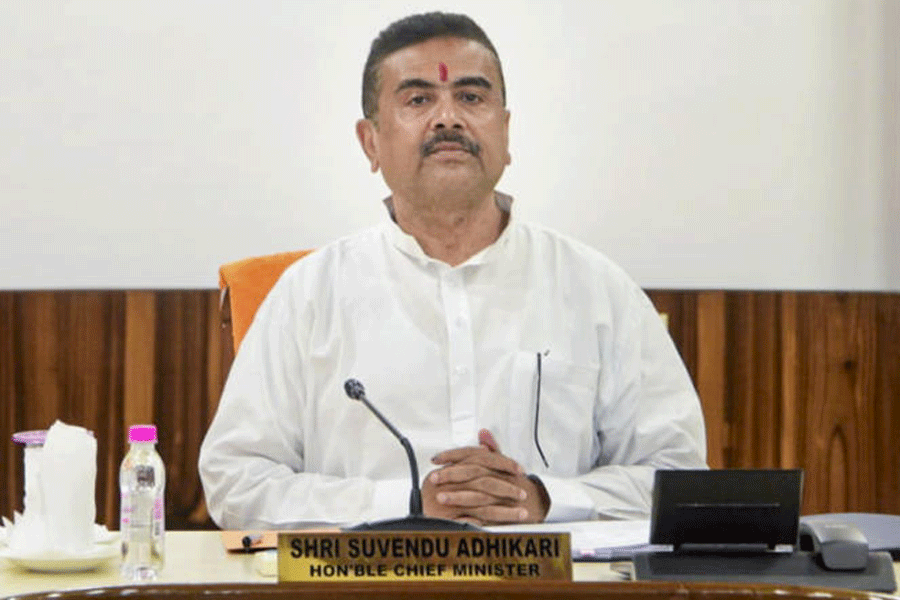
While the erstwhile Mamata Banerjee government had opposed the summary pushbacks and the harassment of Bengal’s Muslim migrants, the state’s new BJP government has declared its intention to pursue its promised “3D” or “Detect, Delete and Deport” policy.
Its establishment of holding centres in the districts and recourse to the “pushback” playbook has triggered panic among illegal immigrants.
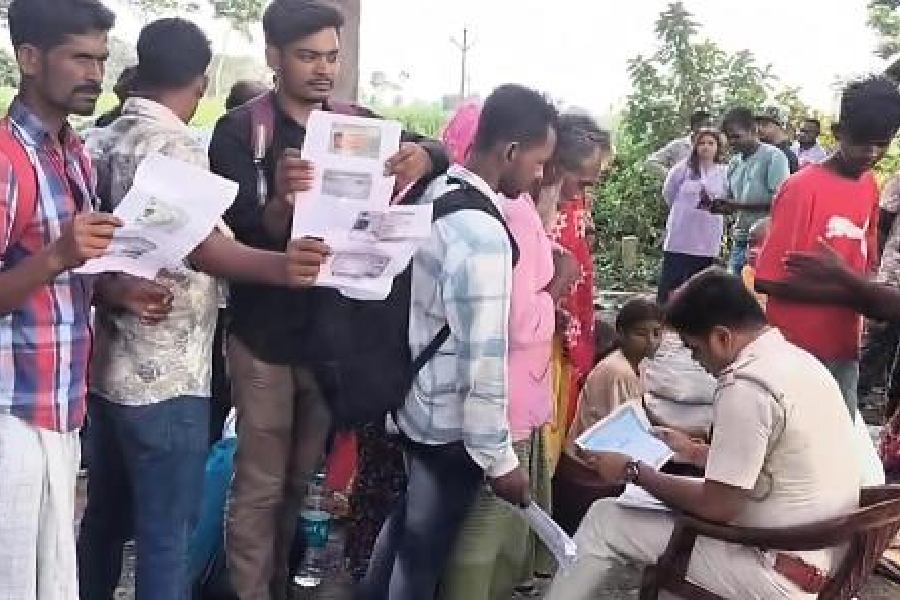
Last week, hundreds of undocumented Bangladeshis, mostly Muslims, made it to the Hakimpur border checkpoint in North 24-Parganas on their own, desperate to cross back into Bangladesh before the state government intensified its crackdown and put them in the holding centres.
The Bengal government has set up at least three temporary holding centres near the Hakimpur channel to accommodate these people before they are allowed to cross over following verification of their antecedents.
Some 384 Bangladeshis were at these centres on Saturday. Sources said 80 of them had been sent back to Bangladesh but neither the BSF nor the state government confirmed the number.
Union home minister Amit Shah recently claimed that while 5,000 to 10,000 “infiltrators” previously entered Bengal from Bangladesh every day, the same number was now leaving daily.
Dhaka objections
Days after the BJP won Bengal, Dhaka formally told New Delhi that any forced, unilateral pushback was a violation of territorial sovereignty, and that any repatriation must involve diplomatic channels and verified nationality processes.
Foreign minister Khalilur Rahman has said Bangladesh would act if such “push-ins” continued.
The Border Guard Bangladesh has reportedly intensified patrolling to prevent forced entries and launched public awareness campaigns, urging border residents over loudspeakers to stay alert against pushback attempts from India.
External affairs ministry spokesperson Randhir Jaiswal has said that “over 2,862 (requests for) nationality verification are pending with Bangladesh, some for over five years”.
“We expect Bangladesh to expedite nationality verification so that repatriation of illegal immigrants can take place in a smooth manner,” Jaiswal said.
Rights worries
The swift and often opaque nature of the pushbacks has prompted civil society members and human rights groups to express concern about the possible victimisation of Bengali-speaking Indian Muslims. They have underlined certain points:
- India has millions of genuine citizens, mostly poor, who do not have birth certificates or supporting documents.
- The suspected foreigners often face human rights violations during the detention period before the pushback.
- If Bangladesh refuses to accept these people as its citizens, they will be rendered stateless and remain stuck in the holding centres indefinitely.
A Human Rights Watch report says: “India’s ruling BJP is fuelling discrimination by arbitrarily expelling Bengali Muslims from the country, including Indian citizens.”
India has not released any official data on the number of pushbacks, the report says, but the BGB has reported that India pushed more than 1,500 Muslim men, women and children into Bangladesh between May 7 and June 15 last year alone.
According to the report, the expulsions sometimes involve Indian border guards threatening and beating the detainees to force them to cross into Bangladesh.
‘Flawed process’
Rights activist and former IAS officer Harsh Mander has said the overwhelming majority among those “pushed” into Bangladesh have been declared “illegal” through flawed and truncated processes.
“The details of these persons are not communicated to the Bangladesh high commission, nor are the Bangladeshi authorities given the opportunity to confirm that these persons resident in India are actually Bangladeshi citizens,” he has written in an article.
“This brazenly contravenes international law, and indeed India’s constitutional guarantees of the fundamental right to life, liberty and due process that extend also to non-citizens.
“If you are a working-class Muslim in India today and speak Bengali, you are likely to be living in mortal fear of the state stripping you of your citizenship overnight, throwing you into a detention centre or pushing you across the international border to neighbouring Bangladesh.”
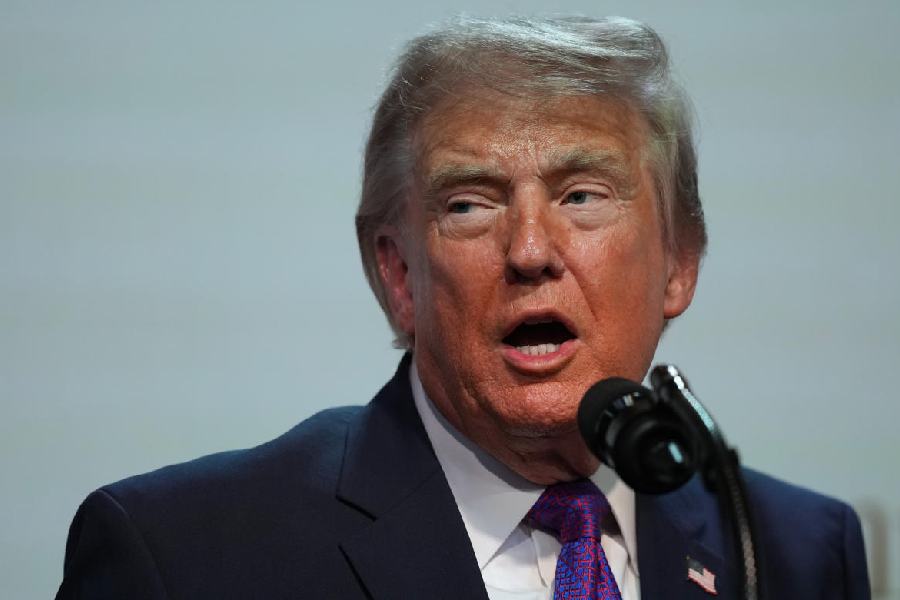
Mander contrasted New Delhi’s actions with the Donald Trump administration’s move of sending large numbers of “illegal” immigrants back to India last year.
He said the US did not simply fly these people back to India. “It acts while communicating the details of these persons to the Indian embassy,” he wrote.
“What we must understand is that the people who the American authorities are sending back to India (with or without shackles) are indisputably Indian citizens. There is no contestation by both governments and by the person that the undocumented person is Indian.”
Indian victims
Sunali Khatun, a pregnant Birbhum woman detained by Delhi police and pushed into Bangladesh last year, was brought back to India almost six months later in December with her young son under the apex court’s orders. The court declared her an Indian citizen. She gave birth days after returning to India.
Mehbub Sheikh, a 36-year-old Bengali migrant worker in Mumbai, was pushed into Bangladesh with four others last year, allegedly at gunpoint in the night.
His family claims he was taken to a BSF camp in Bengal a day after they sent his voter, Aadhaar and ration cards, which the police dismissed, citing the absence of a birth certificate. He was eventually brought back after his family approached the courts.
Last week, the Centre told the apex court that it would bring back some others, too, and verify their claims of Indian citizenship.
The apex court is hearing the Centre’s appeal against a September 2025 Calcutta High Court order that set aside as “illegal” the government’s move of forcing Sunali and others into Bangladesh.
Poll logic
Amid all the rights violation concerns, scare-mongering about “demographic change” and fulminating against Bangladeshi and Rohingya “infiltrators” seems to be paying electoral dividends for the BJP, the latest confirmation being the Bengal poll results.
In every election, the BJP-RSS has been raising the bogey of Bangladeshi “ghuspaithiyas”, apparent instruments of an alleged conspiracy to alter India’s demography and undermine its political and social stability.
Prime Minister Modi, home minister Amit Shah and their minions have been arguing that unchecked “infiltration” unbalances electoral, social and cultural equilibriums, eats into jobs meant for Indians, and exposes the nation to danger.
While the BJP has exploited Assam’s longstanding fear of “infiltration” to the hilt, it has introduced the subject to election campaigns in places like Jharkhand — alleging an existential threat to tribal identity — and Delhi, where it accused the then ruling AAP of settling illegals to build an illegitimate vote bank.
In Bihar, the BJP alleged that illegal immigrants were settling in large numbers in the border districts, especially in the Seemanchal region, altering the demography and threatening national security.
In Bengal, a similar polarising campaign appears to have helped consolidate a sizeable Hindu vote against Mamata Banerjee, trumping her pitch on Bengali unity and pride and seemingly nullifying any anger at the SIR harassment and the victimisation of Bengali migrants in other states.
Deport decline
For all its aggressive brand of nationalism, the initial years of the Modi government witnessed a sharp fall in the deportation (following due process, which was the norm earlier) of illegal migrants to Bangladesh.
Home ministry figures show that 5,234 Bangladeshis were deported under the UPA government in 2013 alone, while the number on Modi’s watch over the next four years — 2014 to 2017 — was just 1,822.
The yearly breakup was 989 deported in 2014, followed by 474 in 2015, then 308 in 2016 and 51 in 2017.
Ministry sources acknowledged that the trend remained similar till about 2024.
In contrast, the three UPA years from 2009 to 2011 had recorded a combined 23,653 deportations to Bangladesh.
The highest number of foreigners deported from India between April 2023 and March 2024 were Nigerians. According to the home ministry’s latest annual report, a total of 2,331 foreigners were deported during that period, including 1,470 Nigerians, 411 Bangladeshis and 78 Ugandans.