The Sustainable Harnessing and Advancement of Nuclear Energy for Transforming India Act represents the most consequential reform in India’s nuclear sector since 1962. By opening doors to private participation while establishing a regulatory framework, it addresses climate targets and energy security. Yet questions remain about overcoming financial and technical challenges.
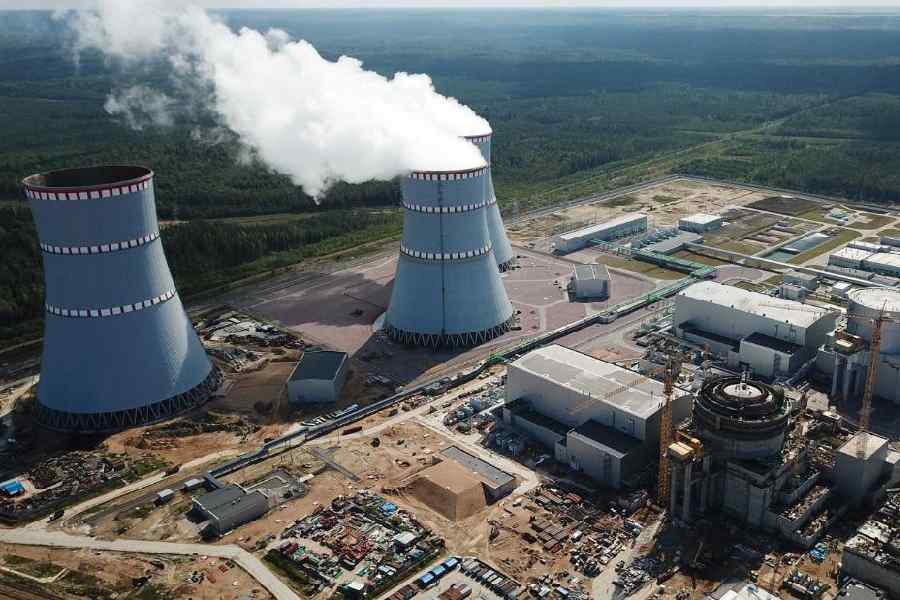
India has committed to achieving net-zero emissions by 2070. Meeting this goal requires massive deployment of clean energy. Nuclear power operates continuously, requires minimal land, and provides the stable baseload power that modern economies need. The government’s target of 100 gigawatts of nuclear capacity by 2047 represents roughly 12 times its current capacity. While India did not commit to tripling nuclear capacity at COP28 in Dubai, the SHANTI Act shows commitment through concrete legislative action.
The Act introduces a four-tier dispute resolution mechanism with 60-day timelines providing investors with certainty. Sensitive activities like enrichment and reprocessing remain State monopolies, appropriately balancing commercial opportunity with proliferation concerns. Section 16 introduces calibrated supplier recourse, limited to contractual provisions or intentional acts causing nuclear damage. This preserves absolute operator liability toward victims while allowing negotiated risk allocation, essential for insurability and investment viability. But concerns remain about adequacy. The Fukushima disaster’s estimated costs exceed $200 billion. While India’s reactor designs differ and such scenarios remain unlikely, the Rs 3,000 crore liability threshold would be grossly insufficient in a worst-case event. The Act mitigates this through State liability beyond operator limits and access to international funds.
The Act’s success hinges on private investors committing substantial capital; this is questionable given global evidence of nuclear projects running 2-3 times over budget. Nuclear projects require 30-40 year payback periods, far exceeding typical private sector horizons of 10-15 years. Without government guarantees (assured power purchase agreements, capital subsidies, or construction risk-sharing) the legislation’s promise of private participation may remain theoretical.
India urgently needs venture capital viewing nuclear power as a viable investment sector. The nuclear industry has suffered from underinvestment, trapped within government bureaucracies. Small modular reactors, advanced fuel technologies, digital monitoring systems, and AI-driven safety systems represent opportunities for start-ups. Consider renewable energy’s parallel: venture capital drove dramatic solar cost reductions. Nuclear power needs similar entrepreneurial capital. However, this requires proactive engagement from India’s investment community. The government should consider tax incentives for nuclear-focused venture funds.
India expects to commission indigenous SMRs by 2033, creating an eight-year vacuum during which foreign manufacturers will aggressively market their technologies. Companies are unlikely to wait for unproven indigenous designs when foreign alternatives appear less risky. By 2033, the market may be locked into foreign
platforms through fuel contracts, training programmes, and maintenance ecosystems. India’s track record counsels scepticism. The Prototype Fast Breeder Reactor at Kalpakkam, scheduled for 2010, remains decades behind. The risk is acute: indigenous SMRs may arrive late while India’s nuclear sector becomes structurally dependent on foreign designs.
The SHANTI Act represents a watershed moment, dismantling regulatory barriers that have constrained expansion for decades. Yet legislation cannot by itself guarantee success. The path forward requires designing financial mechanisms that make private nuclear investment viable, accelerating indigenous SMR development to prevent technology lock-in, and ensuring liability provisions prove adequate in practice. With strategic course corrections on financing, realistic timelines, and
proactive policy support, transformative capacity addition can secure India’s energy future.
Kavya Wadhwa is a nuclear energy advocate and policy analyst