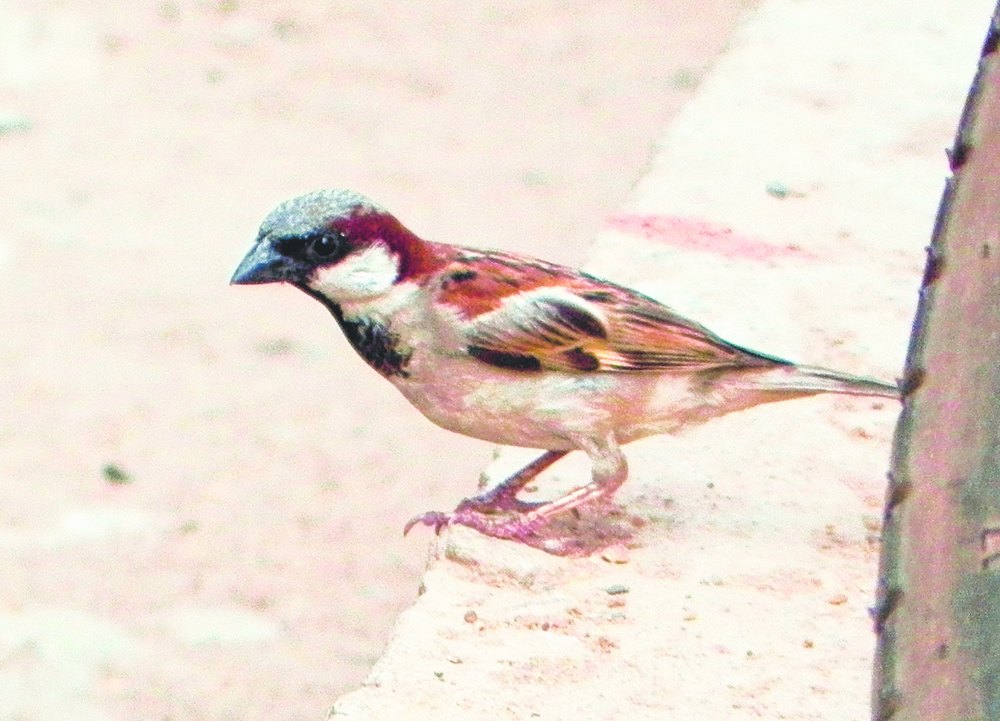

Paradip, Aug. 29: Thousands of house sparrows have made Bhitarkanika National Park their home with the picturesque wetland and meadows within park emerging as their congenial habitat.
At a time when these species is fast disappearing, the sighting of these birds is a positive development for the profile of the park.
Nearly 440 nesting sites have been spotted along the mangrove-infested meadows in the core area of the park. The identified habitation sites include Dangmal, Dakhin Mahinsamunda, Uttar Mahinsamunda, Kalibhanjdiha, Pataparia, Durgaprasad Diha, Satabhaya and Angari forest blocks.
Sparrows were earlier sighted in villages on the Bhitarkanika fringes. But, now they seem to prefer the interference free forest areas, said forest officials.
Though a census is yet to be undertaken, the nesting sites were found during a headcount of monsoon birds earlier this month, said divisional forest officer, Rajnagar mangrove (wildlife) forest division, Bimal Prasanna Acharya.
These pint-sized birds are incidentally not listed in any schedule of the Wildlife Protection Act, 1972. Over the years, the number of sparrows has come down drastically and its sighting is rare.
"The human habitations thriving on the fringes of the national park have turned out to be blessing for the house sparrows. They have built many straw thatched houses. Twigs from the straw come in handy for their nesting. They feed on the grains from the crop fields," said Acharya.
In most other areas, the grains and insects the sparrows feed on have gone out of sight due to man-made factors.
The birds used to flourish in the countryside and urban areas. However, the increasing use of pesticides in agricultural fields has seen their numbers drastically go down. The birds perished as they failed to withstand grain toxicity. Urbanisation and fast disappearing straw-thatched houses have also contributed to their habitat shrinking.
However, farmers in Bhitarkanika grow saline-resistant paddy with low use of pesticides. Sparrows are averse to eating grains grown through application of pesticide. Thus, grains here suit the food chain of these birds, leading to an increase in their number.