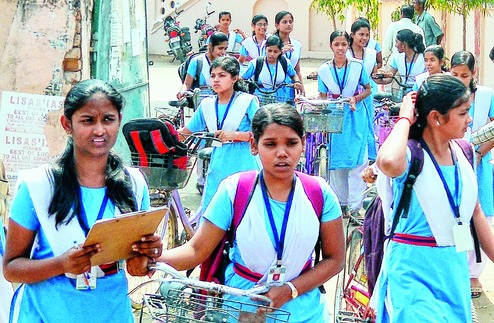

Bhubaneswar, May 3: The school and mass education department has decided to include human rights education in the school curriculum for Classes VI-X from the forthcoming academic session.
At present, human rights education is imparted to students in the form of stories, essays or poems. However, none of the textbooks have any specific chapter on human rights education.
"Students should know their rights from an early age. The present form of study of human rights in story or poem form cannot educate the children properly. For this, a specific chapter is needed. We have decided to introduce the chapter specifically in the school curriculum," said an official of the school and mass education department.
She said human rights education in the school curriculum would be implemented on a pilot basis for a select 100 schools from eight different districts of the state. "After including the chapters on a pilot basis for a year and educating the students, we will analyse the outcome and go ahead with introducing it in schools across the state," said the official.
The department has also decided to reconstitute the expert committee on syllabus since it existed since 2010 and many of the members have already retired from their services. "A new committee with fresh members will be constituted, which will revisit the textbooks and look for scope to add chapters on human rights education," said another official of the department.
The objective of adding human rights education in the school curriculum is to enhance knowledge and understanding of human rights, foster attitudes of tolerance, respect, solidarity, and responsibility, develop awareness of how human rights can be translated into social and political reality and develop skills for protecting human rights.
Educationists in the city said the schools should encourage open expression of views and dialogue between students and teachers. "The schools can work toward building a closer relationship between itself and the community. Human rights should permeate the whole school from its ethos and organisation to the content of its curriculum," said educationist Pramila Padhi.