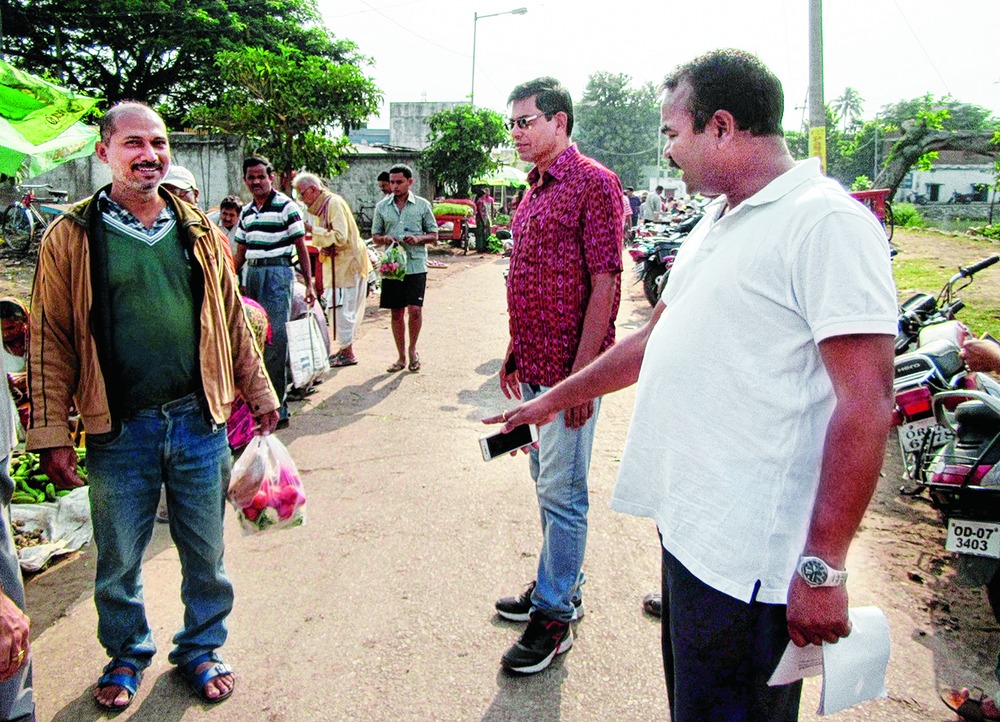

Picture by Gopal Krishna Reddy
Berhampur, Oct. 29: District collector P.C. Chowdhary has said that a complete ban on use of polythene carry bags in the town will be implemented from January 1 next year.
In its last council meeting in September, the Berhampur Municipal Corporation had already passed a resolution to ban the use of polythene carry bags in public places.
The district administration and the Berhampur Municipal Corporation have already intensified raids and awareness campaigns to turn town polythene-free.
A vehicle with a public address system has been pressed into service to appeal to the public not to use polythene bags.
"I have asked the municipal corporation and district administration to create public awareness before implementing the ban on polythene bags," Chowdhary added.
Senior district and civic officials today raided vending zones and shops at various locations and seized poly-thene bags from the traders' stocks.
"Now, most customers are coming to purchase vegetables with their own bags," said Kalia Panda, a trader at Mardarajpur vending zone.
"We will advise the public not to use polythene bags and water sachets. Instead, we will ask them to use cotton bags. In the next phase, we will raid wholesale godowns, collect fines and initiate criminal cases against those who violate the rule," said municipal commissioner Susanta Kumar Mishra.
Sardar Ballav Bhai Patel Samiti president Ram Kumar Patra has also welcomed the move.
"Polythene poses a major threat to the environment. Use of polythene carry bags is rampant at wedding venues and community halls. In order to ensure easy availability of alternatives, we should promote manufacture of earthen pots, leaf/paper plates and paper bags," he said.
Polythene wastes choke and clog the city's drainage system, resulting in artificial flooding during monsoon and unseasonal rains. Besides, stray cows and bulls fall prey to the polythene menace since these are not biodegradable, he said.
The state government had imposed restrictions on the use of polythene below the width of 40 microns on February 7, 2011, keeping in mind the dangers posed to these materials to both the environment and the health of human beings and animals.