
Jorhat, July 23: The versatile pineapple, a staple in the Northeast, has found a use even for its "waste."
The department of Textiles and Apparel Designing, College of Home Science here has blended the fibre made of pineapple waste with yarn from eri and muga waste to give a new spin to eco-friendly garments.
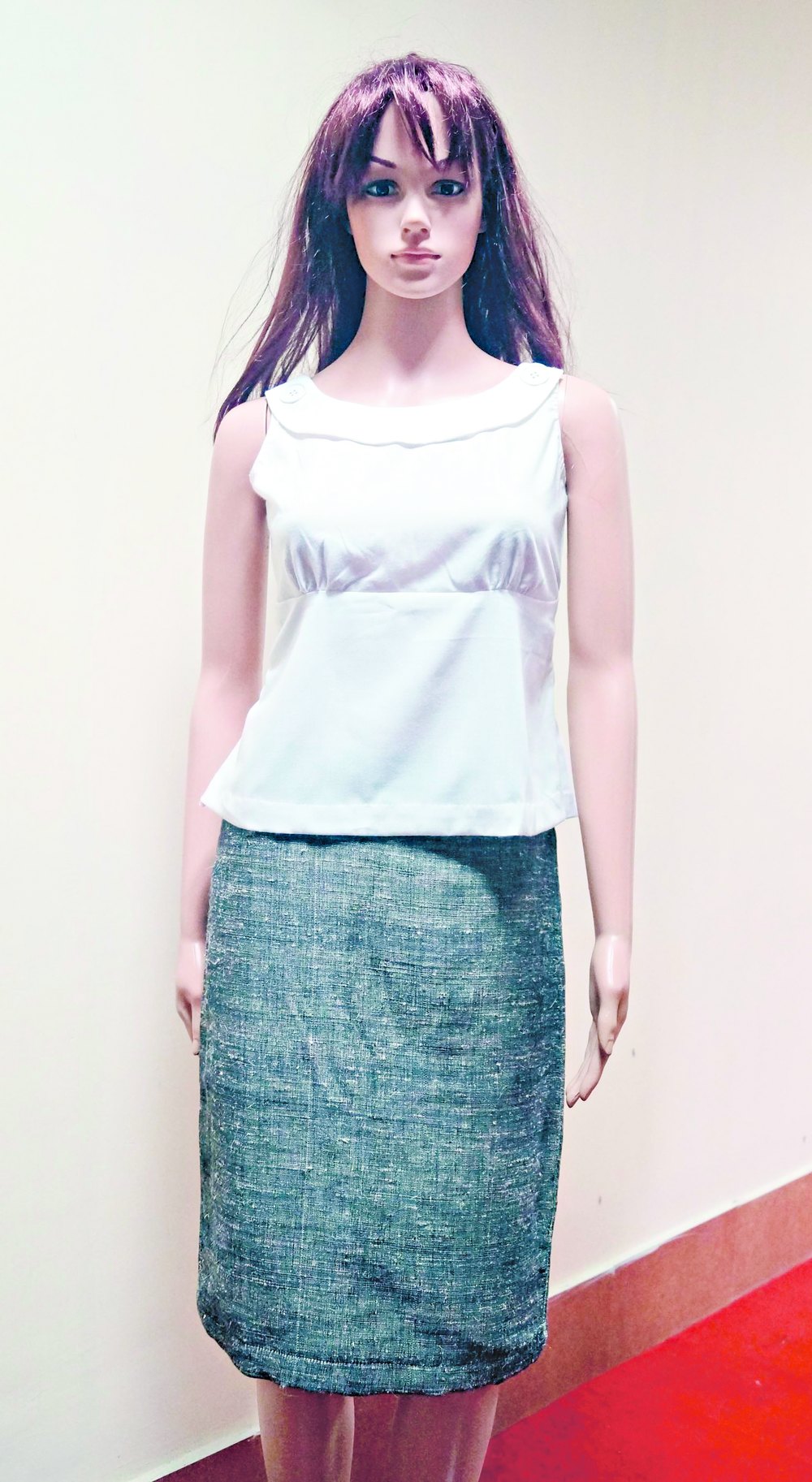
Garments, stoles, ties and cushion covers, stitched out of these materials, resemble khadi with sheen and could give the best designers a run for their money.
A professor of the department, Binita Baishya Kalita, said research scholars in the MSc and PhD programmes had worked to develop these threads with the help of the National Institute of Research on Jute and Allied Fibre Technology, Calcutta.
"At first, the fibre is extracted by a fibre extraction machine from the pineapple leaves. Likewise, eri or muga threads are extracted from the waste biomass. Then, a water rating is done after which we come to know if the fibre has to be further degummed. This was also done with sodium hydroxide and then bleached. In Calcutta, the eri or muga fibre was blended with the pineapple fibre to create a new fibre," Kalita added.
Apart from inventing a new fibre out of pineapple waste, the college has also made a unique union fabric in which bamboo fibre has been blended with muga waste fibre and then woven into cloth with cotton.
In the warp and weft of its union fabrics, bamboo rayon or cotton yarn is woven with eri and muga waste fibre to make affordable and eco-friendly dresses.
Dean of the College of Home Science, Satvinder Kaur, said a lot of such agricultural waste could be converted into useful items that can be used in handloom and garment-making sectors.
"A well-planned policy is required to convert such waste into fibre which is eco-friendly and it should be done here. We do not have a blending machine and therefore, making such blended fibre with eri, muga and pineapple will be difficult. But our research has shown the process by which this can be done. If the raw material is available, weavers can make the cloth and this can be used in making garments, curtains, furnishing materials. It is affordable too. In fact, we have made innumerable ties with ethnic motifs to gift the dignitaries visiting the institute," Kaur said.
It is easier to make garments out of union fabric as they contain two different yarns that have not been blended. Cotton or polyester is used in the weft, while vanya silk waste fibre is used in the warp in different weaves - twill, plain and satin - for variety.
Kaur said while the stress was on using cotton or bamboo fibre with the vanya silks, polyester, too, could be used for a creaseless effect. Affordability and its resemblance with the cloth made wholly of eri or muga thread are the USPs of this new product.
"If one value-adds with traditional motifs or borders, one can turn out gorgeous stoles, dresses and vests as have been done by our students," added Kaur.
MSc student Deepshikha Hazarika developed the pineapple waste blend with eri waste under the guidance of Prof. Nabanita Gogoi, while another student, Papori Hazarika, blended pineapple waste with mulberry waste under the guidance of Kalita.
PhD student Smita Rani Saikia developed the bamboo and silk waste blend and another MSc student, Gabur Taga, developed one of the union fabrics. Both worked with Kalita.