Germany and India are finalising a submarine manufacturing agreement worth at least $8 billion, potentially the biggest defence deal New Delhi has ever signed, according to a Bloomberg report.
The agreement, being negotiated ahead of German Chancellor Friedrich Merz’s visit to India next week, would for the first time involve the transfer of submarine technology to India, the report said.
If concluded, the deal would mark a significant deepening of defence ties between the two countries, the report said citing sources familiar with the matter.
Under the proposed arrangement, Germany’s Thyssenkrupp Marine Systems GmbH would partner with India’s state-owned Mazagon Dock Shipbuilders Ltd to manufacture the vessels in India. The discussions are confidential, the people said, and both governments have yet to formally announce the agreement.
The Indian Navy operates around a dozen ageing Russian submarines alongside six newer French-built boats. Should the German deal go through, Delhi would abandon plans to buy three additional French submarines, Bloomberg’s sources said, reshaping its long-term naval procurement strategy.
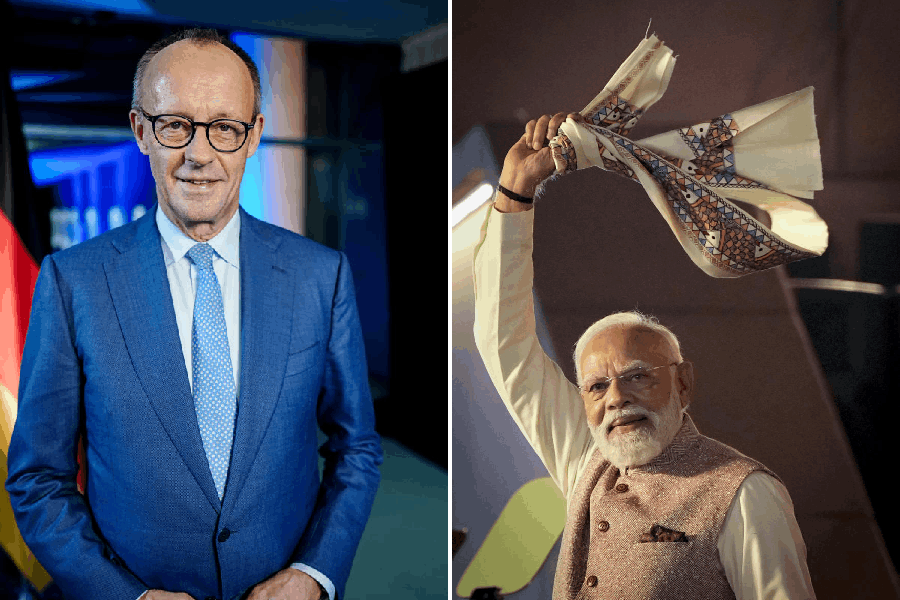
Merz, on his maiden visit to India as chancellor, is scheduled to meet Prime Minister Narendra Modi in Gujarat on Monday before travelling to Bengaluru to meet German companies operating in India, according to a German government spokesman. The trip will be his first overseas visit accompanied by a large delegation of German chief executives.
Beyond defence, the two sides are expected to discuss closer cooperation in pharmaceuticals and efforts to accelerate negotiations between India and the European Union on a long-pending free trade agreement, the people said.
The submarines under discussion would be equipped with air-independent propulsion systems, allowing them to remain submerged for longer periods than conventional diesel-electric models.
Such capability would strengthen India’s ability to patrol the Indian Ocean as China expands its naval footprint in the region, Bloomberg said.
The proposed deal reflects a convergence of strategic and industrial priorities. India has for years pushed foreign arms makers to manufacture locally and share technology, part of a broader “Make in India” drive.
In 2020, the Modi government blocked the import of most major defence platforms to encourage overseas manufacturers to move production lines to India.
Despite those efforts, India remains the world’s second-largest importer of military equipment, sourcing most of its arms from Russia, according to the Stockholm International Peace Research Institute.
Germany’s defence industry, meanwhile, has expanded rapidly since Russia’s invasion of Ukraine.
Berlin’s willingness to transfer sensitive submarine technology is also seen as a move to reduce India’s long-standing dependence on Russian weaponry, the report said.