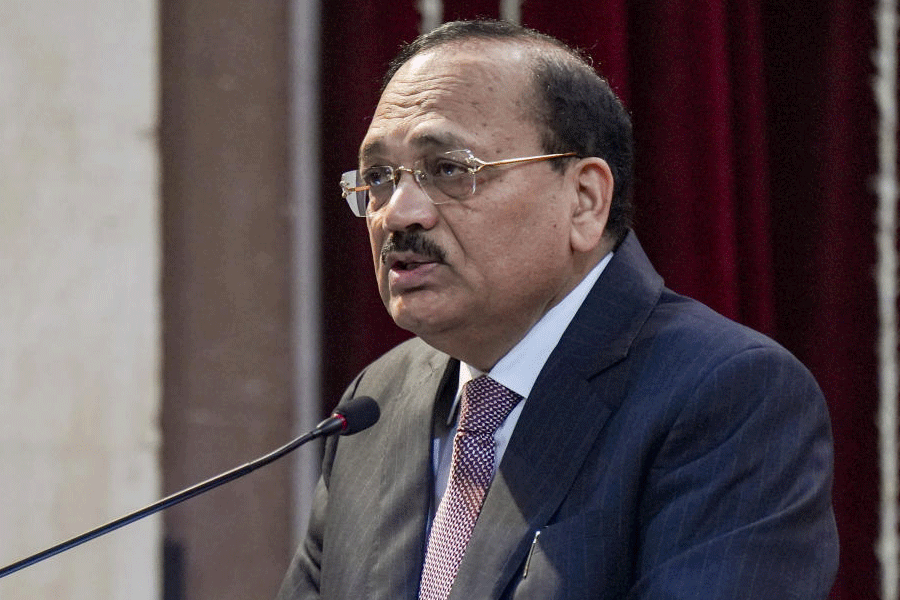

Guwahati: Unabated encroachment of land by "immigrant Muslims from Bangladesh" is the "most serious threat" to land rights and identity of the indigenous population of Assam, says a committee on land rights led by former Chief Election Commissioner H.S. Brahma.
The Committee for Protection of Land Rights of Indigenous People of Assam, formed by the BJP-led state government after it came to power in 2016, submitted its final report recently.
The report says local farmers are selling off land to rich "land-hungry" non-indigenous traders who use them for non-agricultural purposes owing to lack of measures to make agriculture profitable.
"Threats to security of the land rights and the very identity of the indigenous people of Assam has come from the sustained immigration of Bengali Muslim peasants into mainland Assam from the neighbouring districts of pre-independent Assam/erstwhile East Pakistan and now Bangladesh. Admittedly, it is not a new phenomenon. It has been going on since pre-Independence days. Sir Sayed Mahammad Sadullah's government in Assam between 1937 and 1947 devised 'Grow More Food' campaign under which thousands of Bengali Muslim peasants were unleashed to be spread in the lower Assam districts like the invading swarms of ants," it says.
"Unabated, organised and incessant encroachment of all kinds of land by land-hungry immigrants from across the unfenced stretch of the Indo-Bangladesh border is one of the reasons of shrinking geographical space and cultivable land in Assam. The lands encroached include agricultural land, sar (riverine) areas, village grazing reserves, professional grazing reserves, xatras and temple land (Debottar, Dharmottar and Brahmottar lands), tribal belt/block lands, government vacant waste/ khas land, road and riverside reserved land," it says.
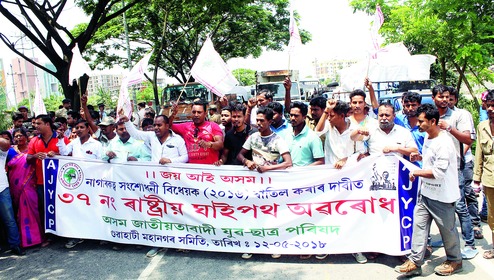
The findings come at a time when there are widespread protests against the Centre's Citizenship (Amendment) Bill, 2016, that seeks to grant citizenship to certain minorities from Pakistan, Bangladesh and Afghanistan. Groups opposing the bill fear the move will reduce the indigenous people to linguistic minority and make them politically weak.
The report also said the fast population growth in Barpeta, Bongaigaon, Darrang, Dhubri, Goalpara, Hailakandi, Karimganj, Morigaon and Nagaon districts was affecting the demographic pattern.
"The land rights of the indigenous people and their identity are at stake. If no effective constitutional, legal and administrative steps, including sealing off of the Indo-Bangladesh border and detection and deportation of the illegal immigrants are taken, the indigenous people are bound to be reduced to a landless class of people and to become foreigners in their own home," the report says.
The government told the Assembly in February that there are 3,62,450 landless families in 31 of the 33 districts and Tinsukia topped the list.
The committee said though agriculture contributes 19.89 per cent to the state's gross domestic product (2011-12), the farmers continue to struggle owing to annual floods and erosion and other problems.