|
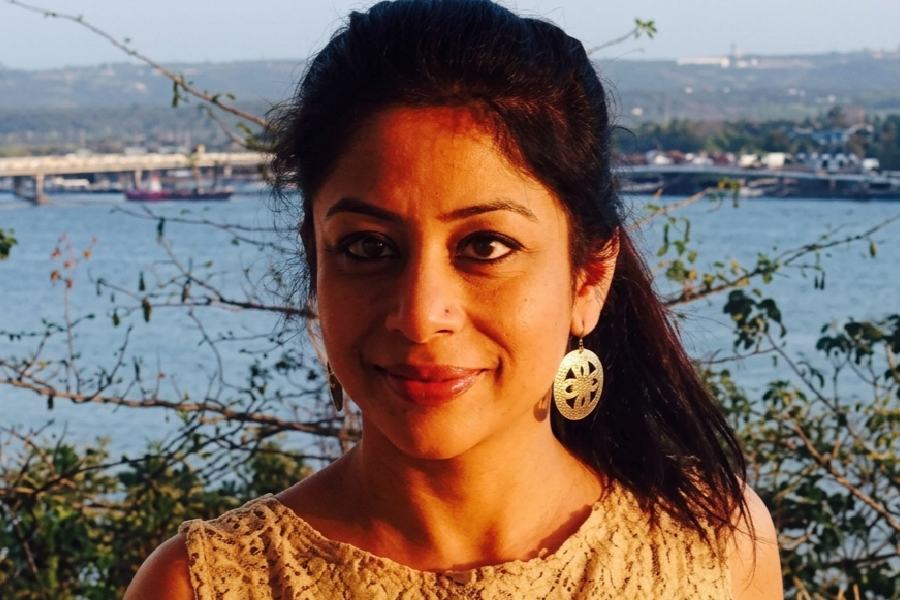
| Sayang Konyak perfects the craft of weaving Naga shawls in her Assam home. Picture by Aabir Borgohain |
Saripora (Sivasagar), May 7: You would expect Saripora?s Naga past and Assamese present to be the recipe for another identity crisis in a region of myriad communities, cultures and aspirations. But residents of this village straddle both worlds with ease.
Every member of the 700-odd families residing at Saripora, in Sivasagar district, has two names ? one Naga and the other Assamese. Everyone in the village is as attached to the Naga shawl as to the Assamese gamocha. Each villager is as faithful to the traditional Konyak Naga customs as he or she is to the adopted culture of the Assamese community.
?We are a part of Assamese society and we are Nagas, too,? says Sayang Konyak, the earnestness in her voice compelling you to believe her.
Saripora?s history dates back to the 16th century, when a group of Nagas followed the Ahom king Gadadhar Singha, who had been forced to temporarily take shelter in Nagaland to escape persecution in Assam, to this small village.
Four centuries later, Saripora remains an odd mix of identities but comfortable in its own skin. There is no conflict between the past and the present or the Naga shawl and the Assamese gamocha.
?In our village, we are known by our Naga names. Outside it, everyone calls us by our Assamese names,? says Pongtai Konyak, a higher secondary student.
The name Pongtai is only for his village mates. Once in school, Pongtai is Utpal to his Assamese classmates.
Like Pongtai, Yonguo is Pradip and Hamkai is Bipul to their friends in school.
Do their dual identities ever leave them confused?
?Never,? says Pongtai.
Attempts to hold on to the tradition of their forefathers are, however, visible all over the village, be it in a school that teaches girls to make traditional Naga shawls or at home, where adherence to traditional Konyak rituals is strict.
Sayang, who recently opened the school to teach the village women the fine art of making Naga shawls, says her motive is not commercial gain. ?I don?t wish to make money from this school. The training is free. My aim is to keep our heritage alive. Our shawl is what the gamocha is to an Assamese.?
Unlike in Nagaland, where the majority of the people are Christians, the Nagas of Saripora are Hindus. They ostensibly converted after being blessed by the satradhikar (head monk) of Moiramoria Satra, Debananda Mahanta, decades ago.
?We have taken up Hinduism, but we still follow the religious traditions we inherited from our forefathers,? says Watai Konyak, the 105-year-old gaonburah (village elder).
Watai still wears the traditional headgear worn by Naga chieftains and speaks Konyak.
The village even has a Morung Ghar (a traditional community hall), where animal sacrifice and feasts are common.
?The only major change is that we no longer have stringent rules against inter-caste marriage,? says 95-year-old Wanchui.